
Definizioni chiave: Cosa sono le Wattora e le Ampere-ora?
Comprendere la differenza tra wattora e ampere-ora è la base per costruire un sistema di alimentazione affidabile. Come produttore, vedo molti utenti concentrarsi esclusivamente su una metrica, il che spesso porta a sistemi sottodimensionati o a una selezione inefficiente dei componenti. Per padroneggiare l'accumulo di energia con batterie al litio, è necessario capire come queste due unità interagiscono all’interno del tuo ecosistema energetico.
Ampere-ora (Ah) e Capacità di carica
Ampere Ora (Ah) misurano la capacità di carica di una batteria. Questo valore indica quanta corrente può fornire una batteria in un determinato periodo. Ad esempio, una batteria da 100Ah può teoricamente erogare 10 ampere per 10 ore. In calcolo della capacità della batteria, Ah è essenzialmente la dimensione del “serbatoio di carburante”, descrivendo il volume di elettricità disponibile per fluire attraverso i tuoi cavi.
Wattora (Wh) e Energia totale
Wattora (Wh) rappresentano l’energia totale o il vero “lavoro” che una batteria può svolgere. Mentre l’Ah misura il volume di corrente, Wh tiene conto della pressione (tensione) dietro quella corrente. Questo è il modo più accurato per misurare la capacità della batteria solare perché riflette il tempo di funzionamento effettivo che puoi aspettarti.
- Definizione: 1 Wattora è l’energia consumata da un carico da 1 watt che funziona per un’ora.
- Significato: Wh consente un confronto diretto tra diverse chimiche e configurazioni di batterie.
- Utilità di Calcolo: Wh è il linguaggio universale per dimensionare apparecchiature e sistemi di accumulo energetico.
Confronto della Capacità tra Diversi Voltaggi di Sistema
Il più grande errore nel settore è confrontare le batterie solo in Ah senza considerare la tensione nominale. Quando si esegue una conversione da Wh a Ah, la tensione cambia completamente la densità energetica del pacco.
| Valutazione della Batteria | Tensione di sistema | Energia Totale (Wh) | Confronto Energetico |
|---|---|---|---|
| 100Ah | 12,8 V | 1.280 Wh | Unità di Base |
| 100Ah | 25,6V | 2.560 Wh | 2x l'energia |
| 100Ah | 51,2V | 5.120 Wh | 4x l'energia |
Per garantire una guida alla dimensione della batteria, converti sempre le tue esigenze in Wattora. Questo garantisce che, che tu stia gestendo un sistema RV a 12V o un ESS domestico a 48V, tu stia confrontando mele con mele riguardo alla potenza effettivamente disponibile ai tuoi carichi.
Mastering Watt Hours to Amp Hours: Consigli di esperti – Fornitore professionale di batterie al litio
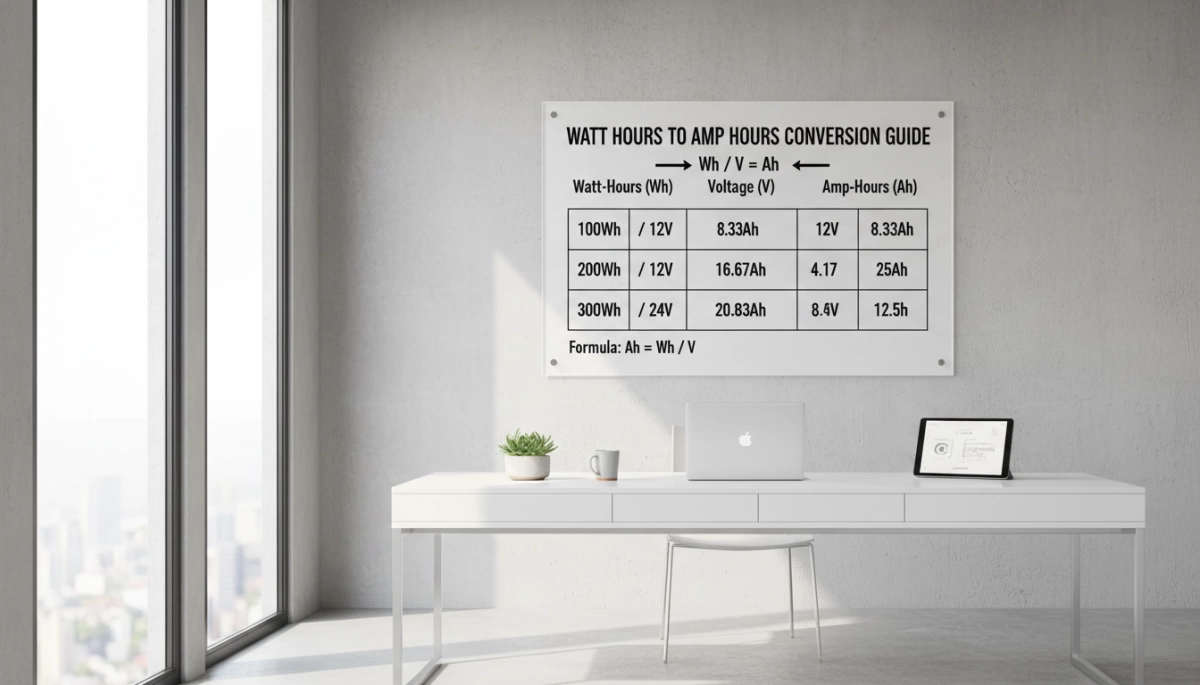
Per dimensionare correttamente la batteria, devi comprendere la relazione matematica tra energia (Wh) e capacità (Ah). Come produttore professionale di batterie al litio, sottolineo sempre che non puoi confrontare gli Ampereora tra diverse tensioni senza prima convertirli in Wattora.
La formula da Ampereora a Wattora
Questo è il calcolo della capacità della batteria usato per determinare l'energia totale immagazzinata in un pacco. Per trovare l'energia totale, moltiplica la capacità per la tensione nominale:
- W = Ah × V
- Esempio: Una batteria da 100Ah a 12,8V fornisce 1.280Wh (1,28kWh) di energia.
La conversione da Wh a Ah
Quando conosci il consumo energetico giornaliero in Wattora e vuoi trovare la capacità della batteria richiesta, usa questa conversione da Wh a Ah:
- Ah = Wh / V
- Esempio: Se hai bisogno di 5.000Wh di energia per un sistema a 48V, ti serve una capacità di circa 104Ah.
Calcolo passo passo per sistemi comuni
Capire la formula da ampereora a wattora cambia il modo in cui percepisci le tue esigenze di potenza. I sistemi a tensione più alta richiedono meno Ampereora per fornire la stessa energia totale, il che permette fili più sottili e meno calore.
| Tensione di sistema | Capacità (Ah) | Energia Totale (Wh) |
|---|---|---|
| Sistema a 12V (12,8V nominali) | 100Ah | 1.280Wh |
| Sistema a 24V (25,6V nominali) | 100Ah | 2.560Wh |
| Sistema da 48V (51,2V nominali) | 100Ah | 5.120Wh |
Se stai iniziando con l'immagazzinamento di energia su piccola scala, imparare come realizzare un pacco batteria LiFePO4 da 12V fai-da-te è un ottimo modo per vedere queste formule in azione. Per configurazioni più grandi, utilizza sempre la tensione nominale di 51,2V per i sistemi al litio da 48V per assicurarti che i tuoi calcoli riflettano le prestazioni effettive delle celle. Calcoli coerenti evitano di sottodimensionare il banco e garantiscono che il sistema funzioni in modo efficiente sotto carico.
Perché la Tensione Nominale è Importante nell'Accumulo di Energia con Batterie al Litio
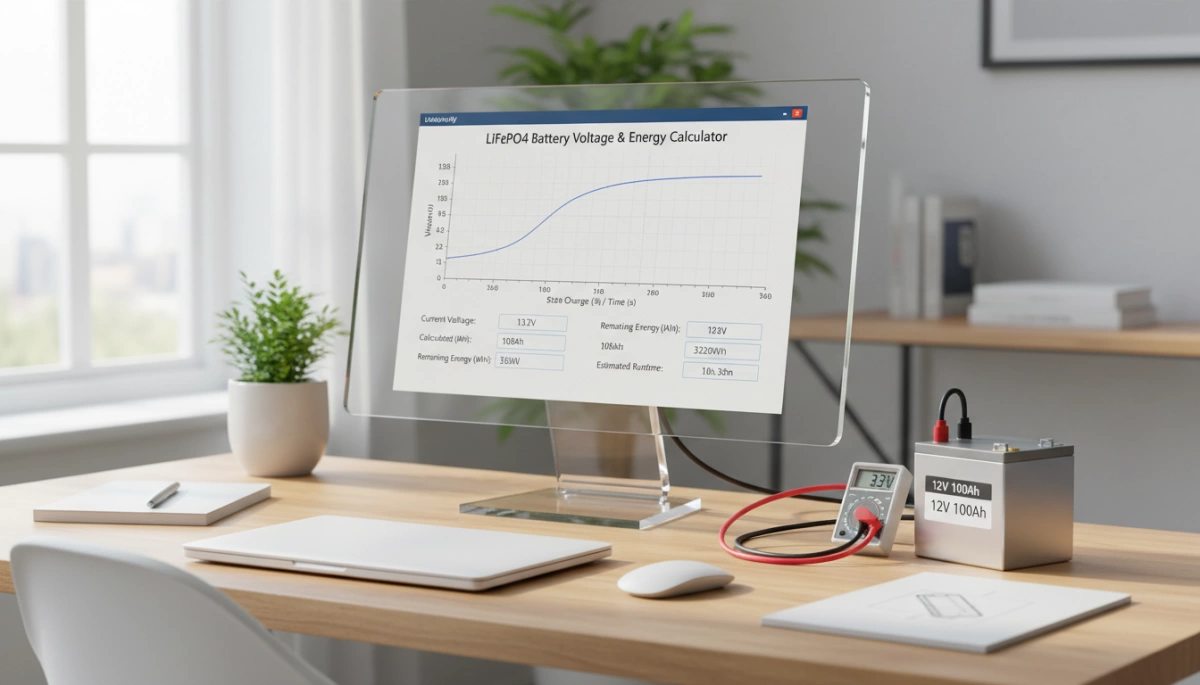
Quando parliamo di convertire wattora in ampere-ora, la tensione nominale è la variabile più critica. Nel mondo di l'accumulo di energia con batterie al litio, le etichette “12V” o “48V” sono spesso abbreviazioni. Per la chimica LiFePO4, una batteria standard da 12V in realtà ha una tensione nominale di 12,8V, mentre un sistema da 48V è tipicamente 51,2V.
Questa differenza è importante perché l'energia (Wh) è il prodotto della capacità (Ah) e della tensione (V). Se calcoli il tuo sistema basandoti su 12V invece di 12,8V, i tuoi calcoli saranno sbagliati di quasi il 71%. Per apparecchiature specializzate, come un pacco batteria al litio da 14,8V per generatori di ossigeno portatili, la tensione nominale è accuratamente progettata per corrispondere al consumo specifico del dispositivo, garantendo che l’elettronica funzioni in modo efficiente senza surriscaldarsi o spegnersi prematuramente.
Curva di Scarica Piatta del Litio vs. Piombo-Acido
Uno dei maggiori vantaggi del LiFePO4 è la sua stabilità di tensione. Mentre le batterie al piombo-acido soffrono di una caduta di tensione costante durante lo scaricamento, il litio mantiene una curva di scarica quasi piatta.
- Potenza Costante: Il tuo inverter e gli elettrodomestici ricevono una tensione stabile fino a quando la batteria è quasi completamente scarica.
- Maggiore Efficienza: Tensione stabile significa un minor assorbimento di corrente per la stessa potenza in uscita, riducendo il calore nei tuoi cablaggi.
- Dimensionamento accurato: Poiché la tensione non diminuisce sotto carico, il tuo conversione da Wh a Ah rimane preciso durante l'intero ciclo di scarica.
Calcolo dell'energia per pacchi ad alta tensione
In configurazioni residenziali o commerciali di grandi dimensioni, si passa al territorio ad alta tensione per ridurre l'amperaggio e risparmiare sui costi di cablaggio. Comprendere il salto da 12,8V a 51,2V è fondamentale per un corretto dimensionamento della batteria:
| Tipo di sistema | Tensione nominale | Capacità (Ah) | Energia Totale (Wh) |
|---|---|---|---|
| LiFePO4 standard a 12V | 12,8 V | 100Ah | 1.280Wh |
| LiFePO4 standard a 24V | 25,6V | 100Ah | 2.560Wh |
| LiFePO4 standard a 48V | 51,2V | 100Ah | 5.120Wh |
Per chi costruisce un sistema di alimentazione serio, usare sempre la tensione nominale dichiarata dal produttore piuttosto che la tensione generica del sistema. Questo garantisce che i calcoli di stoccaggio dell'energia siano precisi, evitando di sottodimensionare la banca e lasciandoti al buio.
Padronanza delle Wattora in Ampere-ora: Consigli esperti per un dimensionamento preciso della batteria
Per ottenere il massimo dal tuo stoccaggio di energia, devi guardare oltre il semplice conversione da Wh a Ah. Come produttore professionale, vedo molti utenti trascurare le inefficienze del sistema reale, il che porta a bancali di potenza sottodimensionati. Un dimensionamento accurato fa la differenza tra un sistema di alimentazione affidabile e uno che ti lascia al buio.
Considerazioni sull'efficienza dell'inverter e le perdite di energia
Nessun sistema elettrico è al 100% efficiente. Quando calcoli la tua capacità utilizzabile della batteria, devi considerare la “tassa” pagata durante la conversione dell’energia.
- Perdite di efficienza dell'inverter: La maggior parte degli inverter DC-AC di alta qualità operano con un'efficienza tra l'85% e il 95%. Per sicurezza, consiglio di moltiplicare le Wattora totali richieste per 1,15.
- Resistenza del cablaggio: L'energia si perde sotto forma di calore attraverso i cavi. Per veicoli ricreazionali e impianti solari, l'uso del calibro di filo corretto è fondamentale per mantenere la stabilità della tensione LiFePO4.
- Consumo del BMS: Il Sistema di Gestione della Batteria stesso utilizza una piccola quantità di energia per monitorare e proteggere le celle, cosa da considerare per applicazioni di standby a lungo termine.
Calcolo della capacità utilizzabile e della profondità di scarica (DoD)
Il profondità di scarica delle batterie al litio è il loro più grande punto di forza. A differenza delle batterie al piombo-acido, che si dovrebbero scaricare solo fino al 50%, i nostri pacchi al litio offrono in modo sicuro dal 80% al 100% della loro capacità nominale.
- Ottimizzazione della durata del ciclo: Per chi desidera la massima durata possibile, suggerisco di dimensionare il sistema per un DoD dell'80%.
- Formula della capacità utilizzabile in Wh: (Totale Ah × Tensione nominale) × 0,80 = Wattora utilizzabili in modo sicuro.
Pianificazione delle esigenze energetiche giornaliere per sistemi solari e veicoli ricreazionali
Quando progettiamo configurazioni per illuminazione solare o kit RV off-grid, ci concentriamo sulla velocità di scarica. Non si tratta solo di quanta energia hai, ma di quanto velocemente puoi prelevarla.
- Carichi ad alta corrente: Se utilizzi apparecchiature pesanti come aria condizionata o microonde, hai bisogno di una capacità Ah più alta per rimanere entro i limiti di scarica continua della batteria.
- Dimensionamento per l'autonomia: Pianifica sempre “giorni di autonomia”. Se i tuoi pannelli solari non riescono a caricarsi per due giorni a causa del maltempo, il tuo l'accumulo di energia con batterie al litio dovrebbe avere abbastanza Wh per colmare il divario.
Masterizzando questi calcoli, garantisci il tuo batterie LiFePO4 ad alto ciclo funzionano esattamente come previsto, fornendo energia affidabile per gli anni a venire.
Masterizzare Watt Ora in Ampere Ora: Esempi pratici di dimensionamento
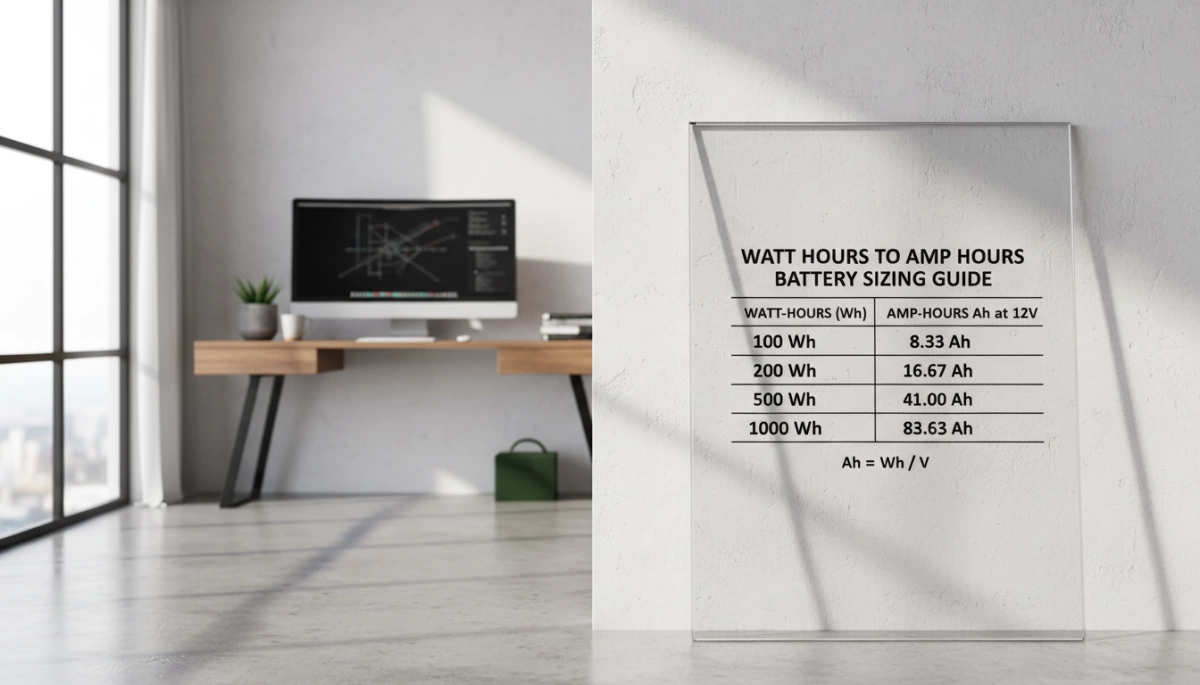
Quando progetto un l'accumulo di energia con batterie al litio sistema, inizio sempre con il requisito totale di energia in Watt Ora (Wh). Per un sistema di accumulo solare domestico da 10kWh standard, il calcolo della capacità della batteria dipende interamente dalla tensione del sistema. Se utilizzi un setup da 48V (51,2V nominali), hai bisogno di circa 200Ah di capacità per raggiungere quella soglia di 10,24kWh. Usare un sistema da 24V richiederebbe 400Ah per la stessa energia, illustrando perché una tensione più alta è più efficiente per l'uso residenziale su larga scala.
Confronto tra batterie da 100Ah a diverse tensioni
Una “batteria da 100Ah” non è una quantità fissa di energia. La tensione determina quanto lavoro la batteria può effettivamente svolgere. Questo è un passaggio critico in qualsiasi guida alla dimensione della batteria per veicoli ricreazionali o configurazioni solari.
| Tensione (V) | Ampere Ora (Ah) | Energia Totale (Wh) | Caso d'Uso |
|---|---|---|---|
| 12,8 V | 100Ah | 1.280Wh | Piccoli veicoli ricreazionali / Van |
| 25,6V | 100Ah | 2.560Wh | Motori trolling / Piccoli sistemi off-grid |
| 51,2V | 100Ah | 5.120Wh | Accumulo di energia domestica |
Per progetti specializzati, utilizziamo spesso il batteria al litio 11,1V 15Ah 18650 per apparecchiature di supporto industriale per fornire una densità energetica precisa per dispositivi compatti dove i blocchi tradizionali da 12V sono troppo ingombranti.
Stime di durata e configurazione Nuranu
Per utilizzare un calcolatore di durata della batteria effettivamente, devi considerare il carico continuo. Se hai un pacco batteria da 5,12kWh (5120Wh), ecco quanto tempo alimenterà gli elettrodomestici tipici di una famiglia italiana a una profondità di scarica di 90%:
- Frigorifero di grandi dimensioni (150W): ~30,7 ore
- Luci LED e Laptop (100W): ~46 ore
- Riscaldatore d'ambiente (1500W): ~3 ore
- Climatizzatore centrale (3000W): ~1,5 ore
I nostri grafici di configurazione Nuranu sottolineano che mentre conversione da Wh a Ah è una certezza matematica, la durata effettiva dipende dai tassi di scarica. Gli elettrodomestici ad alto assorbimento consumano il la capacità della batteria solare più veloce a causa del calore e di lievi cali di efficienza, anche con la stabilità superiore della chimica LiFePO4. Comprendere queste differenze ti assicura di non sottodimensionare il tuo banco e lasciare la tua casa al buio.
Padronanza delle Watt Ora in Ampere Ora: Vantaggi di LiFePO4 per l'Energia Utilizzabile
Quando si massimizza il potenziale energetico, comprendere la chimica delle batterie è altrettanto importante quanto i calcoli. Come fornitore professionale di batterie al litio, diamo priorità alla tecnologia LiFePO4 perché offre le prestazioni più efficienti per qualsiasi l'accumulo di energia con batterie al litio progetto. Padronanza delle Watt Ora in Ampere Ora: consigli da esperti inizia con la scelta di una batteria che mantenga la sua tensione e fornisca ogni singolo bit di energia immagazzinata.
- Stabilità della Tensione LiFePO4: Questa è la chiave per durate più lunghe. A differenza delle batterie al piombo-acido che vedono una significativa diminuzione di tensione durante la scarica, la stabilità della tensione LiFePO4 garantisce che la tua attrezzatura riceva una corrente stabile fino a quando la batteria è quasi esaurita.
- Celle Prismatiche di Classe A: Costruiamo i nostri pacchi utilizzando celle prismatiche di alta qualità Classe A. Queste offrono una stabilità termica superiore e una densità energetica più elevata, garantendo che il tuo investimento duri anni.
- Sistema di Gestione Intelligente Integrato: Ogni batteria che produciamo è dotata di un Sistema di Gestione della Batteria intelligente. Questa tecnologia bilancia le celle e protegge da sovraccarichi. Per i migliori risultati, consulta il nostro guida alla cura delle batterie LiFePO4 per mantenere il tuo batterie LiFePO4 ad alto ciclo in condizioni ottimali.
- Design Modulari Scalabili: I nostri sistemi sono progettati per la flessibilità. Che tu stia alimentando una piccola baita fuori rete o un grande sistema di accumulo energetico commerciale, le nostre unità modulari ti permettono di aumentare facilmente la capacità man mano che aumentano le tue esigenze energetiche.
Scegliendo LiFePO4 di alta qualità, garantisci che i Watt Ora calcolati si traducano in potenza reale e utilizzabile sul campo.





 Italian
  English
  German
  Spanish
  French
  Polish
  Russian
  Thai
Thai  Turkish
  Japanese
  Korean