
Ti stai chiedendo se la promessa di una 'durata di vita di 10 anni' per le batterie al litio sia scienza reale o solo marketing?
Scegliere la soluzione di alimentazione giusta può fare la differenza tra il successo e il fallimento del ritorno sull'investimento a lungo termine del tuo progetto. Come fornitore professionale di batterie al litio, Nuranu progetta batterie ricaricabili high-performance LiFePO4 dal 2012. Sappiamo esattamente cosa distingue una batteria che si guasta presto da una che resiste nel tempo.
In questo post, stiamo svelando la verità: quanto durano le batterie al litio?
Imparerai le variabili del mondo reale dietro la durata del ciclo delle batterie al litio, l'importanza critica di celle al litio di qualità A, e come un sistema intelligente spegnimento del sistema di gestione della batteria (BMS) protegge il tuo investimento. Che tu stia cercando per applicazioni solari, marine o industriali, questa guida è per te.
Andiamo subito al sodo.
Comprendere la durata delle batterie al litio
Quando investi in accumulo di energia, la domanda più urgente è sempre: “Quanto durerà effettivamente questa batteria?” Per capire la longevità delle nostre soluzioni di alimentazione, dobbiamo considerare due metriche distinte: durata del ciclo e durata del calendario.
- Durata ciclo: Questo si riferisce al numero di cicli completi di carica e scarica che una batteria può completare prima che la sua capacità scenda sotto una certa percentuale (di solito 80%). Da Nuranu, la nostra durata di vita della batteria LiFePO4 progettato per oltre 6000 cicli profondi a una profondità di scarica (DOD) di 80%.
- Durata nel tempo: Questo è il tempo trascorso durante il quale una batteria rimane funzionante, indipendentemente da quante volte viene utilizzata. Le nostre batterie sono progettate con un vita utile di 10 anni, garantendo affidabilità a lungo termine per applicazioni domestiche e industriali.
Vantaggi della chimica LiFePO4
Ci concentriamo esclusivamente su Litio Ferro Fosfato (LiFePO4) perché è lo standard d'oro per sicurezza e durata. A differenza di altre chimiche, LiFePO4 è chimicamente stabile e resistente al runaway termico, rendendola la scelta superiore per lo stoccaggio energetico ad alte prestazioni.
| Caratteristica | LiFePO4 (Nuranu) | Litio NMC | Piombo-Acido |
|---|---|---|---|
| Durata del ciclo | Oltre 6000 cicli | 500 – 2000 cicli | 300 – 500 cicli |
| Sicurezza | Estremamente alto | Moderato | Basso (emissione di gas) |
| Durata del servizio | Oltre 10 Anni | 3 – 5 Anni | 2 – 3 Anni |
| Manutenzione | Zero | Minimo | Alto (Irrigazione/Pulizia) |
In confronto tra litio e piombo-acido, il vincitore è chiaro. Mentre le batterie al piombo-acido sono più economiche all'acquisto, si usurano rapidamente sotto uso intensivo. Utilizzando celle al litio di qualità A, garantiamo che le nostre batterie offrano un costo per ciclo molto più basso nel corso della loro durata di un decennio. Anche rispetto alle batterie NMC (Nichel Manganese Cobalto) comunemente trovate in telefoni o automobili, LiFePO4 offre significativamente più la durata del ciclo delle batterie al litio, rendendola il candidato ideale per sistemi di accumulo solare, camper e ambienti marini.
Fattori che Influenzano la Durata delle Batterie al Litio
Mentre le nostre batterie LiFePO4 sono progettate per una vita utile di 10 anni, il reale durata di vita della batteria LiFePO4 dipende dalle condizioni ambientali e dalle abitudini di utilizzo. Anche con oltre 6000 cicli disponibili, come gestisci la scarica e la temperatura determinerà il ritorno totale sul tuo investimento.
Profondità di Scarica (DoD) e Durata del Ciclo
Il profondità di scarica DoD è il fattore più significativo che influisce su la durata del ciclo delle batterie al litio. Mentre le nostre celle di Classe A sono costruite per cicli profondi, esiste una correlazione diretta tra profondità di scarica e longevità totale:
- DoD 80%: Questo è il “punto ideale” per le nostre batterie, consentendo un massimo di cicli (6000+) mentre fornisce energia sufficiente per esigenze solari e di camper.
- DoD: Scaricare frequentemente la batteria fino a 0% aumenta lo stress interno e può accorciare la durata complessiva del calendario rispetto a cicli parziali.
- Cicli superficiali: Scaricare solo il 20-30% prima di ricaricare può estendere significativamente il numero di cicli oltre le specifiche di targa.
Impatto della temperatura e ambientale
Effetti della temperatura sulle batterie possono determinare il rendimento del sistema. La chimica al litio è sensibile agli estremi termici. Il calore elevato accelera la degradazione chimica, mentre la ricarica a temperature di congelamento senza un riscaldatore adeguato può causare danni permanenti alle celle. Si consiglia di conservare le batterie in un'area climatizzata o in un contenitore ventilato per garantire longevità della batteria solare in regioni calde o fredde d'Italia.
Pratiche di ricarica e conservazione
Una corretta ricarica è imprescindibile per mantenere la salute delle celle. Utilizzare un caricatore specificamente programmato per LiFePO4 garantisce che le funzionalità di protezione da sovraccarico al litio all'interno del nostro Smart BMS non siano costantemente sotto stress.
- Evitare la carica a goccia: A differenza delle batterie al piombo, il litio non necessita di una carica costante a goccia.
- Livelli di conservazione: Se si conserva per l'inverno, mantenere la batteria al 40-60% di carica.
- Manutenzione: Se una batteria rimane inattiva troppo a lungo e scende sotto una certa tensione, potrebbe entrare in uno stato di protezione. Conoscere come attivare la modalità di sonno della batteria al litio 18650 è essenziale per gli utenti che gestiscono dispositivi di backup o monitoraggio di piccola scala che sono stati inattivi.
Modelli di utilizzo in solare e backup
In Italia, il solare residenziale e il campeggio off-grid sono le applicazioni più comuni per i nostri pacchi ad alta capacità. Un ciclo quotidiano costante in un sistema solare richiede un BMS robusto per bilanciare le celle ogni singolo giorno. Per l'alimentazione di backup, dove la batteria può rimanere inattiva per mesi, il basso tasso di autoscarica della nostra chimica LiFePO4 garantisce che sia pronta quando la rete cade, a condizione che venga mantenuta in uno stato di carica stabile.
Il Smart BMS: Guardiano della durata della batteria LiFePO4
Da Nuranu, non assemblamo solo celle; integriamo un sistema sofisticato Sistema di Gestione della Batteria (BMS) che funge da “cervello” di ogni unità. Se vuoi sapere quanto durano le batterie al litio, la risposta di solito risiede nella qualità del BMS. Questo circuito interno monitora lo stato di salute di ogni singola cella di litio di Classe A, garantendo che il pacco operi sempre entro limiti elettrici e termici sicuri.
Come un Smart BMS protegge il tuo investimento
Un BMS di alta qualità è imprescindibile per ottenere una durata di oltre 6000 cicli. Previene i principali fattori di deterioramento della chimica al litio fornendo monitoraggio attivo e difese automatizzate:
- Protezione da sovraccarico: Interrompe il processo di ricarica quando le celle raggiungono la capacità massima, prevenendo instabilità chimica.
- Protezione da sovrascarica: Interrompe l'alimentazione prima che la batteria si scarichi a un livello che potrebbe causare perdita permanente di capacità.
- Bilanciamento delle celle: Ridispone automaticamente l'energia per garantire che ogni cella rimanga allo stesso livello di tensione, massimizzando l'energia utilizzabile.
- Monitoraggio di cortocircuito e temperatura: Spegne istantaneamente il sistema se rileva calore irregolare o guasti nei cablaggi.
Mantenendo un controllo preciso su Tensione di carica della batteria LiFePO4 32650 e altri parametri critici, il nostro BMS integrato riduce significativamente lo stress sull'hardware. Come fornitore professionale di batterie al litio, diamo priorità a queste protezioni intelligenti per garantire un vita utile di 10 anni.
Senza un BMS robusto, anche le migliori celle si deteriorerebbero prematuramente a causa di lievi squilibri di tensione o stress ambientali. È il componente più importante per garantire prestazioni costanti e a lungo termine nel tuo sistema di accumulo di energia solare o sistemi di backup domestici. Questa gestione intelligente è ciò che ci permette di offrire il la durata del ciclo delle batterie al litio che le applicazioni industriali e residenziali moderne richiedono.
Svelare la verità: Quanto durano le batterie al litio rispetto a quelle al piombo?

Quando si confrontano le opzioni di accumulo di energia, il Confronto tra litio e piombo-acido è spesso il momento in cui il vero valore del tuo investimento diventa chiaro. Le batterie al piombo-acido tradizionali sono una tecnologia obsoleta che di solito fallisce entro 2-3 anni di uso intensivo. Al contrario, le nostre batterie LiFePO4 sono progettate per una durata di 10 anni, offrendo un livello di durabilità che le batterie al piombo-acido semplicemente non possono eguagliare.
Confronto di prestazioni ed efficienza
| Caratteristica | LiFePO4 (Nuranu) | Piombo-acido (Tradizionale) |
|---|---|---|
| Durata del ciclo (80% DoD) | Oltre 6000 cicli | 300 – 500 cicli |
| Efficienza | 98% | ~85% |
| Manutenzione | Zero manutenzione | Innaffiature e pulizie periodiche |
| Peso | 70% più leggero | Pesante e ingombrante |
| Profondità di scarica | Fino a 100% | Consigliato 50% Max |
Analisi del Costo Per Ciclo
Non lasciarti ingannare dal prezzo iniziale più basso delle batterie al piombo-acido. Per capire il valore reale, devi considerare il costo per ciclo al litio offerte. Sebbene una batteria al piombo-acido possa costare meno oggi, la sostituirai da cinque a dieci volte durante la durata di una singola unità al litio Nuranu. Quando si considerano i costi di sostituzione, manodopera e inattività, il litio è la scelta più economica per qualsiasi applicazione solare o marina seria.
Impatto Ambientale e Operativo
- Senza Manutenzione: Niente più controllare i livelli di acido o pulire la corrosione dei terminali.
- Eco-Compatibile: La nostra chimica al fosfato di ferro e litio è non tossica e stabile, a differenza dei metalli pesanti e degli acidi presenti nelle tecnologie più vecchie.
- Ricarica Rapida: Il litio accetta la corrente molto più efficacemente, riducendo significativamente i tempi di ricarica del generatore o solare.
Scegliendo un produttore professionale, garantisci che le durata di vita della batteria LiFePO4 promesse siano supportate da celle di Classe A e protezioni integrate, piuttosto che da specifiche di marketing vuote. Per un accumulo di energia ad alte prestazioni, la scelta è chiara: il litio fornisce più potenza, per più anni, a un costo totale inferiore.
Durata reale in applicazioni comuni
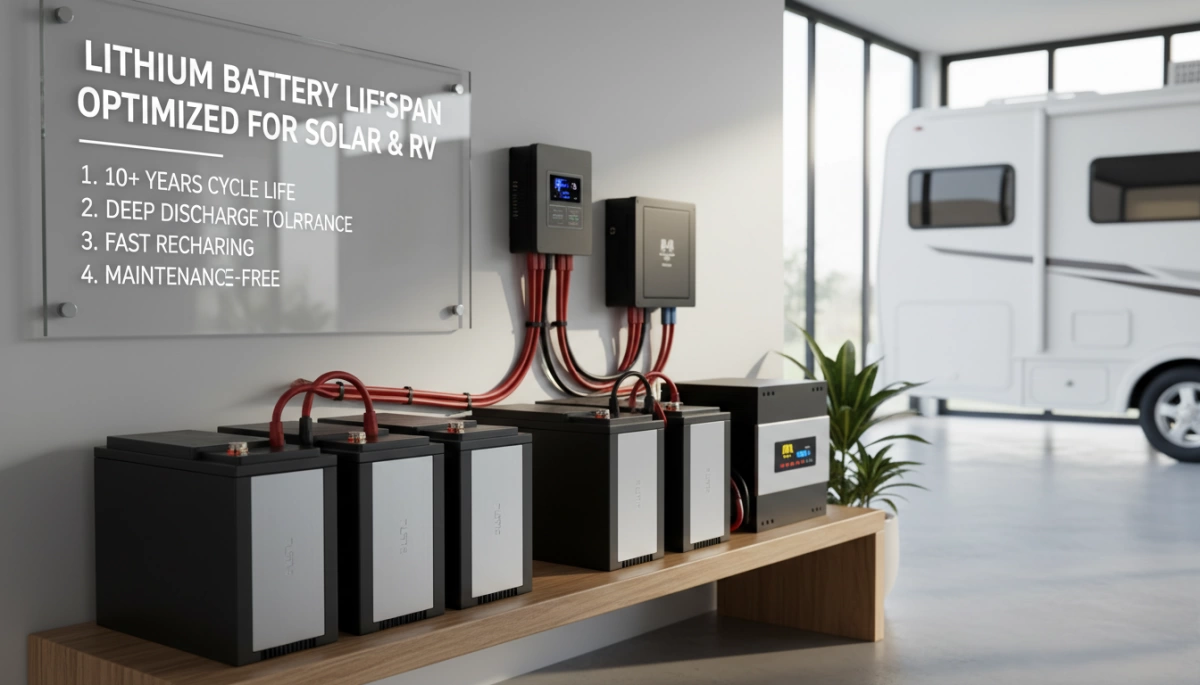
Svelare la verità: Quanto durano le batterie al litio? – I dati del fornitore di batterie al litio professionali mostrano che l'ambiente e l'applicazione sono i fattori più importanti nelle prestazioni nel mondo reale. Sebbene le nostre batterie siano progettate per una durata di 10 anni, il modo in cui le utilizzi sul campo determina se raggiungi quel traguardo di oltre 6000 cicli.
Prestazioni di accumulo di energia solare
In configurazioni solari residenziali e industriali, longevità della batteria solare è l'obiettivo finale. Poiché questi sistemi tipicamente ciclagono una volta al giorno, le nostre unità LiFePO4 sono costruite per fornire 10-15 anni di servizio continuo. A differenza delle al piombo-acido, che si degrada rapidamente sotto cicli profondi quotidiani, le nostre celle di Classe A mantengono un'alta capacità anche dopo un decennio di utilizzo con il sole alto e basso.
Durabilità per RV e Marine
Le applicazioni mobili richiedono robustezza. Durata della batteria al litio per RV e cicli della batteria al litio marina sono spesso testati tramite vibrazioni estreme e temperature variabili.
- Resistenza alle Vibrazioni: La nostra costruzione interna è a stato solido rispetto alle piastre liquide e di piombo delle tecnologie più vecchie, rendendole perfette per strade accidentate e mari agitati.
- Ciclismo Profondo: Puoi usare il condizionatore o il motore trolling più a lungo senza preoccuparti di “uccidere” la batteria, poiché il nostro BMS gestisce perfettamente la curva di scarica.
Carrelli da Golf e Sistemi Off-Grid
Per carrelli da golf e cabine remote off-grid, l'attenzione è rivolta a una consegna di energia costante. Per ottenere il massimo dalla tua configurazione, è fondamentale dimensionare correttamente il banco. Sapere come calcolare la capacità della batteria assicura di non sottodimensionare il sistema, prevenendo scariche eccessive e prolungando la vita complessiva del pacco. Le nostre batterie offrono una curva di scarica piatta, il che significa che il tuo carrello da golf non rallenterà man mano che la batteria si scarica, fornendo potenza completa fino all'ultimo amp-hour.
Scegliere un Fornitore Professionale di Batterie al Litio
Quando parliamo di svelare la verità: quanto durano le batterie al litio?, la risposta inizia dalla fonte di produzione. Da Nuranu, siamo un'impresa high-tech dedicata dal 2012, specializzata in R&S e produzione di batterie ricaricabili ad alte prestazioni. Acquistare direttamente da un fornitore professionale di batterie al litio come noi garantisce hardware progettato per una durata di 10 anni, piuttosto che alternative generiche che si guastano prematuramente.
Lo Standard di Qualità Nuranu
Utilizziamo solo celle al litio di qualità A batterie nuove di zecca in ogni produzione. Questa è la base della nostra promessa di oltre 6000 cicli profondi. Gestendo l'intera linea di produzione, garantiamo che la nostra chimica LiFePO4 e il Smart BMS lavorino in armonia per prevenire il degrado comunemente visto nei prodotti di livello inferiore. Assicuriamo anche la sicurezza attraverso test rigorosi, aiutando i clienti a comprendere differenze critiche come batterie 18650 protette vs batterie 18650 non protette
per varie applicazioni industriali e consumer.
| Caratteristica | Vantaggi Diretti di Fabbrica vs Rivenditori Terzi | Fabbrica Nuranu Diretta |
|---|---|---|
| Qualità delle celle | Grado A (Nuovo Certificato) | Spesso Grado B o Surplus |
| Durata del ciclo | Oltre 6000 cicli @ 80% DoD | 1.000 – 2.000 cicli |
| Personalizzazione | Supporto OEM/ODM completo | Solo disponibile in pronta consegna |
| Certificazioni | CE, UN38.3, MSDS | Limitato o Nessuno |
| Competenza | R&S interno dal 2012 | Staff di vendita generale |
Eliminando l'intermediario, offriamo prezzi diretti dalla fabbrica e trasparenza tecnica. Il nostro impegno per un'alta densità energetica e protocolli di sicurezza integrati significa che le nostre batterie non solo durano più a lungo—ma funzionano in modo più affidabile in ambienti impegnativi come ESS solari, configurazioni marine e sistemi RV off-grid. Scegliere un produttore professionale garantisce che il tuo investimento sia supportato da specifiche tecniche autentiche e affidabilità nelle spedizioni globali.
Consigli per Massimizzare la Durata della Batteria al Litio
Svelare la Verità: Quanto Durano le Batterie al Litio? Come Fornitore Professionale di Batterie al Litio, sappiamo che raggiungere oltre 6000 cicli dipende molto dalla routine di manutenzione. Mentre le nostre celle LiFePO4 di Grado A sono costruite per resistere, seguire queste linee guida professionali assicura di massimizzare la tua longevità della batteria solare e Durata della batteria al litio per RV.
Migliori Abitudini di Carica e Caricatori Compatibili
Per mantenere ottimale la durata del ciclo delle batterie al litio, evita di “profondamente scaricare” la batteria regolarmente a 0%.
- Carica Parziale: Mantieni lo stato di carica (SoC) tra 20% e 80% per le operazioni quotidiane per ridurre lo stress sulle celle.
- Attrezzature Dedicata: Usa solo caricabatterie specificamente programmati per profili LiFePO4. Questi garantiscono che la tensione corretta venga applicata, prevenendo il BMS Intelligente dal dover attivare frequentemente la protezione da sovraccarico.
- Evita la ricarica rapida: Mentre le nostre batterie gestiscono correnti elevate, una ricarica più lenta di solito garantisce un costo per ciclo al litio rapporto migliore riducendo il calore interno.
Routine di conservazione e manutenzione corrette
Se conservi le batterie per la stagione morta, una corretta cura previene la perdita permanente di capacità.
- Controllo della Temperatura: Conserva le batterie in un ambiente fresco e asciutto. Il calore estremo accelera la vita utile della batteria nel tempo degradazione.
- Soc di conservazione: Non conservare mai una batteria al litio a 0%. Mira a circa 50% di carica prima di un deposito a lungo termine e scollega tutti i carichi per prevenire il consumo parasitario.
- Controlli di routine: Per unità mobili, seguendo il uso e manutenzione delle batterie agli ioni di litio dei veicoli elettrici assicura che le vibrazioni non abbiano allentato le connessioni, il che può causare riscaldamento resistivo.
Segni di deterioramento da tenere d'occhio
Anche le migliori batterie alla fine invecchiano. Essere in grado di individuare i segni di usura ti aiuta a pianificare le sostituzioni prima che si verifichi un guasto.
- Perdita di capacità: Una diminuzione evidente della durata con cui la batteria alimenta le tue apparecchiature.
- Calo di Tensione: Se la tensione diminuisce significativamente sotto un carico normale, è probabile che la resistenza interna stia aumentando.
- Cambiamenti Fisici: Qualsiasi gonfiore o rigonfiamento del case è un segno che la batteria ha raggiunto la fine della sua vita operativa sicura e deve essere riciclata.
- Avvisi BMS: Il frequente scatto del circuito di protezione durante l'uso normale di solito indica celle sbilanciate o chimica invecchiata.






 Italian
  English
  German
  Spanish
  French
  Polish
  Russian
  Thai
Thai  Turkish
  Japanese
  Korean