
The Anatomy of a 12V Battery: Terms You Must Know
Before upgrading your gear, you need to speak the language of power. Understanding the basic specs of a deep cycle battery ensures you choose the right model for your fish finder, alarm system, or scooter. Here is the breakdown of the essential terminology.
Voltage vs. Capacity (The Water Tank Analogy)
The easiest way to understand electricity is to visualize a water tank.
- Voltage (V): Think of this as water pressure. Most small electronics require a 12V system (nominally 12.8V for our LiFePO4 batteries) to push the energy through the device.
- Capacity (Ah): This is the size of the tank. An Amp Hour rating (Ah) tells you how much energy is stored. A 12V 7Ah battery and a 12V 20Ah battery have the same \”pressure,\” but the 20Ah tank holds nearly three times as much \”water,\” allowing your device to run longer.
Understanding C-Rating and Draw Speed
The C-Rating measures how fast a battery can safely deliver its energy.
- 1C Rating: You can drain the entire battery in one hour.
- Low C-Rating: Designed for slow, steady power (like a memory backup).
- High C-Rating: Designed for bursts of power (like starting a motor).
Our small-format batteries are designed for consistent, reliable output. Pushing a battery beyond its rated draw speed can trigger the Battery Management System (BMS) to cut power to prevent overheating or damage.
Cycle Life and Longevity Explained
Battery cycle life is the number of times you can discharge and recharge a battery before it degrades. This is where the difference in chemistry becomes undeniable.
- Sealed Lead Acid (SLA): Typically lasts 300–500 cycles. You might replace these every 1–2 years.
- Nuranu LiFePO4: Rated for 2,000 to 5,000+ cycles. Even with daily use, these can last 5 to 10 years.
While the upfront cost of lithium is higher, the cost per cycle is significantly lower because you aren\’t buying replacements constantly.
Chemistry Wars: SLA vs. LiFePO4
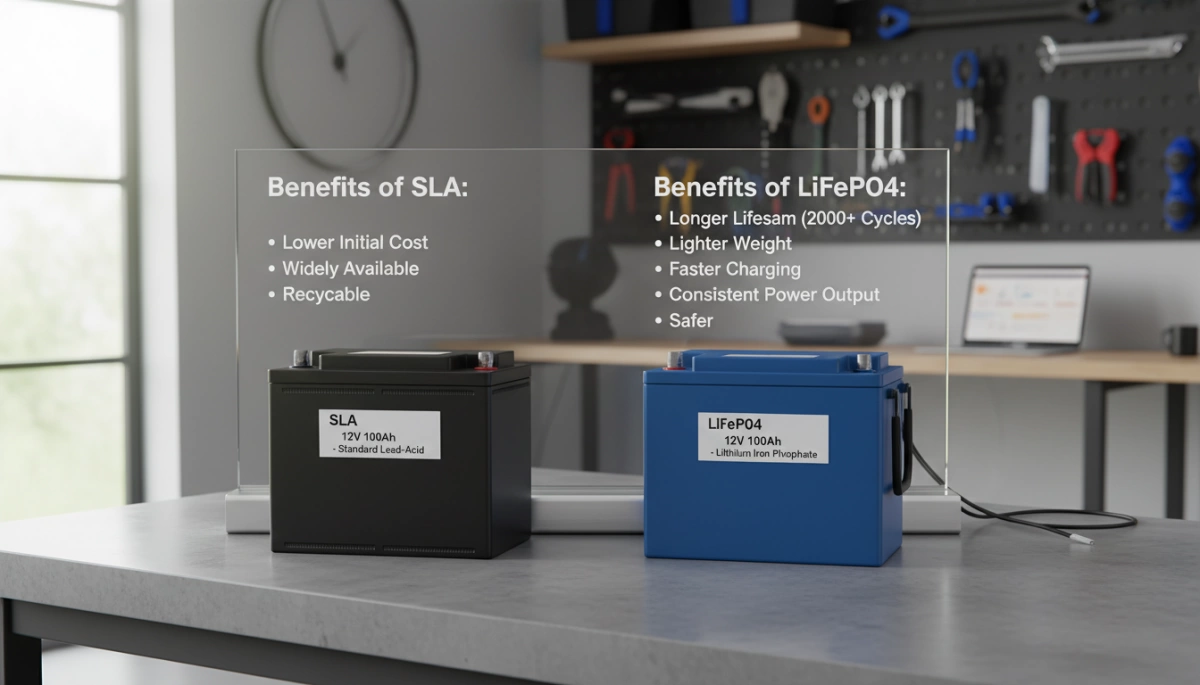
When you are looking to power your electronics, the biggest decision comes down to the chemistry inside the black box. For decades, we relied on lead-acid, but the landscape has shifted. Today, the comparison of LiFePO4 vs Lead Acid is the most critical factor in determining how long your gear runs and how often you have to replace your power source.
The Old Standard: Sealed Lead Acid (SLA)
Sealed Lead Acid (SLA) and Absorbent Glass Mat (AGM) batteries have been the go-to for a long time simply because they are cheap upfront and widely available. However, they come with significant drawbacks for modern applications.
- Heavy Weight: Lead is heavy. A standard SLA battery weighs about three times as much as its lithium counterpart, making it a burden for portable applications like kayaks or hiking gear.
- Short Lifespan: Most SLA batteries are rated for only 300 to 500 cycles. If you use them daily, you might be buying a replacement in less than a year.
- Voltage Sag: As the battery drains, the voltage drops significantly, which can cause sensitive electronics to shut off before the battery is actually empty.
The Modern Standard: LiFePO4 Advantages
At Nuranu, we focus on Lithium Iron Phosphate (LiFePO4) because it solves the inherent problems of older technology. These batteries are designed as \”drop-in\” replacements, meaning they fit the same physical space but offer vastly superior performance.
Why we switched to LiFePO4:
- Superior Usable Capacity: With lead-acid, you should rarely discharge below 50% to avoid damage. With LiFePO4, you get 100% Depth of Discharge (DoD). This means a 10Ah lithium battery gives you twice the usable run-time of a 10Ah lead-acid battery. Understanding this efficiency is key when mastering watt-hours to amp-hours for your specific device requirements.
- Massive Cycle Life: Our LiFePO4 units are rated for 2,000 to 5,000+ cycles. You could potentially use the same battery for 5 to 10 years, whereas an SLA battery would have been replaced multiple times.
- Weight Efficiency: Weighing roughly 1/3 of an equivalent lead-acid battery, these are game-changers for mobility scooters and portable ham radios.
- Low Self-Discharge: If you store your gear for the winter, a LiFePO4 battery holds its charge much better than lead-acid, which tends to go flat and sulfated if left unattended.
While the upfront cost of a deep cycle battery using lithium chemistry is higher, the cost per cycle is significantly lower over the life of the product. You buy it once, and it works.
Safety First: What is a BMS?
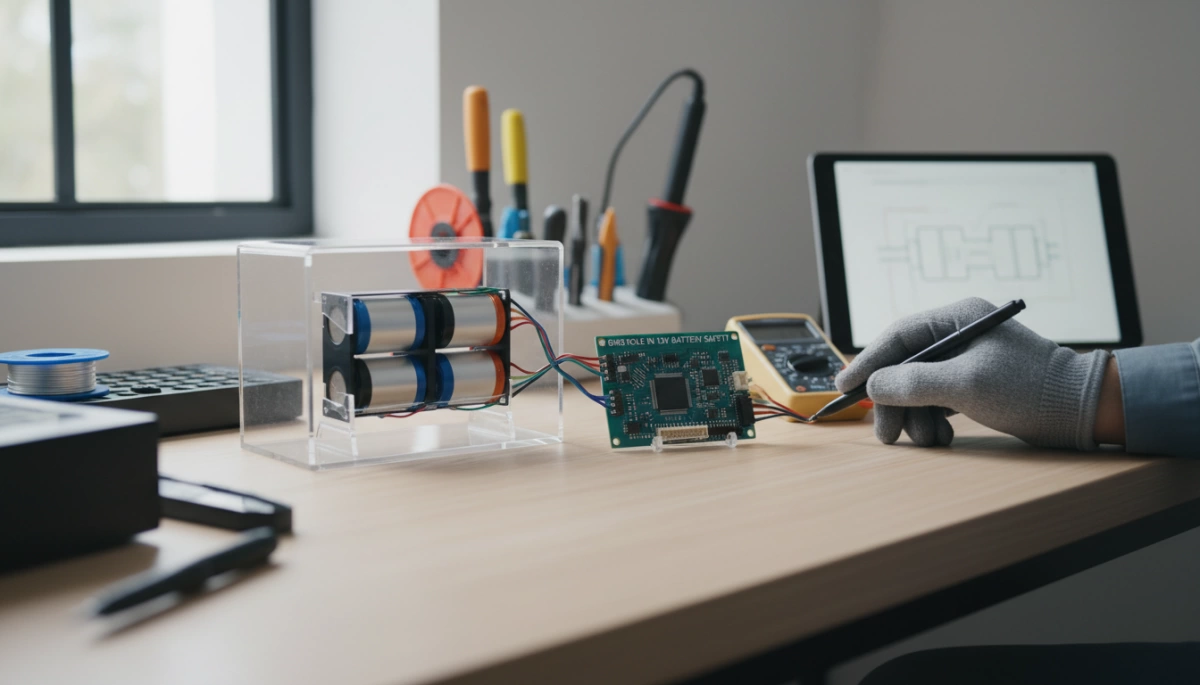
When you switch from old-school lead-acid to modern lithium technology, you aren\’t just changing chemistry; you are adding intelligence to your power setup. The Battery Management System (BMS) is a small electronic circuit board built directly inside the battery case. Think of the BMS as the \”brain\” or the dedicated bodyguard of the battery. Its sole job is to monitor the battery\’s health in real-time and intervene if things get risky.
While traditional batteries will blindly accept or release power until they fail, our LiFePO4 batteries use the BMS to ensure safe operation. This integrated intelligence is a major factor when comparing lithium-ion vs LiFePO4 safety, as it prevents the volatile failures often associated with other battery types.
How the BMS Acts as the \”Brain\”
The BMS constantly checks voltage, current, and temperature. If it detects a parameter moving outside the safe zone, it automatically disconnects the battery to prevent damage. This makes the battery \”worry-free\” for applications like fish finders, mobility scooters, and security systems.
Here is exactly what the BMS manages:
- Overcharge Protection: It stops the flow of electricity once the battery is full, preventing high-pressure buildup.
- Over-Discharge Protection: It cuts off power before the voltage drops too low, allowing you to use 100% of the capacity without killing the battery cells.
- Short Circuit Protection: If the terminals are accidentally bridged, the BMS shuts down the circuit instantly to prevent sparks or fire.
- Thermal Protection: It monitors internal heat, shutting down operation if the temperature gets too high during charging or discharging.
Sizing Guide: Which Amp-Hour (Ah) Do You Need?
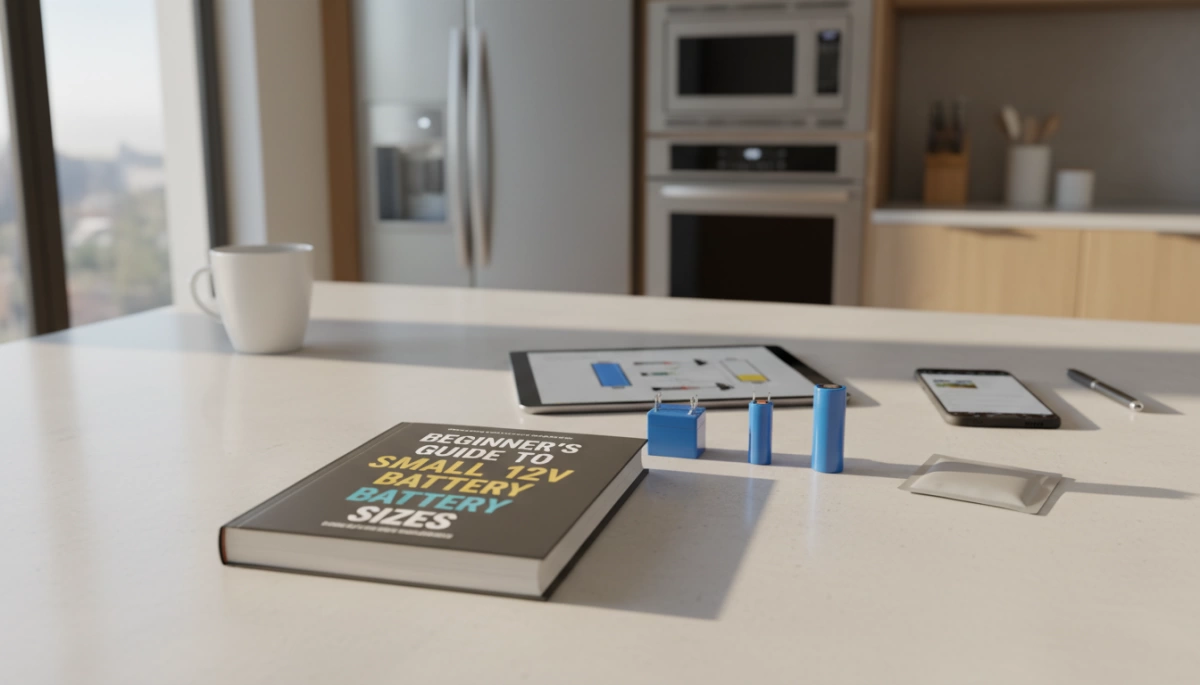
When selecting a battery, the Amp-hour rating (Ah) is essentially the size of your fuel tank. It determines how long your device will run before needing a recharge. Since our LiFePO4 batteries allow for 100% Depth of Discharge (DoD)—unlike the 50% limit of lead-acid—you effectively get double the usable power in the same physical size. Choosing the right capacity depends entirely on your specific application and power demands.
Lightweight Power: 7Ah to 10Ah
This range is the industry standard for compact, low-draw electronics. These batteries are incredibly light, making them the ideal portable power source for gear you have to carry.
- Home Security & UPS: The 7Ah model is the most common 12V 7Ah battery replacement for home alarm systems, gate openers, and Uninterruptible Power Supply (UPS) backups.
- Fish Finders: For kayak anglers, a 10Ah battery provides ample runtime for a fish finder battery setup without weighing down the boat.
- Small Electronics: Perfect for powering LED lighting strips or charging phones during camping trips.
Extended Run-Time: 12Ah to 20Ah
If you are powering motors or need gear to run all weekend, you need to step up to the 12Ah or 20Ah models. These pack significantly more energy density while remaining drop-in compatible with standard battery boxes.
- Mobility & Toys: This is the sweet spot for a ride-on toy battery upgrade (like Power Wheels) or mobility scooters. The consistent voltage of lithium keeps these vehicles running at full speed until the battery is empty, rather than slowing down gradually.
- Ham Radios: Amateur radio operators prefer the 20Ah model for field days to keep transceivers operational for longer periods.
- Solar Storage: A 20Ah battery is an excellent starting point for small, portable solar generators used in off-grid setups.
Physical Compatibility: Terminals and Dimensions
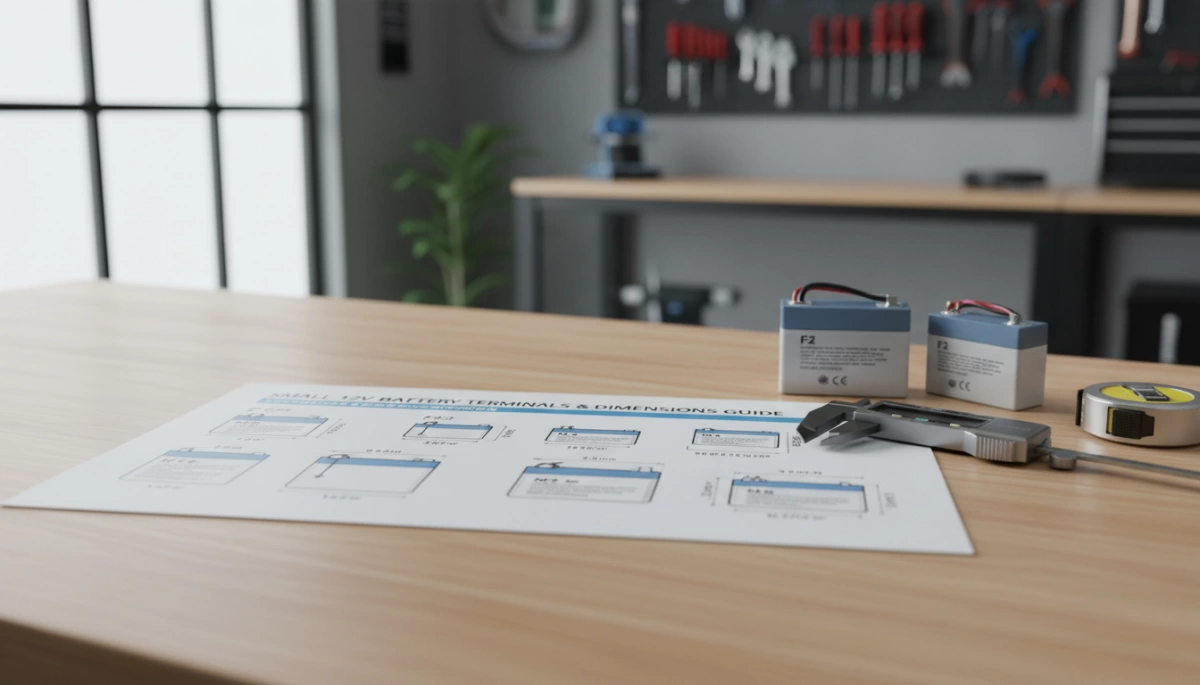
When upgrading your power source, voltage and capacity are only half the battle. If the battery doesn\’t physically fit into your device\’s compartment, the specs don\’t matter. We design our lithium lineup as direct \”drop-in\” replacements, meaning they match the standard physical dimensions of the Sealed Lead Acid (SLA) batteries they replace. However, you must pay close attention to the terminal type and physical measurements to ensure a hassle-free installation.
F1 vs F2 Terminals: Knowing the Difference
The most common frustration for new buyers is ordering the right battery with the wrong connectors. While they look similar, F1 vs F2 terminals have distinct size differences that affect compatibility.
- F1 Terminals (0.187\” width): These are narrower and typically found on older or lower-capacity batteries (often under 7Ah).
- F2 Terminals (0.250\” width): These are wider and designed to handle higher current loads.
Our entire range of 12V batteries—from the 12V 7Ah battery replacement up to the 20Ah models—utilizes standard F2 terminals. This ensures a robust connection capable of handling the higher efficiency and power output of lithium chemistry. If your device currently uses F1 connectors, you may need simple adapters, but for most modern fish finders, ride-on toys, and alarm systems, F2 is the preferred standard.
Check Your Group Sizes
Before you buy, grab a tape measure. While \”Group Sizes\” standardize battery dimensions across the industry, slight variations can occur between brands. Since lithium packs are significantly lighter than lead-acid, the weight won\’t be an issue, but the dimensions must match your battery box.
Key Sizing Tips:
- Measure Twice: Check the Length, Width, and Height of your current battery.
- Check Clearance: Ensure there is room for the terminals and wiring harness.
- Secure Fit: Since our LiFePO4 batteries are about 1/3 the weight of traditional lead-acid batteries, you may need to tighten your hold-down brackets or add foam spacing if the fit is loose in a vibration-heavy environment like a kayak or scooter.
Charging and Maintenance for Beginners
Switching from traditional lead-acid to modern lithium technology requires a slight adjustment in how you handle power management. While our LiFePO4 batteries are designed to be user-friendly, following the right charging and storage protocols ensures you get the full 2,000+ cycle life out of your investment.
The Charger Myth: Lead-Acid vs. LiFePO4 Chargers
A common misconception is that any 12V charger works perfectly for all 12V batteries. While you can often use a standard lead-acid charger to bulk charge a deep cycle battery, it is not optimal. Lead-acid chargers typically run at lower voltages and may have \”desulfation\” modes that send high-voltage spikes, which can trigger the Battery Management System (BMS) to shut down for protection.
For the best results, we recommend using a dedicated lithium iron phosphate charger. These chargers are programmed with the correct voltage curves (typically 14.4V – 14.6V) to ensure the battery cells are balanced and charged to 100% capacity.
Storage Tips and Self-Discharge Rates
One of the biggest advantages of LiFePO4 chemistry is its low self-discharge rate. Unlike Sealed Lead Acid (SLA) batteries, which can lose a significant amount of power while sitting on a shelf and suffer from sulfation, our lithium batteries hold their charge for months with minimal loss.
Quick Storage Guidelines:
- State of Charge: Store the battery at around 50% to 80% capacity if you aren\’t using it for a long time.
- Environment: Keep the battery in a cool, dry place.
- Orientation: Because there is no liquid acid to spill, these units are versatile. In fact, many users wonder if LiFePO4 batteries can be mounted on their side, and the answer is yes, making them perfect for tight spaces in kayaks or scooters.
Temperature Rules for Charging
Temperature plays a critical role in battery health. Our built-in BMS provides protection against high temperatures, but you must be mindful of the cold.
- Charging: Do not charge lithium batteries when the temperature is below freezing (32°F / 0°C). Doing so can permanently damage the internal cells.
- Discharging: You can safely use (discharge) the battery in colder temperatures, but efficiency may drop slightly compared to mild weather.
By sticking to these simple rules, you ensure your power source remains reliable for years, rather than just a few seasons.
Common Applications for Small 12V Batteries
Small-format 12V batteries are the unsung heroes of modern electronics. While they look like simple black boxes, upgrading to a deep cycle battery with LiFePO4 chemistry changes the game for specific applications. Here is where we see the biggest impact when switching from heavy lead-acid to lightweight lithium.
Outdoor Hobbies: Kayaks and Camping
For outdoor enthusiasts, weight is everything. A fish finder battery needs to be light enough to toss into a kayak hatch without weighing down the vessel. Our 12V 10Ah or 12Ah models are perfect here. They provide consistent voltage for sonar and GPS units all day long.
- Kayak Electronics: A 12V 10Ah LiFePO4 weighs roughly one-third of an equivalent SLA. That means less drag on the water and more room for tackle.
- Ham Radios: Operators need a clean, portable power source for field days. The flat discharge curve of lithium ensures the radio transmits at full power until the battery is empty.
- Camping Power: Small solar setups often utilize the 20Ah model to run LED lights and charge phones overnight without the bulk of a car battery.
Home Security and UPS Backups
Most home alarm systems and gate openers rely on a backup battery to function during outages. Traditionally, these use cheap lead-acid units that degrade quickly.
- Alarm Panels: The 12V 7Ah is the standard size for almost all home security boxes. It acts as a reliable UPS backup battery, keeping sensors active when the grid goes down.
- Gate Openers: These systems require consistent power delivery. Our built-in BMS handles the load while ensuring the battery provides worry-free operation for years, rather than months.
Mobility and Ride-On Toys
We frequently see parents looking for a ride-on toy battery upgrade for Power Wheels or electric scooters. Switching to lithium is a massive performance booster for these devices.
- Longer Playtime: Because you can use 100% of the capacity (unlike the 50% limit of lead-acid), kids get significantly more runtime per charge.
- Mobility Scooters: For mobility aids, the weight reduction makes the scooter easier to transport, and the 2,000+ cycle life means you won\’t be replacing the battery every season.
FAQ: Quick Answers for New Users
Can I Link Two Small Batteries Together?
Yes, you can connect multiple batteries to meet your specific power needs, provided they are identical in brand, voltage, and capacity. There are two main ways to do this:
- Series Connection: Connecting the positive terminal of one battery to the negative of the other increases the voltage (e.g., two 12V batteries become 24V) but keeps the Amp hour rating (Ah) the same.
- Parallel Connection: Connecting positive to positive and negative to negative keeps the voltage at 12V but doubles your capacity for a longer runtime.
Understanding the physics behind these connections is crucial for safety. The principles for increasing capacity are similar to connecting batteries in parallel, ensuring you get the most out of your portable power source without overloading the system.
How Do I Recycle My Old Battery?
Never throw a battery in your household trash. Traditional Sealed Lead Acid (SLA) batteries contain toxic lead and corrosive sulfuric acid that are hazardous to the environment. While our LiFePO4 batteries are eco-friendly and contain no heavy metals or acid, they still need to be processed correctly. Most auto parts stores and municipal recycling centers in the US accept both lead-acid and lithium batteries for free.
Is Lithium Safe Indoors?
Absolutely. Safety is often a concern due to news stories about lithium fires, but those usually involve different chemistries like Lithium Cobalt Oxide. Our batteries use LiFePO4 (Lithium Iron Phosphate), which is chemically stable and incombustible.
Furthermore, every Nuranu battery includes a built-in Battery Management System (BMS). This \”brain\” constantly monitors the battery to prevent overcharging, short circuits, and overheating. Because they don\’t off-gas like lead-acid batteries, they are perfectly safe for indoor applications like UPS backup batteries, home security systems, and medical mobility devices. You can read more about the safety profile of this chemistry in our guide on LiFePO4 vs. Lithium Ion differences.





 English
  German
  Spanish
  French
  Italian
  Polish
  Russian
  Thai
Thai  Turkish
  Japanese
  Korean