
The “Big Three” Performance Killers: Battery Anxiety and Degradation
We all know the feeling: you’re halfway through cleaning the living room, and the vacuum motor starts to whine, slow down, and eventually cut out completely. As engineers, we know that the heart of any cordless appliance is its power source. When asking what are common problems with cordless vacuums, the answer almost always points back to the battery technology. Here is the reality behind the “Big Three” issues that plague most consumer models.
The Runtime Myth: Why “up to 40 minutes” often means 10 minutes on “Max Mode”
Marketing specs can be incredibly misleading. You see “40-minute runtime” on the box, but that number is usually tested in “Eco Mode” with no motorized attachments running. The moment you switch to “Max Mode” to pull pet hair out of a carpet, the current draw spikes massively.
- The Math: High suction requires high wattage. A standard battery pack simply drains faster under that load.
- The Reality: Runtime on max mode often drops to a frustrating 6–10 minutes on standard models.
At Van4NU, we focus on high-capacity Li-ion cells (like 21700 formats) that offer higher energy density. This means we can pack more actual power into the same footprint, bridging the gap between marketing claims and real-world cleaning time.
Fade-Free Power: The difference between consistent suction and power that drops
Have you noticed your vacuum sounding “tired” as the battery bar drops? That is voltage sag, a symptom of poor power management. In cheaper systems, as the battery charge depletes, the voltage supplied to the motor drops, resulting in suction power loss right when you need it most.
True Fade-Free Power requires:
- Advanced BMS: A Battery Management System that regulates output.
- Consistent Voltage: Delivering steady power from 100% charge down to 1%.
We engineer our systems to maintain that “fresh off the charger” performance until the very last second. You shouldn’t have to guess if your vacuum is actually cleaning just because the battery is at 20%.
Lifespan Issues: The “throwaway culture” of non-removable batteries
Nothing is more frustrating than a perfectly good motor trapped inside a unit with a dead battery. Lithium-ion battery degradation is a chemical reality; all batteries lose capacity after a few hundred charge cycles.
- The Problem: Many brands seal the battery inside the handle. When the battery dies, the whole vacuum becomes e-waste.
- The Solution: A removable battery pack.
We champion modular designs. By allowing users to swap out the power pack, we extend the appliance’s life by years. It turns a catastrophic failure into a simple maintenance step, saving your wallet and the landfill.
Suction Power vs. Airflow Blockages
The Power Gap: Corded vs. Cordless Suction
When we compare cordless vs. corded suction, there is an undeniable physics challenge. Corded vacuums draw consistent amperage directly from the wall, allowing them to generate massive Pascal (Pa) pressure continuously. Cordless units are strictly limited by the battery’s discharge rate. Even with a high-end brushless digital motor, if the power source cannot sustain high voltage under load, the user experiences immediate suction power loss. The gap is narrowing, but it requires battery packs capable of high-drain output to match the raw lift of a plug-in canister.
The Filter Clog: Fine Dust and Pre-Motor Filters
Often, what feels like a dying battery is actually an airflow issue. Fine dust particles frequently bypass the primary cyclone and cake onto the pre-motor filters. This creates a dense wall that restricts air intake, choking the motor and reducing suction efficiency significantly.
- Rapid Clogging: Drywall dust or baking soda can clog a filter in seconds.
- Heat Buildup: Restricted airflow prevents the motor from cooling, triggering thermal shutoffs.
- False Diagnostics: Users often replace the battery when airflow blockage troubleshooting and filter cleaning are actually required.
Carpet Performance on High-Pile Rugs
Deep carpet cleaning remains the ultimate stress test for battery-operated devices. High-pile rugs create immense friction against the brush roll, forcing the motor to demand a sudden, massive spike in current to keep spinning. Standard batteries often fail here because they cannot deliver that burst of energy quickly enough. To prevent this, we utilize advanced testing methods, such as interpreting dQ/dV graphs for battery analysis, to ensure our cells maintain stability and power delivery even during the high-torque demands of cleaning thick carpets.
The Small Dust Bin Dilemma
Frequent Trips to the Trash
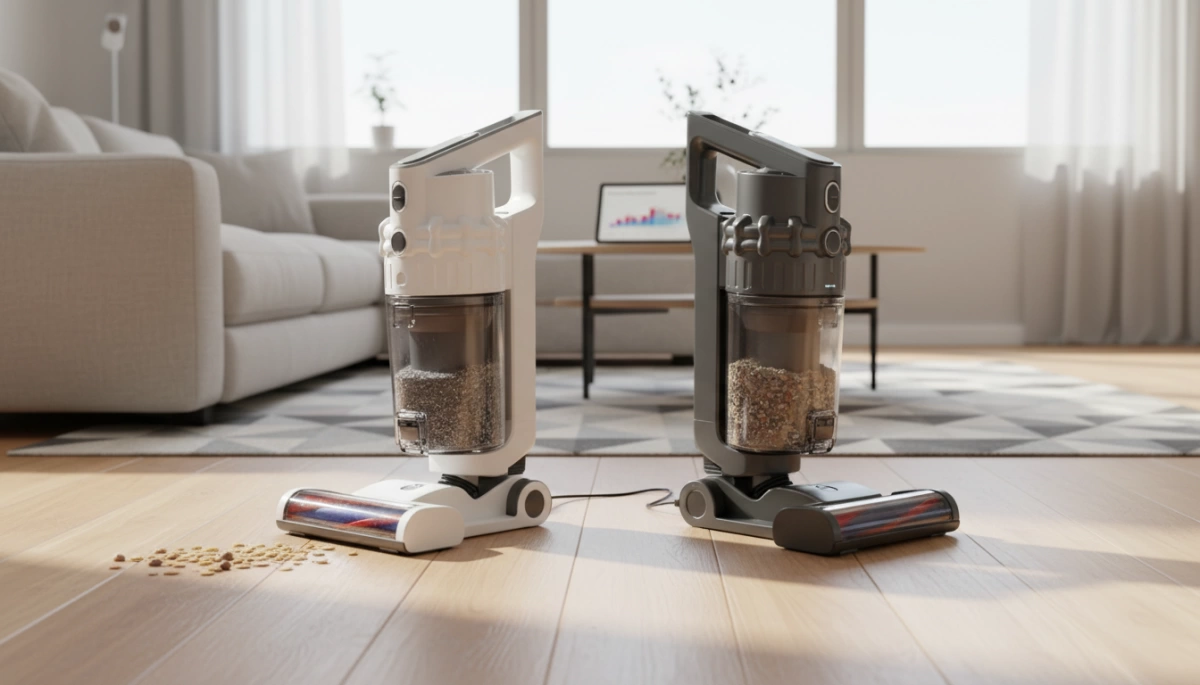
The biggest trade-off in optimizing stick vacuum weight distribution is almost always the collection capacity. To keep the unit lightweight enough for comfortable one-handed use, manufacturers often shrink the canister size. For the average American home—especially those with shedding pets—this creates a frustrating workflow interruption.
You aren’t just cleaning; you are constantly monitoring the fill line. A standard 0.4L to 0.6L dust bin capacity fills up incredibly fast when tackling high-pile carpets or heavy debris. Instead of cleaning the whole floor in one go, you are forced to stop, walk to the garbage, and reset multiple times per session. This inefficiency highlights why optimizing internal space—using compact components like high-density batteries—is critical for maximizing bin volume without increasing the device’s overall footprint.
The Messy Emptying Process
The convenience of “bagless” often disappears the moment you open the latch. Because the bins are compact, debris gets compacted tightly around the inner shroud, leading to the “dust cloud” problem.
- The “Dig Out” Factor: Gravity isn’t always enough. Users often have to reach in with their fingers or a tool to dislodge clumps of hair and dust that refuse to drop.
- Re-contamination: Releasing the dirt creates a plume of fine particulate matter. If you suffer from allergies, this “puff” of dust re-entering the air immediately counteracts the benefits of a high-quality filtration system.
Ergonomics and Durability Issues
When shifting from corded units to battery-operated systems, the physical burden moves from the floor to the user’s hand. This introduces distinct design challenges that directly impact user comfort and the long-term viability of the appliance.
Top-Heavy Design Strain
In traditional vacuums, the heavy components sit on the ground. In contrast, cordless stick vacuums cluster the motor, filtration system, and battery pack near the handle. This specific stick vacuum weight distribution creates a lever effect, placing significant torque on the wrist. Users frequently report wrist fatigue after just a few minutes of cleaning, particularly when reaching for overhead cobwebs or maneuvering around furniture. At Nuranu, we focus on high-energy-density cells to keep battery packs compact, helping manufacturers reduce this top-heavy sensation.
Trigger Finger Fatigue
To maximize runtime, many models utilize a “hold-to-run” trigger. While this prevents battery drain when moving between rooms, it requires constant finger pressure. This leads to cramping and discomfort during larger jobs. While effective for power management, it is often cited as a major annoyance compared to simple on/off switches found on corded counterparts.
Durability of Lightweight Plastics
To compensate for the weight of the motor and battery, manufacturers often utilize thinner, lightweight plastics for the body and dust bin. This trade-off often compromises structural integrity:
- Fragile Components: Dust bins and latches are prone to cracking if the unit is dropped or tipped over.
- Wear and Tear: Frequent opening of the bin wears down plastic catch mechanisms, leading to loose seals.
- Internal Pressure: If the power source isn’t managed correctly, thermal issues or expansion can stress the housing. Understanding what causes lithium-ion battery swelling is essential for preventing internal battery failures that can crack or deform these lightweight plastic casings.
Balancing a lightweight form factor with the ruggedness required for daily household use remains a critical engineering hurdle.
The Hidden Maintenance Burden
Owning a cordless vacuum often feels like a trade-off: you ditch the cord, but you inherit a new set of chores. Many users don’t realize that keeping these machines running requires a strict maintenance routine, or performance drops off a cliff. We see this constantly in the industry—great hardware fails early simply because the upkeep is more demanding than consumers expect.
Hair Wrap Headaches
If you have pets or long hair in your home, the brush roll is your enemy. Without advanced anti-tangle technology, hair tightly winds around the roller, stopping the bristles from agitating the carpet effectively.
- Manual Removal: You often end up flipping the vacuum over and using scissors to cut through layers of wrapped hair.
- Motor Strain: A jammed brush roll forces the motor to work harder, draining the battery faster and risking vacuum overheating protection shutdowns.
Filter Washing Schedule
The sealed filtration system in modern stick vacuums is great for air quality, but it clogs faster than bagged units. Fine dust coats the pre-motor filter, choking off airflow.
- Odor Buildup: Neglected filters start to smell like old dog or stale dust.
- Performance Loss: A clogged filter kills suction power instantly.
- Component Stress: Restricted airflow causes heat buildup. Excessive heat is actually one of the two major reasons affecting the service life of 18650 lithium batteries, leading to premature failure of the power pack. HEPA filter maintenance isn’t optional; it’s critical for longevity.
Blockage Hunting
When your vacuum starts making a “pulsing” sound (revving up and down), it’s usually a distress signal. This indicates a blockage somewhere in the air path. Airflow blockage troubleshooting involves dismantling the unit to check the wand, the bin inlet, and the cleaner head. It’s a messy process that turns a quick cleanup into a 20-minute repair job.
How to Avoid Common Cordless Vacuum Pitfalls (The Van4NU Solution)
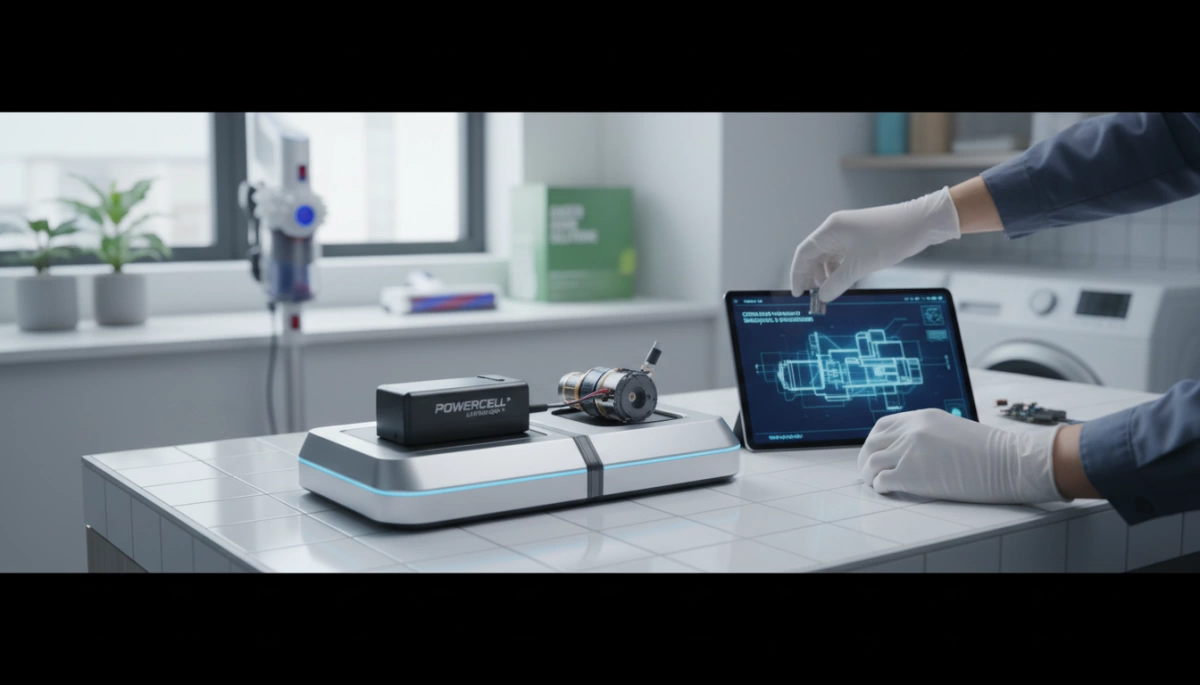
We know that a cordless vacuum is only as reliable as the power system driving it. At Van4NU, we tackle the “throwaway culture” of appliances by engineering robust energy solutions that address the root causes of failure. By integrating advanced lithium technology with smart design, we help manufacturers eliminate the frustrations of weak suction and short lifespans.
The Battery Solution: Swappable Batteries & Power Management
The biggest flaw in many stick vacuums is a non-removable power source. When the cells die, the whole machine becomes trash. We advocate for and manufacture removable battery pack systems using high-quality 18650 and 21700 cells. This allows users to swap packs for extended cleaning sessions without waiting for a recharge.
Our custom Battery Management Systems (BMS) are the brain behind the brawn. They actively monitor voltage and temperature to prevent lithium-ion battery degradation. Understanding the safety mechanisms inside these packs is crucial; for instance, knowing the difference between protected 18650 batteries vs unprotected 18650 batteries ensures we deliver safe, long-lasting power.
Our Power Management Advantages:
- Consistent Voltage: Prevents power fade as the battery drains.
- Thermal Safety: Advanced heat dissipation prevents shutdowns.
- Extended Cycle Life: Optimized charging protocols reduce wear.
Smart Motor Technology: Brushless Efficiency
Raw power means nothing if it overheats the machine. We pair our high-discharge lithium packs with modern brushless digital motor technology. Unlike older brushed motors that generate friction and heat, brushless systems are more efficient and durable.
Our 24V and 36V battery platforms provide the sustained amperage needed to run these motors at peak performance. This eliminates suction power loss and ensures the vacuum can actually handle deep carpet cleaning without triggering vacuum overheating protection circuits prematurely.
User-Centric Design Features
By switching to energy-dense lithium solutions, we reduce the weight of the power pack by up to 70% compared to older technologies. This weight reduction allows for better ergonomics and frees up space for essential features like larger dust bins and advanced filtration systems.
Optimized Design vs. Standard Issues:
| Feature | Standard Vacuum Issue | The Van4NU Approach |
|---|---|---|
| Runtime | 10 mins on “Max Mode” | Optimized runtime on max mode via high-capacity cells |
| Filtration | Clogged filters reduce airflow | Consistent power maintains airflow for HEPA filter maintenance |
| Emptying | Messy, complicated bins | Compact battery allows space for one-touch empty mechanisms |
We focus on the “drop-in” capability of our technology, meaning we can upgrade existing product lines from concept to production in weeks, ensuring the end user gets a powerful, lightweight tool that actually lasts.
Frequently Asked Questions About Cordless Vacuum Problems
Do cordless vacuums lose suction over time?
Yes, but it isn’t always the motor’s fault. Suction loss usually happens for two main reasons: blocked airflow or battery degradation. As filters get clogged with fine dust, the airflow drops significantly. On the power side, older battery technologies or poorly designed packs suffer from voltage sag as they deplete. We focus on engineering lithium-ion battery packs with stable discharge curves, ensuring the vacuum maintains consistent suction from the first minute to the last, rather than fading as the charge drops.
How long do cordless vacuum batteries actually last?
Most standard lithium-ion batteries in vacuums are rated for about 300 to 500 charge cycles. For the average American household, this translates to roughly 2 to 4 years of useful life before you notice a significant drop in runtime. However, heat and storage habits play a huge role. Leaving a battery on the charger in a hot room can degrade it faster. If you are unsure if your device is performing up to spec, reading up on how long a vacuum cleaner battery should last can help set realistic expectations for replacement intervals.
Is a stick vacuum good for pet hair?
Absolutely, provided it has the right specs. A stick vacuum needs two things to handle pet hair effectively:
- High Suction Power: To pull hair embedded deep in carpet fibers.
- Motorized Brush Roll: To physically agitate the rug and prevent tangles.
Without a specialized brushless digital motor and a battery capable of sustaining high-drain output (Max Mode), pet hair can easily stall the brush roll or clog the intake.
Can you replace the battery in a cordless vacuum?
This depends entirely on the manufacturer’s design. Many modern stick vacuums now feature removable battery packs, allowing you to snap in a fresh one when the old one dies or runs out of juice mid-clean. However, some cheaper or older models still use built-in batteries that are difficult to service. From a manufacturing perspective, we always advocate for swappable designs—it extends the product’s lifespan and reduces electronic waste.




 English
  German
  Spanish
  French
  Italian
  Dutch
Dutch  Polish
  Russian
  Thai
Thai  Turkish