
We hear this constantly from fleet operators and daily commuters looking to eliminate range anxiety: “Can I add an extra battery to my electric scooter?” The short answer is unequivocally yes, but it absolutely requires precision engineering.
Not a Simple Plug-and-Play Electric Scooter Battery Replacement
Integrating an external battery for e scooter models or adding a secondary internal pack is a highly effective way to double your operational range. However, treating this like a simple plug-and-play electric scooter battery replacement is a massive mistake. Hacking a secondary e scooter battery pack onto an existing drivetrain without understanding the underlying system architecture is a fast track to hardware failure and severe safety risks.
Precise Integration and Electric Scooter Battery Wiring Diagram
[Image of electric scooter battery wiring diagram]
To successfully engineer a dual-battery setup, you must strictly adhere to the science of battery integration. Whether you are scaling a 36v lithium battery for electric scooter fleets or upgrading a high-torque 48v battery for electric scooter platform, precise integration demands three non-negotiable elements:
- Exact Voltage Matching: The primary and secondary packs must share the identical nominal and resting voltage. Failing to match voltages exactly will result in a violent current inrush from the higher-voltage pack to the lower one, risking immediate component burnout.
- Identical Cell Chemistry: You cannot mix cell types. A scooter lithium battery must be paired with the exact same lithium-ion chemistry to ensure stable, predictable discharge rates and maintain structural integrity.
- Strict BMS Compatibility: The electric scooter battery bms (Battery Management System) on both packs must be explicitly engineered to handle parallel discharge safely. Without a compatible BMS or a proper discharge balancer, you lose critical safeguards against overcharging and thermal events.
Why Add a Secondary Battery to a Mobility Device?
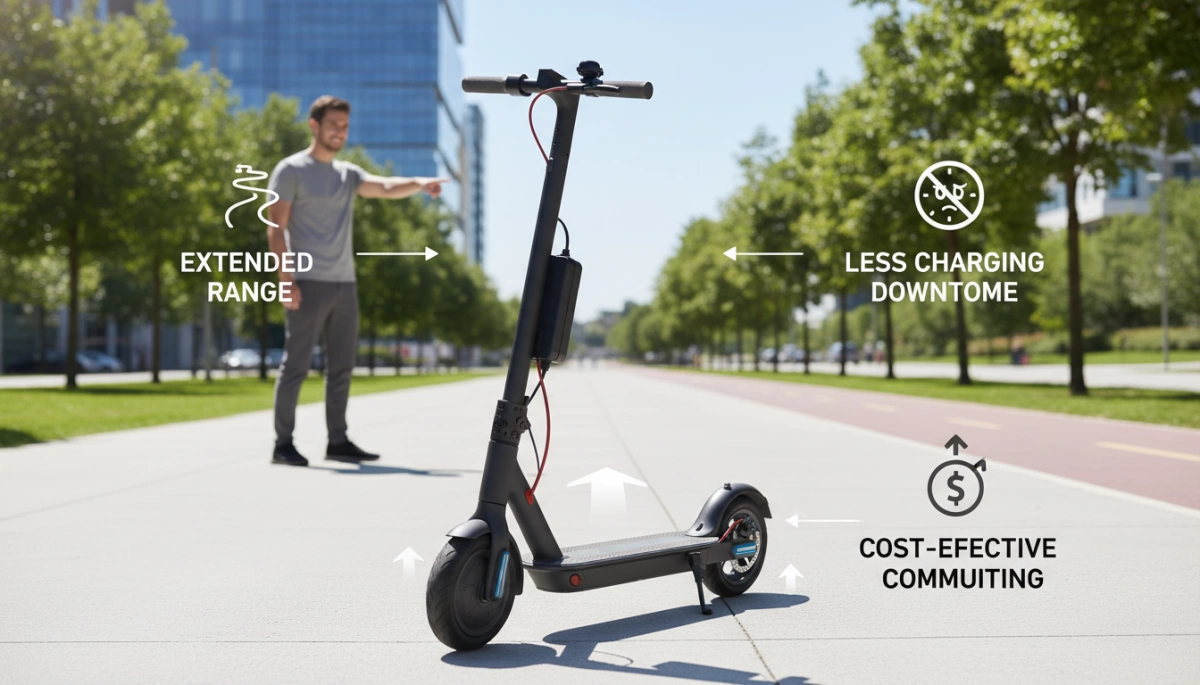
If you rely on your ride for daily commuting or fleet deliveries across sprawling cities, you already know the limitations of a stock setup. I always tell my clients that upgrading your power system is about more than just avoiding a dead battery on the side of the road—it fundamentally transforms your vehicle’s capability and longevity.
Eliminating Range Anxiety
The most obvious benefit of adding an external battery for e scooter is pure distance.
- Double Your Range: Hit the road without constantly checking your battery gauge or searching for an outlet.
- Boost Fleet Efficiency: Delivery riders can benefit from extended operational hours, drastically reducing daily charging downtime.
- Uninterrupted Commutes: Achieve that true electric scooter long battery life necessary for reliable, cross-town travel.
Reducing Battery Strain
Beyond raw distance, there is a massive hidden mechanical advantage to a dual-battery setup known as current sharing. When you draw power across two parallel packs, you drastically reduce the physical stress on your system.
- Lower C-Rate: Each battery works half as hard to push out the required power.
- Thermal Control: Less individual strain means less heat generation, preventing premature component burnout.
- Maximum Lifespan: Whether you are upgrading your main system or using a dedicated 12v lithium battery module to balance your power needs, sharing the electrical load significantly extends your overall e scooter battery life.
By distributing the workload, an upgraded electric scooter battery pack doesn’t just get you further down the road—it protects your core hardware investment for the long haul.
Would you like me to draft the next section outlining the technical science of Series vs. Parallel battery integration?
The Science of Adding an Extra Battery: Series vs. Parallel
When we engineer custom power solutions, the way we wire the cells fundamentally dictates the vehicle’s performance. You generally have two options when integrating a secondary electric scooter battery pack, and they yield vastly different results. It comes down to basic physics: do you want to go further, or do you want to go faster?
- Parallel Configuration (The Range Booster):
This is the most common method for commercial fleets and commuters. By connecting two identical packs (e.g., a 36v lithium battery for electric scooter wired to another 36V pack) positive-to-positive and negative-to-negative, you maintain the system voltage but combine the amp-hours (Ah).- Result: You effectively double your range and achieve electric scooter long battery life without changing the scooter’s speed or risking damage to the motor.
- Benefit: This setup reduces the strain on each individual cell, as the load is shared. If you are unsure about your current setup, understanding how to calculate 18650 battery capacity is the first step to matching packs correctly.
- Series Configuration (The Speed Booster):
This involves connecting the positive terminal of one battery to the negative terminal of another. For example, adding a 12V battery to a 36V system creates a 48v battery for electric scooter output.- Result: Higher voltage forces the motor to spin faster, increasing top speed and torque.
- The Warning: While the speed boost is tempting, this is risky for stock components. Most factory-installed controllers and motors are not rated for the increased voltage. Without upgrading your entire electrical system, a series connection often leads to overheating and rapid component burnout.
Critical Rules for Your Scooter Battery Connection
If you are still asking, “Can I add an extra battery to my electric scooter?” the answer is absolutely yes—but parallel integration requires precision. Whether you are hooking up an external battery for e scooter range extensions or wiring a secondary internal pack, you cannot just plug them together and hit the throttle. You have to follow strict rules to avoid damaging your components or causing a serious safety hazard.
Match Voltages Exactly
The biggest mistake I see when riders modify their electric scooter battery pack is ignoring voltage levels before making the final connection.
- The 0.2V Rule: Before connecting them in parallel, both battery packs must be within 0.1V to 0.2V of each other.
- The Danger of Inrush: If you connect a fully charged 48v battery for electric scooter to a depleted one, the full battery will instantly try to charge the empty one. This massive current inrush can melt your electric scooter battery wiring diagram, blow the BMS, or even trigger a fire. Always test both packs with a multimeter first.
Chemistry and Capacity Compatibility
Your batteries need to speak the same language. Mixing incompatible components is a quick way to ruin your e scooter battery life.
- Never Mix Chemistries: If your stock setup uses a lithium-ion battery, your extra pack must also be lithium-ion. Never try to bridge an old lead-acid battery with a modern lithium battery for e scooter.
- Cell Matching: For a safe and stable scooter battery connection, ensure the cells in both packs have compatible discharge rates. If you are ditching the off-the-shelf options to build a custom lithium ion battery pack, structural integrity is just as crucial as the cell chemistry. Using the correct techniques, like accurately spot welding 18650 batteries, keeps internal resistance low and ensures the packs share the current load safely and evenly.
Electric Scooter Battery BMS
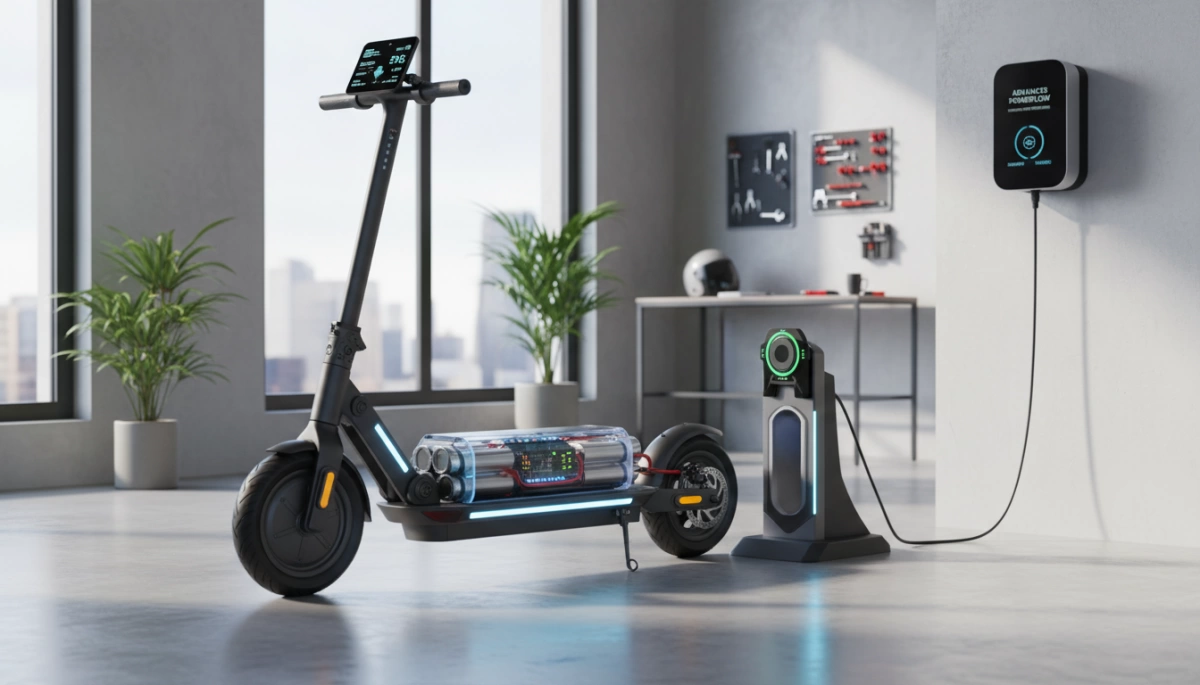
When riders ask me, “Can I add an extra battery to my electric scooter?“, they often overlook the actual brain of the operation: the Battery Management System (BMS). Wiring two high-capacity packs together isn’t as simple as twisting a few cables and hoping for the best.
Ditch the DIY Y-Splitters
If you’re hunting for an electric scooter battery wiring diagram online, you might be tempted to use a cheap, off-the-shelf Y-splitter for your scooter battery connection. I highly advise against this. Here is why:
- Dangerous Current Inrush: If one pack is at 100% charge and the other is at 50%, a direct parallel connection forces a massive, uncontrolled wave of current into the weaker battery. This can easily melt wires or cause a fire.
- The Smart Fix: You absolutely need a dual-battery discharge balancer or an automatic switch module. This hardware acts as a traffic cop, safely managing the load between your internal deck battery and your new external battery for e scooter. It shifts power seamlessly and keeps the current shared without overloading the system.
The Power of Real-Time Protection
Whether you are running a standard 36v setup or upgrading to a high-capacity 48v battery for electric scooter, an advanced electric scooter battery bms is non-negotiable for integrating a secondary pack.
Here is exactly what a high-quality BMS handles behind the scenes:
- Real-Time Monitoring: It constantly tracks voltage and current levels across both the primary and secondary packs to ensure they drain evenly and safely.
- Overcharge Protection: It immediately cuts off excess voltage to protect your cells, especially during aggressive regenerative braking or when plugged into a fast e scooter battery charger.
- Thermal Management: It monitors temperatures to keep your custom lithium ion battery pack cool during steep hill climbs or long summer commutes.
- Predictive Diagnostics: A smart BMS catches unbalanced cells before they permanently fail. Without proper balancing, a severe voltage drop could trip the safety circuit, leaving you stranded and forcing you to figure out how to wake a sleeping lithium-ion battery pack just to salvage your investment.
Whether you’re trying to figure out how to wire a 24v battery for a electric scooter or building a heavy-duty dual 60V setup, pairing your batteries with a proper discharge balancer and a smart BMS is the only way to double your range safely.
Safety First: Electric Scooter Battery Certifications
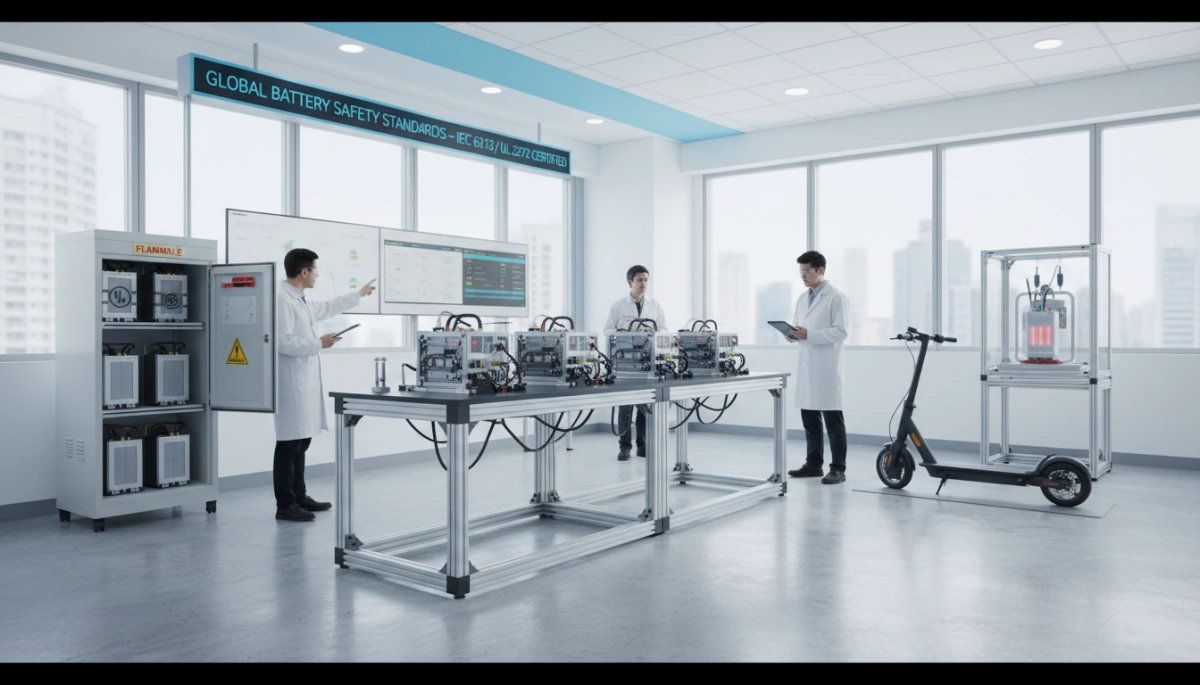
When you decide to add an external battery for an e-scooter, safety isn’t optional. I’ve seen too many riders try to save a few bucks with cheap, unverified aftermarket packs. This is a massive mistake. Low-quality lithium cells are highly prone to thermal runaway—a dangerous chain reaction where the battery rapidly overheats and catches fire. Whether you are wiring up a standard electric scooter battery pack or upgrading a heavy-duty lithium ion battery mobility scooter, guaranteed stability is your baseline. Understanding the proper use of 18650 lithium batteries is a good start, but the manufacturing standards of the pack itself matter most.
Essential Global Standards
We don’t mess around with unregulated power sources in the US market. If you are doing an electric scooter battery replacement, the secondary pack must meet strict global safety and compliance standards to protect your investment and your home:
- UL Certification: The absolute gold standard for electrical safety in the United States, rigorously testing the pack for fire, short-circuit, and shock hazards.
- UN38.3: Legally required for safe transport. It ensures your e scooter battery pack won’t violently react to extreme vibrations, severe impacts, or sudden pressure changes.
- IEC 62133 & CE: Crucial international benchmarks confirming the safe operation, physical integrity, and chemical stability of portable lithium cells.
Automated Cell Sorting and EOL Testing
To guarantee an electric scooter long battery life and zero dangerous defects right out of the box, the internal engineering process has to be flawless. For a truly reliable custom lithium ion battery pack, we demand two mandatory quality control steps at the factory level:
- Automated Cell Sorting: Before assembly even begins, automated machines test and group individual cells by their exact voltage and internal resistance. This keeps the entire pack perfectly balanced and prevents weak cells from dragging down the rest of the system.
- 100% EOL (End-of-Line) Testing: Every single replacement electric scooter battery must pass rigorous real-world discharge, charge, and BMS communication tests before it ever leaves the factory floor. No exceptions, no skipping steps.
Custom OEM/ODM Solutions vs. Off-the-Shelf Hacks
When riders ask, “Can I add an extra battery to my electric scooter?“, they often picture a cheap, off-the-shelf hack. Taping an external battery to the stem and splicing wires might seem like a quick fix, but the hidden costs catch up fast. Between blown controllers, mismatched cells, and safety hazards, a DIY setup often leads to a massive e scooter battery replacement cost down the road.
Instead of forcing incompatible parts together, we engineer proper, purpose-built setups. Whether you are upgrading a personal ride or managing a shared fleet across the US, choosing custom OEM/ODM solutions provides reliability that a duct-tape job simply can’t match.
The True Cost of Battery Hacks
- Unsafe Enclosures: Cheap, strap-on external bags lack the waterproofing and impact resistance required for daily city commuting.
- BMS Conflicts: Two random batteries will fight each other for discharge dominance without a professionally installed balancer module.
- Voided Warranties: Splicing into the factory wiring instantly kills your manufacturer warranty and risks frying the electronics.
Why Proper Engineering Wins
Building a reliable electric scooter with removable battery capabilities requires precision. By leveraging rapid prototyping and scalable manufacturing, we create enclosures that seamlessly integrate with your scooter’s existing geometry.
Here is exactly what a professional custom integration delivers:
- Custom Voltage Platforms: Seamlessly matched systems engineered for your specific ride, whether you need a dedicated 24V setup, a dependable 36v electric scooter battery pack, or a high-torque 48v battery for electric scooter applications.
- Swappable Enclosures: Engineered mounts that click perfectly into place, keeping the custom lithium ion battery pack locked down and safe from heavy road vibrations.
- Long-Term Reliability: Professionally matched cell chemistries maximize electric scooter long battery life without risking thermal runaway.
If you are serious about doubling your range, skip the sketchy parallel wiring hacks. Proper engineering guarantees you get those extra miles safely, efficiently, and exactly how the scooter was meant to be ridden.







 English
  German
  Spanish
  French
  Italian
  Polish
  Russian
  Thai
Thai  Turkish
  Japanese
  Korean