
Decoding Electric Scooter Specs: Volts, Amps, and Watts
For OEMs and fleet managers, understanding the relationship between electric scooter voltage vs wattage is critical for designing reliable mobility solutions. It’s not just about raw numbers; it’s about how these metrics interact to define the speed, torque, and range of your vehicle. Here is the breakdown of the core electrical concepts that drive our custom battery engineering.
Volts (V) – The Pressure
Think of Voltage as the “push” or pressure behind the electricity. It determines how fast energy can be delivered to the motor. In the low-speed mobility sector, we primarily engineer solutions around two standard platforms:
- 24V Systems: Optimized for standard e-scooters and AGVs requiring sustained discharge and rapid charging capabilities.
- 36V Systems: Designed for professional-grade applications, offering higher discharge rates and the “push” needed for better acceleration and hill-climbing performance.
Amps (A) & Amp-hours (Ah) – The Current and Capacity
While voltage is the pressure, Amps (A) represent the volume of electricity flowing through the system at any given moment. This flow is what generates the torque to get the scooter moving.
Amp-hours (Ah), on the other hand, represent the size of your “gas tank.”
- Ah Rating: Tells you how much energy is stored.
- Real-World Impact: A higher Ah rating means a larger capacity, allowing the scooter to run longer between charges. When we design a lithium ion battery for electric scooter applications, maximizing Ah within a compact enclosure is key to extending fleet uptime.
Watts (W) & Watt-hours (Wh) – The Total Power
Watts are the ultimate measure of your scooter’s performance. This is the figure that tells you how powerful the motor is.
- Watts (W): Calculated by multiplying Volts x Amps. This determines top speed and climbing ability.
- Watt-hours (Wh): This is the true indicator of range. While Ah measures capacity, Wh measures the total energy available to do work.
To accurately calculate scooter wattage requirements or estimate range, you must look at the Watt-hours. A 36v electric scooter battery with high Wh will consistently outperform lower-energy alternatives, ensuring your riders reach their destination without range anxiety.
How to Calculate Volts to Watts for Your Electric Scooter
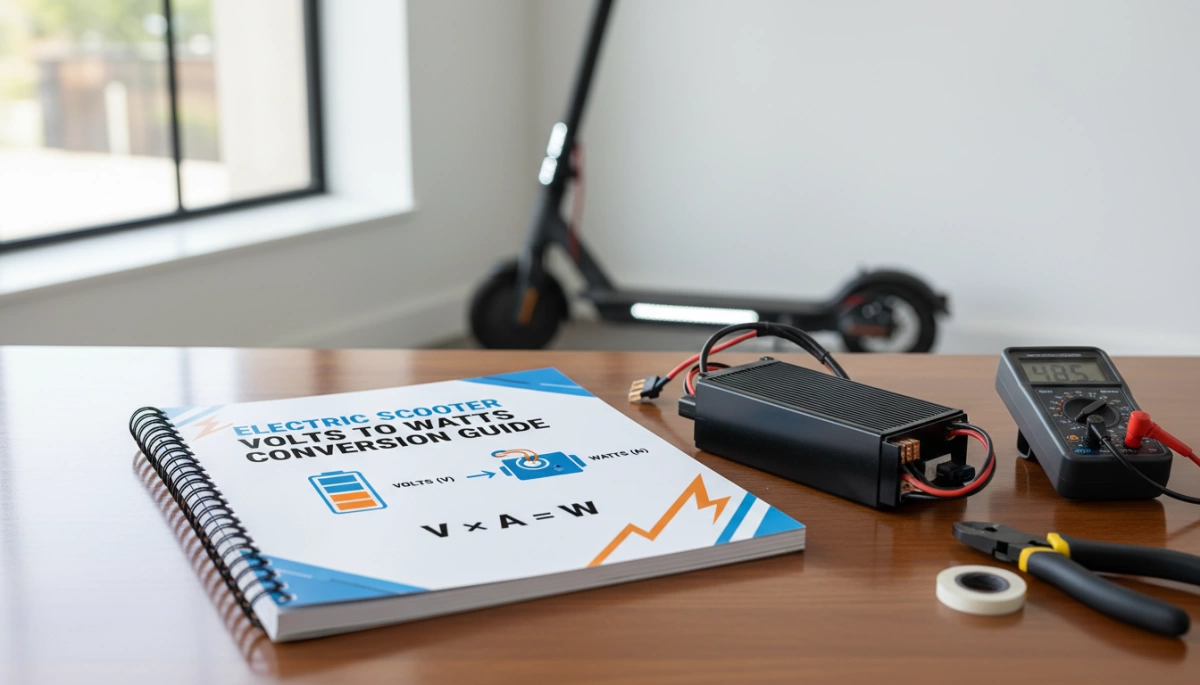
Understanding the relationship between voltage and wattage is essential when designing or upgrading electric mobility systems. As manufacturers, we often guide clients through these calculations to ensure their electric scooter motor kit with battery selection matches their performance goals. The math is straightforward, but getting it right determines whether your scooter climbs that hill or stalls halfway up.
The Formula in Action
The basic formula for electrical power is Watts (W) = Volts (V) × Amps (A).
Let’s look at a real-world scenario using one of our standard configurations. Suppose you are integrating a 36V Nuranu lithium battery into a mid-range commuter scooter. If the scooter’s controller draws a peak current of 15 Amps, here is how you calculate the peak power output:
- Voltage: 36V
- Current: 15A
- Calculation: 36 × 15 = 540
- Result: 540 Watts of peak power.
This calculation helps you verify if a specific electric scooter battery 36V pack can deliver enough raw power to the motor without overheating the system. For professional applications, such as delivery fleets or industrial AGVs, we often customize the BMS (Battery Management System) to handle higher amperage for sustained periods, ensuring reliable torque under load.
Quick Reference Conversion Chart
To save you time, we’ve compiled a reference table for common electric scooter voltage vs wattage configurations found in the US market. This chart assumes peak controller output to help you estimate potential motor performance.
| System Voltage | Controller Current (Amps) | Peak Power Output (Watts) | Typical Application |
|---|---|---|---|
| 24V | 10A | 240W | Entry-level / Kids’ Scooters |
| 24V | 20A | 480W | Standard Commuter Scooters |
| 36V | 15A | 540W | Mid-Range Mobility |
| 36V | 20A | 720W | High-Performance Commuter |
| 48V | 20A | 960W | Heavy-Duty / Uphill Capability |
| 48V | 30A | 1440W | Pro/Off-Road Scooters |
If you are looking to build a custom solution, such as a 6V lithium battery setup for smaller auxiliary systems or a high-voltage powertrain, our engineering team can help match the right cells to your specific power requirements.
Speed, Torque, and Range: How the Numbers Impact the Ride
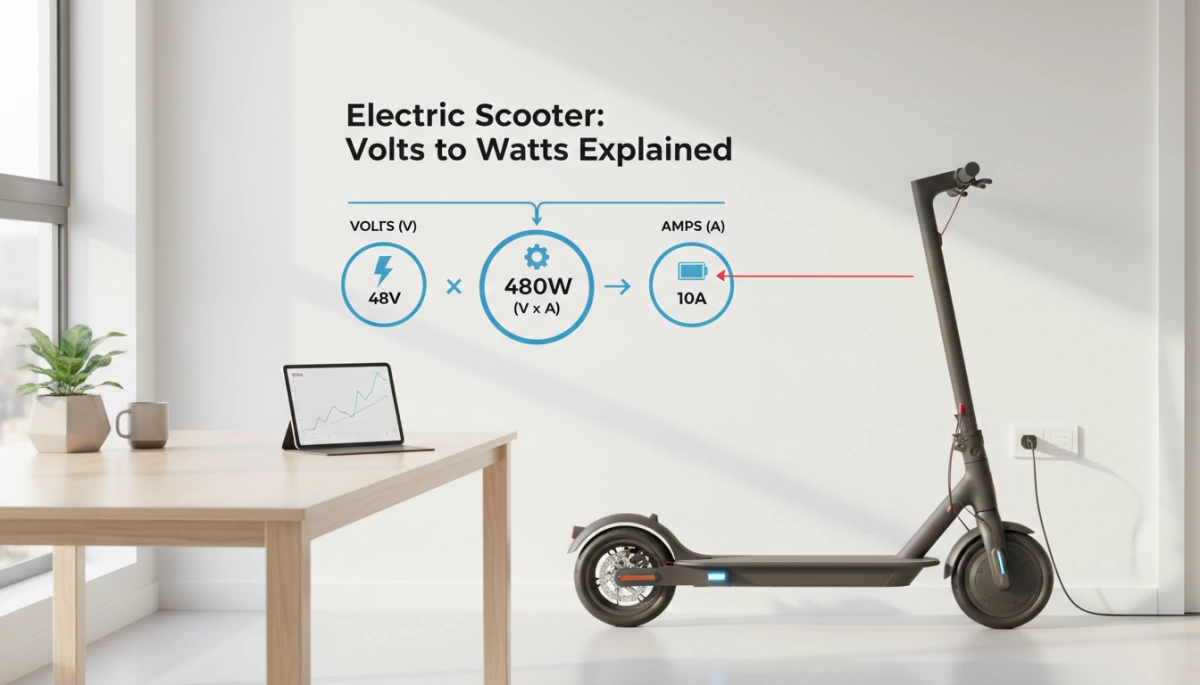
Understanding electric scooter voltage vs wattage is the secret to knowing exactly how your ride will perform on the pavement. These numbers dictate everything from your top speed to how well you handle steep hills on your daily commute.
Higher Voltage vs. Higher Amperage
Not all 500W motors behave the same way. The power delivery heavily depends on the system’s voltage:
- 24V Systems: Running a 500W motor on a standard 24v electric scooter battery requires a high amount of amperage. Pushing more amps creates excess heat, which drains efficiency and accelerates wear on your internal components.
- 36V Systems: Generating that same 500W through an electric scooter battery 36v requires significantly fewer amps. This keeps the motor and controller running cooler, maximizing your energy efficiency and extending the lifespan of your hardware.
Hill Climbing and Acceleration
When you hit a tough incline, continuous wattage isn’t enough—you rely on peak wattage. Peak wattage is the absolute maximum burst of power your motor can produce. A high peak wattage directly translates to aggressive off-the-line acceleration and the raw torque necessary to conquer steep hills without your scooter bogging down.
Battery Life and Range
If you want to know how far you can travel, focus on Watt-hours (Wh). This is the true indicator of the battery capacity of electric scooter systems.
- The Formula: You don’t need an advanced electric scooter range calculator to figure this out. Simply divide your battery’s total Watt-hours by your scooter’s average efficiency. A standard commuter scooter uses about 15 Wh per mile.
- The Real-World Range: A 360Wh battery divided by 15 Wh per mile gives you an estimated range of 24 miles on a single charge.
- The Chemistry: Maximizing those Watt-hours comes down to the cells powering your deck. Researching and choosing an 18650 lithium battery or a lithium polymer battery for your electric vehicle will drastically improve your long-term range retention, weight distribution, and overall reliability.
Scooter Battery Upgrade: Lead-Acid to Lithium

I’ve seen firsthand how a simple electric scooter battery replacement can completely transform an older fleet. Swapping out outdated lead-acid units for high-wattage lithium power is the smartest operational upgrade you can make, instantly optimizing your electric scooters volts to watts conversion for actual road performance.
The Weight Advantage
Dropping a custom lithium ion battery for electric scooter into your deck cuts the power source weight by up to 70%. This massive reduction instantly improves your scooter’s Watt-to-weight ratio without needing a larger motor.
- Faster Acceleration: Less dead weight means your controller translates Watts into speed much faster.
- Better Handling: A lighter scooter is significantly easier to maneuver on busy city streets.
- Peak Efficiency: Your motor doesn’t have to work as hard to push a heavy frame, making every single Watt count toward your range.
Electric Scooter Battery Life and ROI
You don’t need to redesign your entire scooter to get better performance. Working with custom electric scooter battery manufacturers allows you to drop a high-power lithium pack straight into your existing setup. The return on investment is obvious the moment you look at the longevity:
- Triple the Lifespan: Lithium upgrades easily last three times as long as traditional lead-acid bricks.
- Consistent Capacity: Because modern lithium-ion batteries don’t suffer from a memory effect, you get reliable electric scooter battery life without permanently losing capacity after partial charges.
- Long-Term Savings: While the initial swap requires an investment, eliminating the cycle of constant lead-acid replacements drastically lowers your maintenance overhead.
Safety and Compliance in High-Power Scooter Batteries
When we talk about calculating an electric scooter volts to watts conversion to maximize speed and torque, we have to talk about safety. Pushing higher wattage through a system naturally generates more heat. If that heat isn’t managed correctly, you risk component failure or, worse, electric scooter battery fires.
The Critical Role of the Electric Scooter Battery BMS
An advanced electric scooter battery BMS (Battery Management System) is absolutely non-negotiable for high-power rides. Think of the BMS as the onboard security detail for your lithium ion battery for electric scooter. It actively monitors the pack to ensure every individual cell operates within safe limits. Whether your system uses larger custom cells or standard formats—and understanding what an 18650 battery size is helps you appreciate how tightly these energy-dense cells are packed—the BMS is what keeps the thermal dynamics in check.
Key BMS protections include:
- Overcharge Protection: Instantly stops the charging cycle when the battery is full, preventing thermal runaway and extending the overall electric scooter battery life.
- Short-Circuit Protection: Cuts power immediately if a fault is detected, protecting the motor, the wiring, and the rider.
- Thermal Management: Throttles output if the electric scooter battery pack gets too hot during aggressive riding or steep hill climbs.
Industry Standards and Certifications
Are electric scooter batteries safe? Yes, but only if they are built and tested to strict standards. Before any high-wattage battery upgrade hits the US market, it needs to pass rigorous safety checks.
We look for the following non-negotiable benchmarks:
- 100% End-of-Line (EOL) Testing: Every single battery must be tested under full electrical load before it ever leaves the factory floor. No random sampling; every unit is verified.
- UN38.3 Certification: This guarantees the battery is safe for transport and can handle altitude, extreme thermal variations, and heavy vibration shocks.
- IEC 62133 & CE: The gold standard global certifications confirming the battery meets strict, standardized electrical safety requirements.
Upgrading your wattage is the best way to boost your scooter’s performance, but relying on tested, certified components with a smart BMS is what actually guarantees you get home safely.







 English
  German
  Spanish
  French
  Italian
  Polish
  Russian
  Thai
Thai  Turkish
  Japanese
  Korean