
Matching Voltage to Motor Requirements
Have you ever deployed a fleet of scooters only to receive complaints that they struggle up minor hills or suddenly lose top speed? When we consult with buyers looking for wholesale electric scooter batteries, the very first technical hurdle we tackle is voltage. Getting this wrong doesn’t just hurt performance; it destroys the rider experience and ultimately inflates your long-term electric scooter battery replacement cost due to premature component wear.
Think of voltage as the “pressure” that pushes electrical current from the battery to the scooter’s motor. It serves as the baseline that dictates both your top speed and overall power delivery.
- Speed and Torque Control: An electric scooter battery 36v system offers a vastly different ride profile than an electric scooter battery 48v setup. Higher voltage pushes more power through the controller, delivering punchier acceleration and higher top-end speed.
- Operating Efficiency: To achieve the same power output (wattage), a higher voltage system requires less current (amps). Lower current means less heat generated in the wiring and motor, extending the lifespan of the entire powertrain.
Evaluating Your Target Application
You must precisely match your battery’s voltage to the environment where the scooters will operate. Procuring fleet electric scooter batteries for a flat downtown campus requires a completely different specification than outfitting high-performance dual-motor consumer models.
| System Voltage | Ideal Use Case | Application Notes |
|---|---|---|
| 24V | Light-duty & Entry-level | Standard for kids’ models or very lightweight, short-distance flat-terrain commuters. |
| 36V | Urban Commuters & Shared Fleets | The industry sweet spot. A 36v lithium battery for electric scooter provides the perfect balance of cost, range, and adequate speed for city sharing programs. |
| 48V to 72V | High-performance & Off-road | Built for premium consumer scooters needing aggressive hill-climbing torque and heavy payload capacities. |
The Impact of Voltage Sag
One of the most frustrating issues a rider can face is voltage sag. This occurs when a rider demands maximum power—like accelerating from a dead stop or climbing a steep incline. Under this heavy load, the battery’s voltage momentarily drops.
If you are sourcing a lithium ion battery pack for electric scooter fleets that is undersized for the motor controller’s demand, this sag becomes severe. The scooter will noticeably bog down, speed will crawl, and in worst-case scenarios, the sudden voltage drop can trick the controller into thinking the battery is dead, prompting an abrupt mid-ride shutdown. We eliminate this by ensuring the battery pack’s continuous discharge rating comfortably exceeds the peak draw of the motor, guaranteeing a smooth, relentless power band from a full charge down to the last mile.
2. Selecting the Optimal Cell Chemistry
When evaluating 10 things to consider when purchasing batteries electric scooters in bulk, the underlying cell chemistry dictates everything from daily range to long-term safety. The US market demands uncompromising reliability, especially for fleet operators managing hundreds of units on active city streets. We generally narrow the field down to two dominant chemistries: standard Lithium-Ion and Lithium Iron Phosphate (LiFePO4).
Standard Lithium-Ion (18650/21700 Cells)
If your application prioritizes a lightweight build with maximum power output, a standard lithium ion battery pack for electric scooter models is the standard choice.
- High Energy Density: Packs more usable energy into a much smaller, lighter footprint.
- Consumer-Friendly: Ideal for retail consumer scooters where portability and weight matter most.
- Proven Performance: Utilizing standard 18650 cells for electric scooters keeps the scooter deck slim while delivering the burst power needed for steep inclines.
The Case for LiFePO4 Scooter Batteries (26650/32650 Cells)
For heavy-duty, commercial applications like shared mobility fleets, durability and safety must trump weight. Transitioning to a rugged 32650 LiFePO4 battery changes the operational game.
- Thermal Stability: Extremely resistant to overheating, making them perfect for brutal summer heatwaves across the US.
- Maximum Safety: Inherently stable chemistry with a near-zero risk of thermal runaway or battery fires.
- Extended Lifespan: Easily handles 2,000 to 3,000+ deep charge cycles, vastly outperforming standard lithium-ion life expectancies.
Chemistry and Total Cost of Ownership (TCO)
The chemistry you select for wholesale electric scooter batteries directly impacts your bottom line. While standard lithium-ion packs might offer a lower initial electric scooter battery replacement cost, LiFePO4 scooter batteries drastically lower your fleet’s Total Cost of Ownership (TCO). Because fleet electric scooter batteries take a daily beating from multiple riders, the massive cycle life of LiFePO4 means fewer mid-season replacements, reduced vehicle downtime, and a significantly higher return on investment when reviewing your bulk battery quotes.
3. Capacity and True Range (Ah and Wh)
When you are sourcing fleet electric scooter batteries, the numbers on the spec sheet can be misleading if you don’t know what to look for. Many buyers focus solely on Amp-hours (Ah), but that only tells part of the story. To understand the true range your scooters will deliver on the street, you need to calculate Watt-hours (Wh).
Here is the simple math: Voltage (V) x Amp-hours (Ah) = Watt-hours (Wh).
Why does this matter? A 36V 10Ah battery and a 48V 7.5Ah battery might look different, but they both offer roughly 360Wh of energy. However, the 48V system will likely deliver that power more efficiently. Watt-hours are the fuel in the tank; they are the only reliable metric for predicting real-world mileage.
Watch Out for “Label Capacity” vs. Real Capacity
In the bulk market, especially with generic suppliers, we see a lot of “capacity inflation.” A sticker might say 15Ah, but the actual cells inside are low-grade and only deliver 12Ah under load. This kills your fleet’s efficiency and ROI.
At Nuranu, we don’t play guessing games. We use high-quality cells (like 18650 or 21700 formats) and validate every pack with battery charge and discharge cycle testing. When we quote a custom rechargeable lithium battery system at 500Wh, you get 500Wh of usable energy, ensuring your riders don’t get stranded halfway through a trip.
4. The Critical Role of an Advanced Scooter Battery BMS
When I talk to clients about sourcing wholesale electric scooter batteries for the US market, I always remind them that the cells are only half the story. The brain of the operation is the scooter battery BMS (Battery Management System). Without a rock-solid BMS, even a premium lithium ion battery pack for electric scooter fleets will fail early or become a major liability.
The Baseline: What a Standard BMS Does
Think of the BMS as a 24/7 security guard for your power supply. At a minimum, any pack you source needs a reliable BMS to handle:
- Overcharge Protection: Cuts the charging current before cells get dangerously full.
- Short-Circuit Prevention: Instantly severs power if it detects a fault, preventing safety hazards.
- Cell Balancing: Ensures all individual cells charge and discharge at the same rate, which maximizes your overall electric scooter battery lifespan.
Why Fleet Operators Need a Smart BMS
If you are managing fleet electric scooter batteries, a basic BMS just won’t cut it. You need a smart BMS. When you have hundreds of scooters pounding the pavement from Seattle to Miami, you cannot rely on guesswork.
A smart BMS delivers serious ROI through:
- Real-Time Monitoring: Track voltage drops, temperature spikes, and exact cycle counts remotely.
- Predictive Diagnostics: Flag degrading packs before a scooter actually leaves a rider stranded on the sidewalk.
- Automated Protection: Safely powers down the pack during off-season storage. (Knowing exactly how to activate the 18650 lithium battery sleep mode is something a smart BMS should handle automatically to prevent irreversible deep-discharge damage).
- Data Integration: Syncs seamlessly with your fleet’s backend software via Bluetooth or cellular modules.
When you’re comparing bulk battery quotes, dig into the manufacturer’s BMS programming capabilities. Investing in advanced management tech upfront is the easiest way to slash your long-term electric scooter battery replacement cost.
Would you like me to draft the next section on “Thermal Management for Extreme Environments” so we can keep building out the outline?
5. Thermal Management for Extreme Environments
When I advise clients on the 10 things to consider when purchasing batteries electric scooters in bulk, I always point to the weather. The reality of urban deployment in the US is brutal. We are talking about pounding summer heat in Phoenix, freezing winters in Chicago, and constant, heavy usage. These drastic temperature swings are a leading cause of electric scooter battery issues.
If you ignore thermal management, extreme conditions will severely impact how long lithium-ion batteries last and quickly drain your maintenance budget. You need a lithium ion battery pack for electric scooter fleets specifically engineered to survive the elements.
Must-Have Thermal Protections
Do not commit to wholesale electric scooter batteries unless they feature the following built-in safeguards:
- Heat Dissipation Materials: Look for high-grade aluminum enclosures and advanced thermal potting compounds that actively pull heat away from the core.
- Proper Cell Spacing: Packing 18650 cells for electric scooters too tightly creates dangerous hot spots. Smart engineering leaves precise spacing for passive cooling and thermal stability.
- Automated Thermal Cut-Offs: Your scooter battery BMS must use active temperature sensors to instantly cut power if the pack gets too hot or too cold, completely eliminating the risk of electric scooter battery fires.
6. Global Safety Certifications and Compliance
When you’re sourcing wholesale electric scooter batteries, safety is the absolute bottom line. You might ask, are electric scooter batteries safe? They are—but only if they carry the right credentials. For the US market, cutting corners here isn’t an option.
The Non-Negotiables for US and Global Markets
To legally and safely operate or sell within the United States and abroad, your battery systems must meet strict regulatory standards.
- UL 2272: This is the gold standard in the US. It evaluates the electrical drive train system and battery/charger combinations to prevent electric scooter battery fires.
- CE: Mandatory for entering the European market, proving the product meets health, safety, and environmental protection standards.
- IEC 62133: The global safety standard for secondary lithium cells and batteries used in portable applications.
If your OEM electric scooter battery supplier cannot instantly produce these valid certificates, walk away. When we engineer solutions like our 60v 2ah 18650 lithium battery pack for one wheel electric balance scooters, passing these global compliance benchmarks is hardwired into our R&D process from day one.
Avoiding Liability and Product Recalls
Skipping certifications to shave a few dollars off your bulk battery quotes is a guaranteed way to sink your business. Importing and deploying uncertified lithium electric scooter battery packs exposes you to severe risks:
- Catastrophic Liability: If an untested battery fails, catches fire, or causes injury, your company absorbs 100% of the legal and financial fallout.
- Forced Recalls: US Customs (CBP) and the Consumer Product Safety Commission (CPSC) actively seize uncertified mobility devices at the border and issue mandatory, costly recalls for non-compliant products that make it through.
- Brand Destruction: In the low-speed mobility market, consumer trust is everything. A single thermal event linked to a cheap, uncertified battery will permanently damage your reputation.
7. Shipping and Transport Legality (UN38.3)

The Logistical Nightmare of Lithium Batteries
Importing a lithium ion battery pack for electric scooter fleets into the US isn’t like shipping a box of consumer electronics. Lithium batteries are heavily regulated as Class 9 Dangerous Goods. I’ve seen buyers secure incredible bulk battery quotes, only to watch their entire shipment get seized at the port because they lacked the right paperwork.
When you’re dealing with wholesale electric scooter batteries, customs officials and freight forwarders do not mess around. Without proper documentation, your sea or air freight will be grounded immediately, racking up massive daily storage fees or facing total confiscation by port authorities.
Why You Need a UN38.3 Certified Scooter Battery
To legally transport these batteries globally, your electric scooter battery manufacturers must hold a valid UN38.3 certification. This is a non-negotiable international standard that proves the cells and the assembled packs can survive the brutal conditions of transit.
Here is exactly what UN38.3 testing guarantees for your shipment:
- Altitude Simulation: Ensures the battery won’t expand or vent in an unpressurized cargo hold during air freight.
- Thermal Testing: Verifies chemical stability during extreme temperature swings inside shipping containers.
- Vibration and Shock: Proves the structural integrity of the pack can handle rough ocean swells and heavy physical turbulence.
- Short Circuit Protection: Confirms the external wiring and BMS remain safe even under extreme stress.
Whether you are ordering a massive pallet of custom fleet packs or standard 36V 10Ah LG 18650 lithium-ion battery packs for 10-inch electric kick scooters, that UN38.3 test report is your golden ticket. Always demand to see this documentation from the factory before transferring any funds or finalizing your logistics plan.
8. Manufacturing Scalability and Minimum Order Quantities (MOQs)
When evaluating the 10 Things to Consider When Purchasing Batteries Electric Scooters in Bulk, a supplier’s ability to scale is a make-or-break factor for your US operations. Spring and summer ridership spikes can drain your inventory fast, and if your supplier can’t keep up, you leave money on the table.
Vetting True Production Capacity
I always advise my partners not to just take a vendor’s word for it. You need to work with electric scooter battery manufacturers who have proven, massive throughput.
- Target Output: Look for a facility genuinely capable of producing 100,000+ units monthly to ensure you never face a bottleneck.
- Quality at Scale: High volume means nothing if the failure rate spikes. Automated production lines are mandatory for reliable wholesale electric scooter batteries.
- Inventory Readiness: When you finally receive those massive shipments, holding them requires care. Knowing how to store 18650 batteries safely in your domestic warehouses is just as crucial as the manufacturing process itself to protect your investment.
Balancing MOQs for Testing and Peak Seasons
Getting aggressive bulk battery quotes shouldn’t force you into a massive blind purchase right out of the gate.
- Low Initial MOQs: You need the flexibility to order a small batch first. This gives you room to run real-world field tests on your custom rechargeable lithium battery systems before fully committing.
- Rapid Scaling: Once those prototypes pass your tests, your manufacturer must act as a true partner, pivoting instantly to high-volume production so you are fully stocked before the busy season hits.
9. Quality Control and End-of-Line (EOL) Testing
When purchasing wholesale electric scooter batteries, the facility’s environment dictates the product’s actual lifespan in the real world. There is a massive reliability gap between a manually assembled lithium ion battery pack for electric scooter setups and one built in an automated, high-tech clean room.
Clean Room Automation vs. Manual Assembly
- Manual Assembly: Highly vulnerable to human error, inconsistent spot welding, and contamination. Even a speck of dust or a slight bit of humidity trapped inside the casing during hand assembly can lead to serious electric scooter battery issues or premature failure.
- Automated Clean Rooms: As a serious OEM electric scooter battery supplier, we know that utilizing dust-free, fully automated assembly lines is the only way to scale. Robotic precision ensures exact cell spacing, flawless structural welds, and airtight sealing to handle the harsh vibrations of US city streets.
Demand 100% EOL Testing
To protect your bottom line, you must demand a 98.5%+ pass rate to avoid dead-on-arrival units and brutal electric scooter battery replacement costs. Achieving this consistency requires zero shortcuts on the factory floor:
- Automated Cell Sorting: Before a single weld happens, robotic machines must test and group standard 18650 cells for electric scooters by voltage, capacity, and internal resistance. This guarantees the entire pack stays perfectly balanced during charge and discharge cycles.
- 100% EOL Verification: Every completed electric scooter battery pack must pass strict End-of-Line (EOL) testing. This includes rigorous charge/discharge simulations, BMS data communication checks, and thermal stress tests. Do not accept random batch sampling; every single battery must prove it works before it goes into a shipping crate.
If you look closely at the difference between a lead-acid battery and a lithium battery for electric vehicles, it becomes obvious why modern lithium-ion energy systems require this level of extreme quality control. Tight manufacturing tolerances and 100% testing are the only surefire ways to guarantee a long electric scooter battery life and keep your fleet operational.
10. Prototyping Speed and Engineering Support

When we help clients source wholesale electric scooter batteries, we always stress that speed to market is everything. The timeline from a basic concept to a production-ready unit dictates whether you hit your launch window in the competitive US market.
You don’t just need a vendor; you need a partner. Reliable electric scooter battery manufacturers should act as a direct extension of your own engineering team.
Why Engineering Partnerships Matter
- Rapid Prototyping: Moving quickly from a design brief to a fully tested electric scooter battery pack keeps your fleet rollout on schedule.
- Custom Design: Building custom rechargeable lithium battery systems requires tight collaboration to match exact voltage, BMS, and spatial constraints.
- Field Issue Resolution: Post-launch support is non-negotiable. A dedicated engineering partner helps troubleshoot real-world problems, effectively lowering your overall electric scooter battery replacement cost. Sometimes, solid support involves practical troubleshooting—like guiding local technicians on how to bring a 18650 battery back to life after a deep discharge, rather than instantly scrapping the pack.
- Ongoing Warranty Support: Always choose an OEM electric scooter battery supplier that stands by their product with strong warranties long after the initial delivery.
If your supplier goes silent after the container ships, you take on massive operational risk. Demand a manufacturing partner who supports your battery deployment for its entire lifespan.
Why Top Brands Partner with nuranu for Custom Battery Solutions
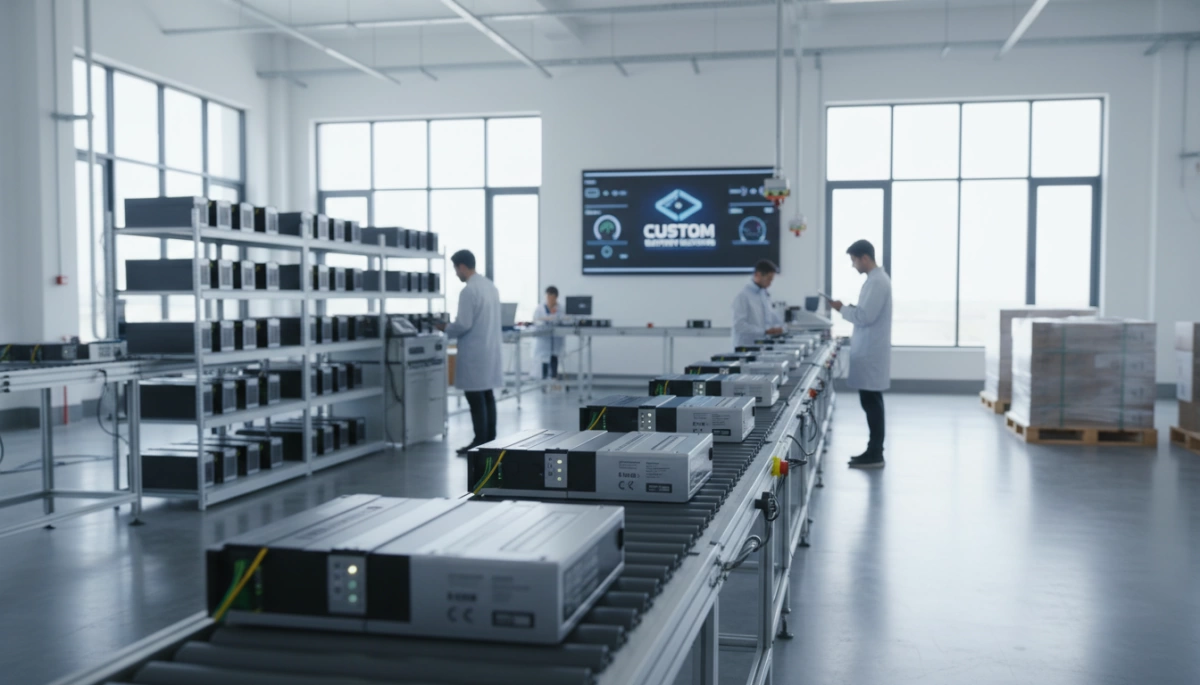
When you are sourcing fleet electric scooter batteries, you need more than just a vendor; you need a manufacturing partner who understands the grind. At nuranu, we have spent over 10 years mastering the unique power demands of low-speed mobility. As a leading OEM electric scooter battery supplier, we know exactly what it takes to keep your riders moving across city streets, campus grounds, and suburban neighborhoods safely and efficiently.
We don’t just assemble cells and ship them out. We design and build custom rechargeable lithium battery systems specifically engineered to handle the pounding heat, freezing winters, and constant vibration that US urban environments dish out on a daily basis.
Our Core Manufacturing Advantages
Here is exactly why top mobility brands choose to work with us over other electric scooter battery manufacturers:
- Rapid Prototyping: In the mobility market, time is money. We take your exact specifications and turn them into functional prototypes fast. Whether you are looking to integrate a highly efficient 36v lithium battery for a lightweight commuter model or a complex, high-capacity setup for off-road use, our engineering team gets it in your hands for testing without the endless back-and-forth delays.
- 24/7 Automated Quality Control: Manual assembly leaves too much room for human error. We utilize clean-room environments with fully automated cell sorting, spot welding, and comprehensive end-of-line (EOL) testing. This rigorous 24/7 QC process guarantees a 98.5%+ pass rate. For your business, that means drastically reducing out-of-the-box failures, unexpected electric scooter battery replacement costs, and safety liabilities.
- Dedicated Engineering Partnerships: We operate directly as an extension of your own R&D team. From customizing the scooter battery BMS (Battery Management System) for optimal predictive diagnostics to ensuring strict UN38.3 compliance for hassle-free sea and air freight to the United States, we provide continuous, dedicated support. We are there from the initial concept phase straight through to post-launch field issue resolution.
When you are reviewing bulk battery quotes and planning your next major scooter rollout, having a reliable factory partner completely changes the game. We deliver the consistency, rapid scalability, and uncompromising quality your fleet demands to stay profitable and on the road.
Frequently Asked Questions (FAQs)
What is the standard lifespan of fleet electric scooter batteries?
For commercial operations, a standard lithium ion battery pack for electric scooter typically lasts between 300 to 500 charge cycles. In the real world, this translates to about 1 to 2 years of heavy daily use. The actual electric scooter battery lifespan depends heavily on urban environments—pounding heat, freezing cold, and constant deep discharges degrade cells faster. Upgrading to more robust chemistries can push that lifespan closer to 3 to 5 years, which drastically reduces your overall electric scooter battery replacement cost.
How do minimum order quantities (MOQs) impact bulk battery quotes?
Volume directly drives your pricing. When evaluating bulk battery quotes, a higher MOQ absorbs the initial engineering, tooling, and setup costs on the manufacturing floor. While we offer flexible initial runs for prototyping and field testing, committing to larger production runs for wholesale electric scooter batteries significantly lowers your per-unit cost and secures better supply chain priority during peak manufacturing seasons.
Why is a UN38.3 certified scooter battery mandatory for shipping?
Lithium batteries are legally classified as dangerous goods. A UN38.3 certified scooter battery has passed rigorous international testing for thermal stability, extreme vibration, shock, and overcharging. Without this certification, you legally cannot ship the batteries via air or sea freight. If you try, your shipments will be flagged, delayed, or outright seized by US Customs. This certification is an absolute non-negotiable for importing power systems into the United States.
Can I replace lead-acid batteries with LiFePO4 scooter batteries?
Yes, you absolutely can, and it is a highly recommended upgrade. LiFePO4 scooter batteries are significantly lighter, charge faster, and offer a much longer cycle life compared to heavy, outdated lead-acid blocks. They are ideal for high-use fleet electric scooter batteries. However, you must ensure the voltage perfectly matches your current motor controller and that you supply a compatible lithium charger. Exploring the benefits of the 32650 LiFePO4 battery can help you understand why this chemistry is becoming the gold standard for durability and safety in modern mobility upgrades.





 English
  German
  Spanish
  French
  Italian
  Polish
  Russian
  Thai
Thai  Turkish
  Japanese
  Korean