
What Exactly Is a 5V Battery?
A 5V battery is a power source engineered to deliver a consistent 5-volt direct current (DC) output. This specific voltage is the universal standard for the vast majority of modern digital electronics, including USB-powered devices, smartphones, and development boards like Arduino. While it functions as a single unit for the end-user, the technology inside is often more complex than a standard AA battery.
The Voltage Myth: Chemistry vs. Output
It is important to understand a fundamental reality of battery physics: No single commercial battery cell naturally produces exactly 5 volts.
Battery voltage is determined by internal chemistry. For example:
- Lithium-Ion (Li-ion): Nominally 3.7V (ranges from 3.0V to 4.2V).
- Alkaline: Nominally 1.5V.
- Lead-Acid: Nominally 2.0V per cell.
Because no raw chemical reaction lands perfectly on 5V, a “5V battery” is actually a battery system. It combines raw energy cells with intelligent electronics to manipulate the voltage into a usable standard.
Achieving 5V: Boost Converters and Regulators
To bridge the gap between raw chemical voltage and the 5V requirement, we utilize specialized power management circuits. This is where the difference between a raw cell and a finished battery pack becomes clear.
We achieve a stable 5V output through two primary methods:
- 3.7V to 5V Boost Converter: This is the most common method for compact devices. We take a standard 3.7V lithium-ion or polymer cell and use a “step-up” circuit (boost converter) to elevate the voltage to a steady 5V. This allows for lightweight, single-cell designs.
- Voltage Regulation (Step-Down): For larger applications requiring more capacity, we connect cells in series to create higher voltages (e.g., 7.4V or 12V). A voltage regulator 5V circuit then “steps down” this higher voltage to a precise 5V. This method is often more efficient for high-drain industrial applications.
At Nuranu, we integrate these management systems directly into our custom packs, ensuring that despite the fluctuating voltage of the internal chemistry, your device receives a clean, constant 5V power supply.
How Does a 5V Battery Work?
At its core, a 5V battery system functions by converting stored chemical energy into a precise electrical output required for digital electronics. Unlike standard alkaline batteries that drain linearly, a rechargeable 5V power supply battery relies on a combination of high-density lithium cells and smart electronics to maintain a steady flow of power.
Since the native voltage of a standard lithium-ion cell is nominally 3.7V, achieving a constant 5V output requires three critical components working in unison:
- Internal Cells: The energy reservoir, typically composed of Lithium-Ion (18650/21700) or Lithium Polymer cells.
- DC-DC Converter: This is the bridge between the cell and your device. We use a 3.7V to 5V boost converter to step up the voltage from a single cell, or a buck converter to step it down from a higher voltage series pack (like 7.4V).
- Battery Management System (BMS): The “brain” of the pack. The Battery management system BMS monitors current, temperature, and voltage to prevent overcharging or short circuits. This safety layer is what differentiates a reliable industrial pack from a raw cell. Understanding the mechanics of protected 18650 batteries vs. unprotected versions is essential for ensuring the longevity and safety of the system.
Voltage regulation is the final piece of the puzzle. A voltage regulator 5V circuit ensures that even as the internal battery drains from 4.2V down to 3.0V, the output remains a stable 5V. This stability is critical for USB-powered devices and microcontrollers, which can malfunction if the voltage fluctuates.
Main Types of 5V Batteries

When sourcing a 5V power supply battery, it is important to understand that “5V” is rarely the native voltage of a chemical cell. Instead, we engineer these systems using specific chemistries paired with voltage regulation circuits (BMS) to deliver a stable 5V output. Here is a breakdown of the primary technologies we utilize and encounter in the market.
Rechargeable Lithium-Ion (Li-ion) and Li-Po
Lithium-based solutions are the industry standard for modern electronics due to their high energy density.
- Lithium-Ion (Li-ion): Typically using cylindrical cells like 18650 or 21700, these packs are robust and energy-efficient. A single cell has a nominal voltage of 3.6V or 3.7V, which we boost to 5V using a converter. For larger packs, we arrange cells in series (e.g., 7.4V) and step the voltage down. Knowing how to choose a high-quality 18650 lithium-ion battery is critical for ensuring the safety and longevity of your 5 volt battery pack.
- Lithium Polymer (Li-Po): These use a pouch format, allowing for ultra-thin and custom shapes. They function similarly to Li-ion regarding voltage (3.7V nominal) but are preferred for lightweight, compact devices like wearables where a rigid cylinder won’t fit.
LiFePO4: Safety and Lifespan
For industrial applications requiring maximum safety and cycle life, we often recommend Lithium Iron Phosphate (LiFePO4). While slightly heavier than standard Li-ion, LiFePO4 cells (3.2V nominal) offer superior thermal stability and can last 3-4 times longer. A rechargeable lithium polymer 5V equivalent in LiFePO4 is ideal for medical devices or equipment that runs constantly, as it resists overheating and degradation.
NiMH and Non-Rechargeable Alternatives
While less common in high-tech manufacturing today, older chemistries still exist:
- NiMH (Nickel-Metal Hydride): These 1.2V cells are often stacked in a series of four (4.8V) to approximate a 5V supply. However, they are heavier and hold less charge than lithium alternatives.
- Alkaline (Non-Rechargeable): Three 1.5V alkaline batteries in series provide 4.5V, which can power some simple 5V logic circuits, but the voltage drops rapidly under load, making them unsuitable for precision electronics.
Single Cell vs. Battery Pack Choices
The choice between a single cell and a multi-cell pack depends on your device’s power draw.
- Single Cell with Boost Converter: Best for low-power devices. We take a single 18650 battery 5V solution (physically one cell with a PCB) to save space.
- Multi-Cell Pack (Series/Parallel): Essential for high-drain devices. We configure cells to increase capacity (mAh) and voltage stability, ensuring the device runs longer between charges.
Popular Form Factors and Examples
When we talk about a 5V battery, we aren’t usually referring to a single off-the-shelf cell like a AA battery. Instead, we are looking at specific form factors designed to deliver that steady 5V output required by modern electronics. Most of these solutions rely on lithium technology paired with regulation circuitry.
Power Banks and USB Battery Packs
The most recognizable portable 5V power source is the standard USB power bank. Inside that sleek plastic or metal casing, you will usually find a cluster of lithium-ion cells or a flat lithium-polymer pouch. Since the native voltage of these cells is 3.7V, the device uses an internal 3.7V to 5V boost converter to step up the voltage for the USB output. These are plug-and-play solutions perfect for charging phones or running small USB fans.
18650 and 21700 Custom Battery Packs
For DIY enthusiasts and industrial applications, building a 5 volt battery pack using cylindrical cells is very common. The 18650 battery 5V setup typically involves using a battery holder or spot-welding cells in parallel, connected to a BMS and a boost module. Because these packs are often built from salvaged or individual cells, it is crucial to check if your 18650 battery is good before assembly to prevent capacity mismatches that could ruin the pack’s performance.
Compact DIY Modules
For projects where space is tight, such as wearable electronics or small sensors, compact DIY modules are the way to go. These often consist of a small, flat LiPo battery connected directly to a tiny voltage regulator 5V board. They lack the protective bulk of a power bank but offer a lightweight 5V power supply battery solution for embedded systems.
Comparison of 5V Battery Types
Here is a quick breakdown to help you decide which form factor fits your needs:
| Form Factor | Typical Capacity | Weight | Cycle Life | Best Use Case |
|---|---|---|---|---|
| USB Power Bank | 2,000 – 30,000 mAh | Heavy | 300–500 cycles | Charging phones, tablets, consumer gadgets |
| Custom 18650 Pack | 2,500 mAh+ (per cell) | Medium | 500–1000 cycles | Robotics, high-drain DIY projects, flashlights |
| Compact LiPo Module | 100 – 2,000 mAh | Very Light | 300–500 cycles | Wearables, Arduino/ESP32, drones |
| Alkaline Pack (3x or 4x) | Varies | Medium | Single-use | Low-power toys, emergency backups (requires regulation) |
Common Applications of 5V Batteries

The 5V standard is arguably the most versatile voltage platform in modern electronics. Because it aligns with the universal USB standard, we see these power sources driving everything from pocket-sized gadgets to specialized industrial sensors. At Nuranu, we engineer solutions that cater to both high-volume consumer needs and niche industrial requirements.
Consumer Electronics and USB Devices
The most visible application is the USB power bank battery. These portable chargers are essential for keeping smartphones, tablets, and wireless headphones running on the go. While the internal chemistry is often 3.7V lithium, the output is strictly regulated to a steady 5V to match USB protocols, ensuring safe charging for sensitive devices.
DIY Electronics and Prototyping
For makers and engineers, a reliable 5V battery for Arduino or Raspberry Pi is critical. These development boards require stable voltage to process data without resetting.
- Microcontrollers: Powering logic boards for home automation projects.
- Robotics: Driving small servo motors and sensors in educational or hobbyist robots.
- Custom Projects: Many developers utilize standard 18650 battery cells configured with a BMS and a boost converter to create long-lasting 5V packs for remote monitoring stations.
Wearable Technology
We frequently design compact 5V rechargeable battery solutions for the wearable market. This sector demands lightweight and safe power sources for applications like heated jackets, smart vests, and portable medical monitoring devices where bulk is not an option.
Industrial and Custom Uses
Beyond consumer tech, we manufacture industrial lithium packs for specialized equipment. These often replace older alkaline setups to reduce waste and improve runtime in:
- Portable point-of-sale (POS) terminals.
- Handheld barcode scanners and inventory trackers.
- Field testing equipment requiring a rugged portable 5V power source.
In these professional settings, off-the-shelf power banks rarely suffice. Custom engineering ensures the battery shape fits the device housing perfectly while delivering the precise current required for heavy-duty cycles.
Key Considerations When Choosing a 5V Battery
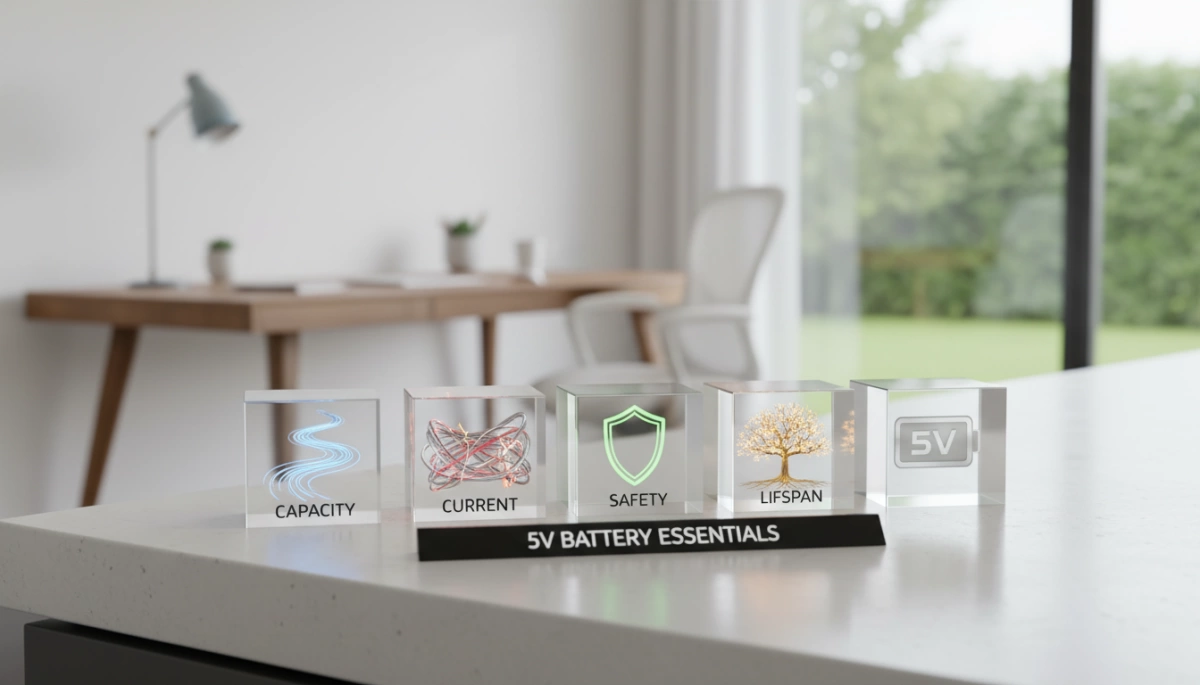
Selecting the right 5 volt battery pack for your project involves more than just matching the voltage. As a manufacturer, I see many buyers overlook critical specs that affect performance and safety. To ensure your device runs reliably, you need to evaluate the specific demands of your application against the battery’s capabilities.
Here are the primary factors to keep in mind:
- Capacity (mAh vs. Wh): While most people look at mAh capacity 5V ratings, Watt-hours (Wh) give you a better picture of total energy. Higher capacity means longer runtime, but it also increases physical size.
- Output Current: Your device needs a specific amount of current to operate. A standard USB port might give 1A or 2.1A, but high-performance electronics often require a continuous discharge of 3A or more. If the battery cannot supply the necessary current, the device will shut down.
- Safety Features: Never compromise on safety. A high-quality Battery management system BMS is non-negotiable. It protects against overcharging, short circuits, and overheating—critical for any portable 5V power source.
- Size and Weight: Lithium technology allows for compact designs. When optimizing for space, understanding the difference between a 18650 lithium battery or 26650 lithium battery helps you balance energy density with the physical footprint of the final pack.
- Lifespan: Consider the cycle life. Quality lithium packs offer significantly more charge cycles than cheaper alternatives, reducing long-term replacement costs and environmental impact.
Charging Compatibility is the final piece of the puzzle. Ensure your charging input matches the battery’s chemistry requirements to prevent damage and ensure a full charge every time.
Safety and Maintenance Tips for 5V Batteries

Dealing with lithium-based power requires respect. Using a poor-quality 5 volt battery pack or mismatched components isn’t just inefficient; it is a legitimate fire hazard. The biggest risk usually comes from bypassing standard safety features or using cells that lack internal safeguards. For DIY enthusiasts building custom packs, it is critical to understand if your 18650 batteries have built-in protection to prevent dangerous over-discharge and short circuits.
Follow these maintenance guidelines to keep your gear safe:
- Temperature Control: Extreme heat is the enemy. Never leave your portable 5V power source in a hot car or direct sunlight. Store it at room temperature (around 68°F/20°C).
- Proper Storage: If you aren’t using the battery for a while, store it at roughly 50% charge. Storing it fully empty can kill the cells, while fully charged storage degrades capacity faster.
- Check Certifications: Reliable batteries carry safety marks like UN38.3, IEC 62133, or UL. These standards ensure the pack has passed rigorous testing for shock, vibration, and short circuits.
- Disposal: Never throw lithium batteries in the regular trash. They must be taken to a certified recycling center to prevent environmental damage and fires.
Why Lithium Technology Dominates 5V Solutions
In the world of portable power, lithium chemistry has effectively retired older technologies like NiCd and lead-acid. For manufacturers and engineers designing 5V systems, lithium-ion (Li-ion) and lithium polymer (Li-Po) offer a performance edge that is impossible to ignore.
At Nuranu, we focus on lithium solutions because they solve the biggest challenges in modern electronics: space and weight.
Superior Performance Metrics
Compared to traditional battery chemistries, lithium-ion 5V output solutions provide distinct advantages:
- High Energy Density: You get significantly more capacity (mAh) in a smaller footprint, which is critical for sleek consumer electronics.
- Weight Reduction: Lithium packs are roughly 70% lighter than lead-acid equivalents, making them ideal for portable devices.
- Extended Lifespan: With proper management, these batteries offer triple the cycle life of older tech, reducing replacement costs.
Customization with 18650 and 21700 Cells
The versatility of cylindrical cells, such as the 18650 battery, allows us to build custom packs tailored to specific voltage and amperage needs. Since a standard lithium cell operates at a nominal 3.7V, we engineer packs with integrated BMS and DC-DC converters to deliver a stable, regulated 5V.
Whether using a single cell for a compact sensor or a multi-cell configuration for a high-capacity 5V power bank, safety remains paramount. We ensure every custom pack meets rigorous standards, addressing concerns about how safe 18650 batteries are through advanced thermal management and short-circuit protection. This flexibility makes lithium the undisputed leader for reliable, rechargeable 5V power.
FAQs about 5V Batteries
Can a single cell provide 5V output?
No, a single lithium-ion cell typically has a nominal voltage of 3.6V or 3.7V. To achieve a 5V output, we integrate a 3.7V to 5V boost converter directly into the battery pack or use multiple cells in series with a voltage regulator. When you are looking to choose the right 18650 battery for a 5V project, understand that the raw cell voltage will always need adjustment to hit that specific target.
How does a boost converter work?
A boost converter is an electronic circuit that steps up the lower voltage from the battery (like 3.7V) to a higher, stable voltage (5V). This allows a standard lithium-ion 5V output to power USB devices effectively, maintaining steady performance even as the battery drains.
Are all 5V batteries rechargeable?
Most modern 5V solutions used in electronics, like power banks and custom packs, are rechargeable because they rely on lithium chemistry. However, primary (non-rechargeable) alkaline packs exist but are less efficient for high-drain devices. For long-term industrial use, we recommend rechargeable chemistries like Li-ion or LiFePO4.
What safety precautions are essential?
Never operate a lithium battery without a Battery Management System (BMS). The BMS monitors voltage, temperature, and current to prevent overcharging or short circuits. At Nuranu, we ensure all packs meet rigorous standards like UN38.3 and UL to guarantee safety during transport and operation.
How to choose the right 5V battery for my project?
Start by calculating your device’s power consumption in Watts or Amps.
- Capacity: Higher mAh means longer runtime.
- Discharge Rate: Ensure the battery can handle the peak current your device draws.
- Application: A battery designed for smart robots often requires higher durability and vibration resistance compared to a simple stationary sensor.
Always consult with a manufacturer if you need a custom form factor to fit tight enclosures.





 English
  German
  Spanish
  French
  Italian
  Polish
  Russian
  Thai
Thai  Turkish
  Japanese
  Korean