
If you’ve ever wondered why the 18650 lithium battery remains a staple in everything from laptops to electric vehicles, you’re in the right place. These cylindrical powerhouses pack impressive energy density, a reliable 3.7V nominal voltage, and long-lasting performance, making them a favorite among tech enthusiasts and professionals alike. But they’re not without their challenges—issues like thermal runaway risks and the need for a solid Battery Management System (BMS) can’t be ignored. In this guide, we’ll break down the advantages and disadvantages of 18650 batteries, helping you decide if they’re the perfect fit for your next project or device. Let’s get straight to the facts that matter.
What Exactly is an 18650 Lithium Battery?
When I look at the landscape of modern portable power, the 18650 lithium battery stands out as the undisputed workhorse. It is a high-performance, rechargeable lithium-ion cell that has powered everything from the first high-end laptops to the early Tesla Model S. Unlike standard AA batteries, these are industrial-grade power cells designed for high energy density and longevity.
Decoding the Name: 18mm Diameter and 65mm Length
The name “18650” isn’t just a random serial number; it describes the physical dimensions of the cell using a standardized metric system:
- 18: Represents a diameter of 18mm.
- 65: Represents a length of 65mm.
- 0: Indicates a cylindrical shape.
While it looks like a larger version of a traditional AA battery, the 18650 is significantly more powerful, typically offering a nominal voltage of 3.7V compared to the 1.2V or 1.5V found in household alkaline or NiMH batteries.
Core Chemistry: How Lithium-Ion Technology Works
At its heart, the 18650 relies on lithium-ion chemistry. In my experience, understanding the movement of ions is key to managing these cells safely. During discharge, lithium ions move from the negative electrode (anode) to the positive electrode (cathode) through an electrolyte. When you plug it into a charger, the process reverses. This stable chemical reaction allows the battery to be recharged hundreds of times while maintaining a compact footprint.
Cylindrical Shape and Standard Form Factor
The 18650 is a cylindrical lithium-ion cell housed in a rigid metallic casing, usually steel. This design is intentional:
- Pressure Resistance: The cylindrical shape handles internal pressure much better than flat pouch cells.
- Scalability: These cells can be grouped in series or parallel to create massive battery packs for EVs or home energy storage.
- Standardization: Because the size is fixed, manufacturers can design devices with universal compatibility in mind.
The Advantages of 18650 Lithium Batteries
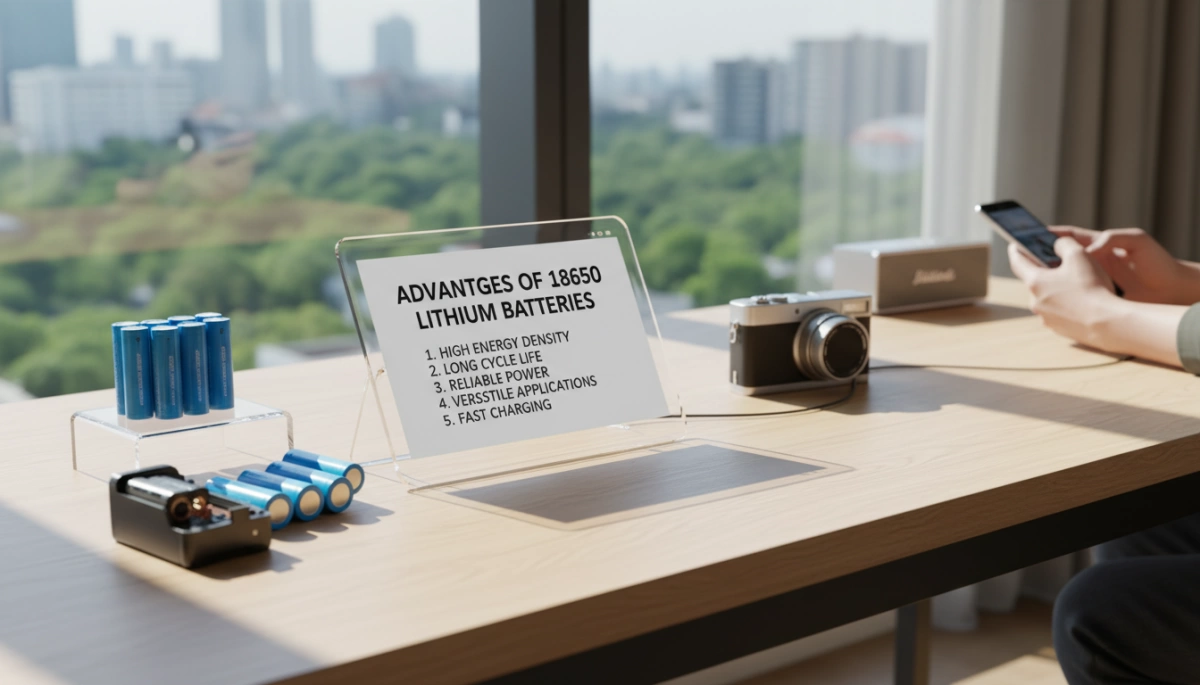
The 18650 cell has become the gold standard in the industry for a reason. I have seen these batteries power everything from high-end flashlights to electric vehicle arrays because they offer a level of reliability and performance that most other form factors can’t match. When you look at the LiFePO4 vs. lithium-ion battery debate, the 18650 remains a top choice for those needing high energy density in a compact cylindrical shape.
Exceptional Energy Density
The biggest draw of the 18650 is its energy density. These cells pack a massive amount of power into a very small footprint. This allows manufacturers to build slim laptops and lightweight power tools without sacrificing runtime. You get more “bang for your buck” in terms of milliamps per gram compared to older battery technologies.
Long Cycle Life and Durability
A quality 18650 cell is built to last. Most of these batteries can handle 300 to 500 full charge cycles before you see any significant capacity drop. In many applications, this translates to years of daily use. They are far more durable than the small 12-volt batteries found in older electronics, making them a sustainable choice for long-term projects.
Low Self-Discharge Rate
One of the most frustrating things about older rechargeable batteries was picking them up after a month only to find them dead. 18650 lithium batteries solve this with an incredibly low self-discharge rate. Even if you leave a charged cell in a drawer for weeks, it will retain the vast majority of its juice, making it perfect for emergency gear and backup power kits.
Key Benefits at a Glance:
- No Memory Effect: You can top off the charge at any time without “training” the battery or reducing its lifespan.
- High Voltage Output: With a 3.7V nominal voltage, a single 18650 does the work of three standard AA alkaline batteries, simplifying circuit designs.
- Cost-Effectiveness: Because billions of these cells are produced annually, the economies of scale have driven prices down significantly. They are the most affordable high-performance lithium cells on the market today.
- Standardized Size: The fixed 18mm x 65mm dimensions mean you can easily find compatible chargers, holders, and enclosures anywhere in the world.
The Disadvantages and Limitations of 18650 Batteries
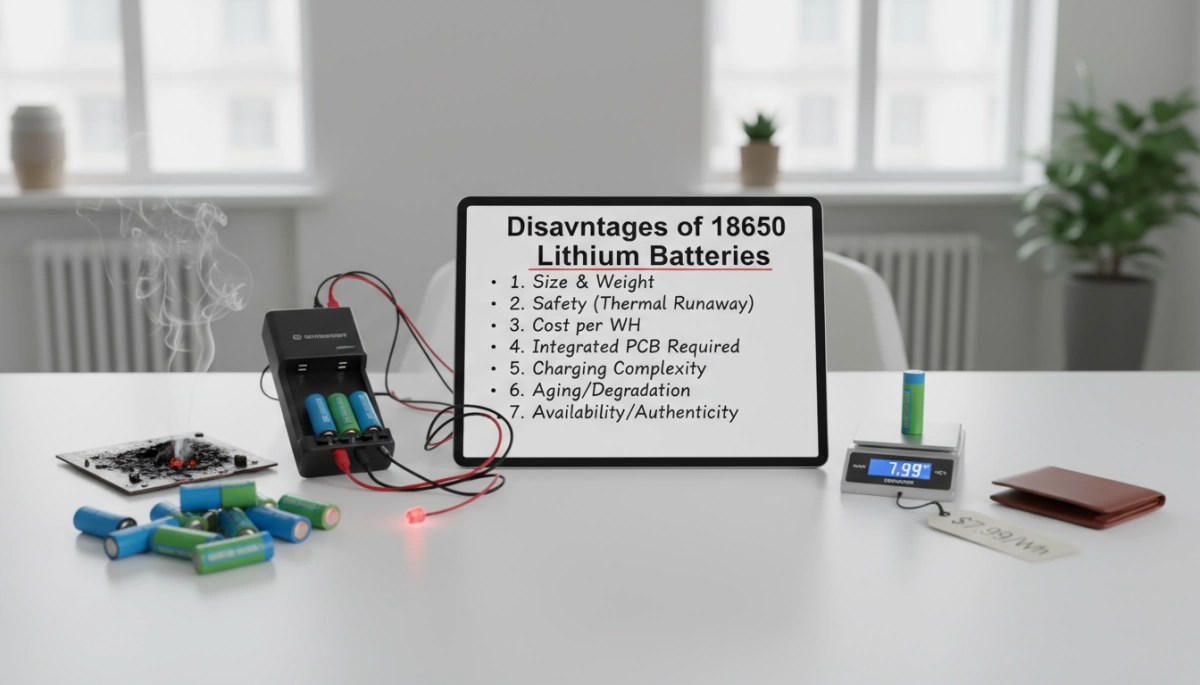
While 18650 cells are powerhouses, they aren’t without their flaws. In my experience, the high energy density that makes them great also introduces specific 18650 battery safety risks that every user must respect. These are not “set it and forget it” batteries like the alkaline AAs in your TV remote.
Critical Safety and Technical Constraints
The most significant drawback is the risk of thermal runaway. If a cell is overcharged, short-circuited, or physically damaged, it can overheat rapidly, leading to fires or venting. This is why a Battery Management System (BMS) is mandatory for any multi-cell pack. Without a BMS to monitor voltage and temperature, you are essentially carrying a chemical fire hazard.
Furthermore, lithium battery degradation is an unavoidable reality. From the moment the battery leaves the factory, its internal chemistry begins to age. Even with perfect care, capacity will drop over time.
| Limitation | Impact on User |
|---|---|
| Temperature Sensitivity | Extreme cold kills capacity; extreme heat accelerates permanent damage. |
| Natural Aging | Chemical breakdown occurs even when the battery is sitting on a shelf. |
| BMS Requirement | Adds cost and complexity to DIY projects to ensure safety. |
| Shipping Rules | Strict aviation regulations make “Class 9” hazardous shipping expensive. |
I always emphasize that understanding what causes lithium-ion battery swelling is the first step in preventing catastrophic failure. If a cell begins to deform or “bloat,” it must be decommissioned immediately.
Finally, these batteries are sensitive to voltage floors. If you discharge an 18650 below its cut-off point (usually 2.5V), the internal chemistry can become unstable, making it dangerous to recharge. To ensure your cells are still viable, you should perform a battery load test to verify their health and internal resistance before building them into a larger pack.
Protected vs. Unprotected 18650 Batteries
Choosing between protected and unprotected cells is a critical step in managing the advantages and disadvantages of 18650 lithium batteries. While they might look identical at a glance, their internal architecture and physical dimensions differ enough to impact device compatibility and safety.
Physical Size and Built-in Circuitry
Protected 18650 batteries feature a small Protection Circuit Board (PCB) usually integrated into the bottom of the cell. This board monitors the battery’s performance and shuts it down if it detects a safety threat. Because of this extra hardware, protected cells are slightly longer (often 66mm to 69mm) and a bit thicker than the standard 65mm unprotected version. This size difference means a protected cell might not fit into a compartment designed strictly for a flat-top, unprotected cell.
Safety Benefits of Protected Cells
The primary reason to choose protected cells is to mitigate 18650 battery safety risks. The integrated circuit provides three essential layers of protection:
- Overcharge Protection: Stops the battery from accepting more current once it reaches full capacity.
- Over-discharge Protection: Prevents the voltage from dropping too low, which can permanently damage the cell.
- Short Circuit Protection: Cuts power immediately if a short is detected, preventing potential fires or venting.
When to Choose Unprotected Cells
Unprotected cells are the “raw” version of the battery. They lack a built-in circuit, meaning the user or the device must manage the safety limits. These are preferred for high-drain 18650 batteries used in demanding applications. For example, when building custom battery packs for electric scooters, we use unprotected cells because an external Battery Management System (BMS) regulates the entire array.
Key Comparison Table:
| Feature | Protected 18650 | Unprotected 18650 |
|---|---|---|
| Length | 66mm – 69mm (Longer) | 65mm (Standard) |
| Safety | Built-in PCB protection | Requires external BMS/Protection |
| Best For | Single-cell flashlights, consumer electronics | DIY packs, power tools, high-drain gear |
| Cost | Slightly higher due to circuitry | Lower per unit |
| Risk Level | Low (User-friendly) | High (Requires technical knowledge) |
18650 vs. 21700: Is the 18650 Becoming Obsolete?
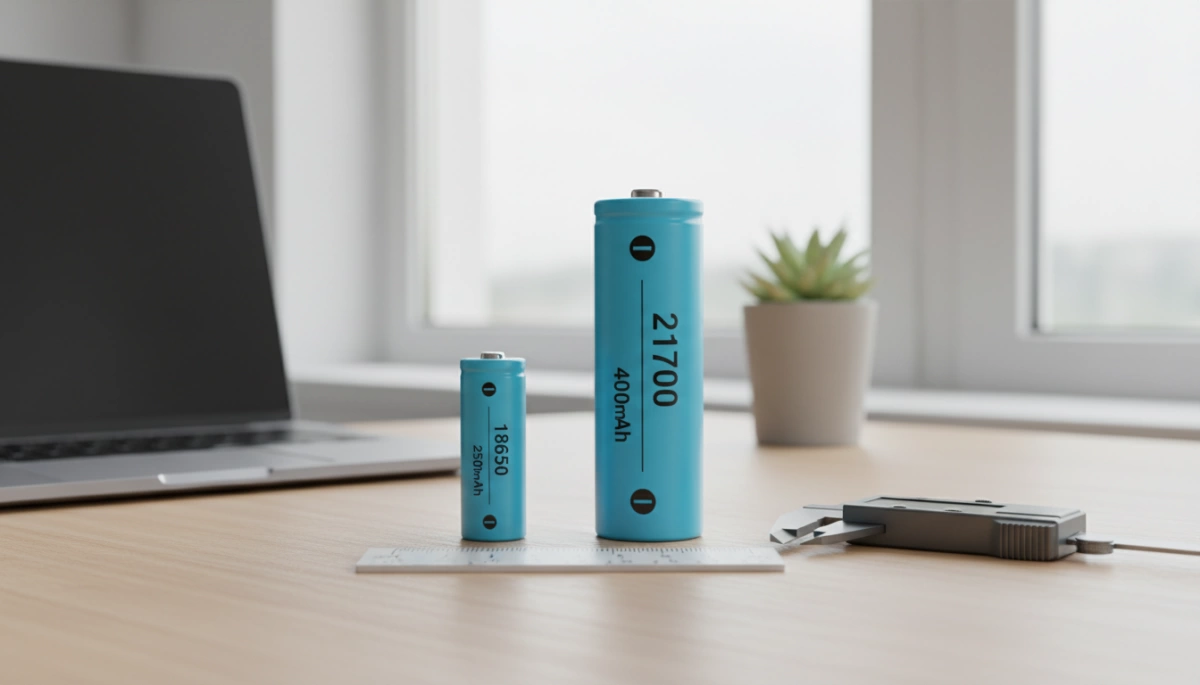
I often see people asking if the 21700 cell is going to make the 18650 a thing of the past. While the 21700 is gaining ground, the 18650 remains the most widely used lithium-ion cell in the world. The primary difference comes down to physical volume and energy density.
Comparing Capacity and Dimensions
The 21700 is slightly larger (21mm x 70mm) than the 18650 (18mm x 65mm). That extra 5mm in length and 3mm in diameter allows for a significantly larger surface area and internal volume.
- 18650 Capacity: Typically ranges from 2200mAh to 3500mAh.
- 21700 Capacity: Can reach 4000mAh to 5000mAh+.
- Energy Density: The 21700 offers more “bang for your buck” in terms of runtime, but it adds bulk and weight to the device.
Industry Trends in EVs and Power Tools
The shift toward larger cells is driven by the need for more power in less space. Major players like Tesla moved toward the 21700 (and now the 4680) to reduce the number of cells needed in a battery pack, which simplifies the Battery Management System (BMS). Similarly, high-end power tool brands are adopting 21700s to provide longer runtimes for demanding jobs. However, if you are working with older equipment, knowing how to identify 18650 battery specs is crucial because these larger cells simply won’t fit in standard 18650 slots.
Why the 18650 Remains the Industry Standard
Despite the hype around larger formats, the 18650 isn’t going anywhere. It remains the “Goldilocks” of batteries for several reasons:
- Cost-Efficiency: Due to massive production scales, 18650s are incredibly affordable.
- Compatibility: Millions of devices—from flashlights to medical equipment—are designed specifically for this form factor.
- Weight Sensitivity: For portable electronics where every gram counts, the 18650 is often the better choice over the heavier 21700.
The advantages and disadvantages of 18650 lithium batteries are well-understood by engineers, making them the “safe” and reliable bet for most DIY and commercial applications today.
Common Applications of 18650 Cells
The 18650 lithium battery is the undisputed workhorse of the modern portable world. Its balance of size, weight, and power output makes it the go-to choice for everything from consumer electronics to heavy-duty industrial equipment. We see these rechargeable lithium cylindrical cells integrated into almost every facet of daily life because they offer a reliable energy source that can be scaled up or down depending on the power requirement.
Electric Vehicles and E-Mobility
One of the most significant uses for these cells is in the light electric vehicle (LEV) market. By assembling individual cells into large packs, we can achieve the high voltage and capacity needed to power motors. For instance, our 25.2V 2.2Ah 18650 lithium-ion battery pack for electric longboards is a prime example of how these cells provide the necessary torque and range for personal transportation. Beyond skateboards, they are the standard for e-bikes and were famously used in thousands-strong arrays to power early Tesla Model S and Model X vehicles.
Portable Power and Computing
Even as devices get thinner, the 18650 remains a staple for high-capacity needs:
- Laptop Battery Replacements: Many thicker “desktop replacement” laptops still use 18650 cells in their internal packs for maximum runtime.
- Power Banks: High-end portable chargers often house multiple 18650s to provide enough juice to charge a smartphone four or five times over.
- Medical Devices: Reliable power is non-negotiable in healthcare, which is why these cells are frequently found in portable monitors and emergency equipment.
High-Lumen Flashlights and Tactical Gear
For the outdoor and tactical community, the 18650 is the gold standard. High-drain 18650 batteries allow modern LED flashlights to reach brightness levels (often exceeding 1,000 lumens) that standard AA or AAA batteries simply cannot support. The high discharge rate ensures the light stays bright and consistent throughout the battery’s cycle.
DIY Solar Storage and Robotics
The hobbyist and “maker” community in the United States relies heavily on 18650 cells for custom projects. Because they are easy to source and relatively simple to manage with the right hardware, they are the top choice for:
- DIY Solar Storage: Building small-scale power walls to store energy from solar panels.
- Robotics: Providing high-current bursts for motors and sensors in autonomous builds.
- Off-Grid Power: Using a solar panel to charge 18650 batteries for remote trail cameras or weather stations.
Whether it’s powering a high-speed electric longboard or keeping a tactical light running in the woods, the 18650 battery application range is unmatched by any other cell size on the market today.
How to Maximize the Lifespan of Your 18650 Batteries
Getting the most out of your 18650 lithium batteries requires more than just plugging them in when they die. Proper maintenance directly impacts the total 18650 battery lifespan and ensures you get the full value out of every cell. By following a few simple rules, I have seen users double the effective life of their power packs.
Best Practices for Charging and Discharging
To minimize lithium battery degradation, avoid the “extreme ends” of the voltage scale. While these batteries are rated for specific ranges, staying within the “sweet spot” preserves the internal chemistry.
- The 20/80 Rule: Try to keep your batteries between 20% and 80% charge. Constant full discharges to 0% stress the cell significantly.
- Avoid Fast Charging: Unless necessary, use a lower amperage. High heat during rapid charging is a primary cause of shortened 18650 charge cycles.
- Use Dedicated Equipment: Always use a high-quality smart charger. If you find yourself in a pinch, knowing how to charge 18650 battery without charger safely is a vital skill for DIYers and off-grid users.
Ideal Storage Voltage and Temperature
If you aren’t using your cells for a few weeks, don’t leave them fully charged or completely drained.
- Storage Voltage: Aim for a “nominal” state, typically around 3.6V to 3.7V. This is the most stable state for the ions.
- Temperature Control: Store your batteries in a cool, dry place. Room temperature (approx. 68°F) is ideal. Never leave them in a hot car or a freezing garage, as extreme temperatures accelerate chemical breakdown.
Identifying Signs of Battery Wear and Tear
Knowing when to retire a cell is crucial for safety. Keep an eye out for these red flags:
- Excessive Heat: If the battery gets hot to the touch during a standard discharge or charge cycle, the internal resistance is likely too high.
- Physical Deformities: Any bulging, denting, or tearing of the outer wrap is a sign to stop using the cell immediately.
- Voltage Drop: If a battery loses its charge significantly faster than it used to, or if it won’t hold a charge above 4.0V, it has reached the end of its functional life.
FAQs About 18650 Lithium Batteries
When weighing the advantages and disadvantages of 18650 lithium batteries, my customers usually have a few specific questions before starting their projects. Here are the straight answers to help you handle these powerhouses correctly.
Can I use 18650 batteries in a standard AA device?
Absolutely not. An 18650 cell is physically much larger (18mm wide by 65mm long) than a standard AA battery. More importantly, the 18650 nominal voltage 3.7V is significantly higher than the 1.5V of an alkaline AA. Trying to force an 18650 into a standard AA device will instantly fry your electronics.
How long does a typical 18650 battery last?
A quality 18650 battery lifespan generally runs between 300 to 500 full charge cycles before the capacity drops to about 80% of its original rating. If you store them at room temperature and avoid draining them completely flat, a good cell will easily last 2 to 3 years under regular daily use.
Are 18650 batteries safe for DIY projects?
Yes, but you must respect the inherent 18650 battery safety risks. In my experience building custom power solutions, you should never solder directly to the battery terminals—always use a spot welder. You must also include a reliable Battery Management System (BMS) to prevent overcharging. If you are building custom gear or replacing a 36V 4Ah 18650 lithium-ion battery pack for smart balance scooters, proper insulation and cell spacing are mandatory to prevent thermal runaway.
What is the best way to dispose of old 18650 cells?
Never throw rechargeable lithium cylindrical cells in your household trash. If they get crushed in a garbage truck, they become a massive fire hazard.
- Tape the ends: Put a piece of electrical tape over the positive and negative terminals.
- Recycle locally: Drop them off at a local battery recycling center or a big-box hardware store (like Home Depot or Lowe’s) that has designated bins for lithium battery disposal.





 English
  German
  Spanish
  French
  Italian
  Polish
  Russian
  Thai
Thai  Turkish
  Japanese
  Korean