Electric Scooter Battery MOQ Guide for B2B Importers

Electric Scooter Batteries MOQ Explained: What Importers Need to Know

Demystifying MOQ: Why Do Battery Manufacturers Set Minimums?

Importers constantly ask us why electric scooter battery manufacturers enforce strict Minimum Order Quantities (MOQs). Whether you are sourcing a standard 36v lithium ion battery for electric scooter fleets or developing custom rechargeable battery packs, MOQs are not arbitrary hurdles. They are a direct reflection of production economics, rigorous safety compliance, and engineering bandwidth. We establish these minimums to mitigate financial risk and guarantee the unit economics make sense for your bottom line and our production lines.

Economies of Scale in Raw Materials

Building reliable power systems starts with high-volume procurement. Cell sourcing dictates the baseline of any production run.

  • Cell Sourcing Volume: Procuring premium 18650, high-capacity 21700, or ultra-stable LiFePO4 cells requires massive upfront commitments to our upstream suppliers to keep per-unit costs viable.
  • Tooling and Enclosures: Fabricating custom enclosures, specialized nickel busbars, and heavy-duty wiring assemblies demands dedicated factory tooling.
  • Production Viability: Spinning up an automated assembly line for a mere 50 units simply cannot absorb the setup costs or the raw material minimums required for high-grade components.

The Cost of Customization: Battery Management System (BMS)

The core of any lithium ion battery pack for electric scooter applications is the Battery Management System (BMS). This is not a place to cut corners, and customizing it requires significant upfront investment.

  • Thermal Management: Custom BMS programming is non-negotiable for preventing electric scooter battery fires. We engineer these systems to strictly regulate temperature during high-draw acceleration and fast charging.
  • Rider Safety Parameters: Fine-tuning the overcharge, deep discharge, and short-circuit protections demands intense engineering and testing hours.
  • Amortizing R&D: These upfront engineering costs must be amortized across a minimum production run. Without an adequate MOQ, your per-unit electric scooter battery replacement cost would skyrocket.

Standard vs. Custom MOQs

Not all minimums are created equal. Your required order size depends entirely on the complexity and uniqueness of your specific mobility platform.

  • Off-the-Shelf Standard Platforms: A standard 24V or 36v electric scooter battery utilizing existing molds and standardized BMS protocols carries a much lower, accessible MOQ (typically 100 to 500 units). The R&D is already done, and the supply chain is active.
  • Fully Customized Proprietary Packs: If your project requires unique form factors, drop-in lead-acid replacements, or proprietary IoT communication protocols, the MOQ scales up significantly (often 1,000+ units). We require this volume to justify the dedicated assembly lines and the rigorous safety validation a totally new architecture demands.

Would you like me to generate the next section covering the “Core Technical Specs That Influence Your Order Size”?

Core Technical Specs That Influence Your Order Size
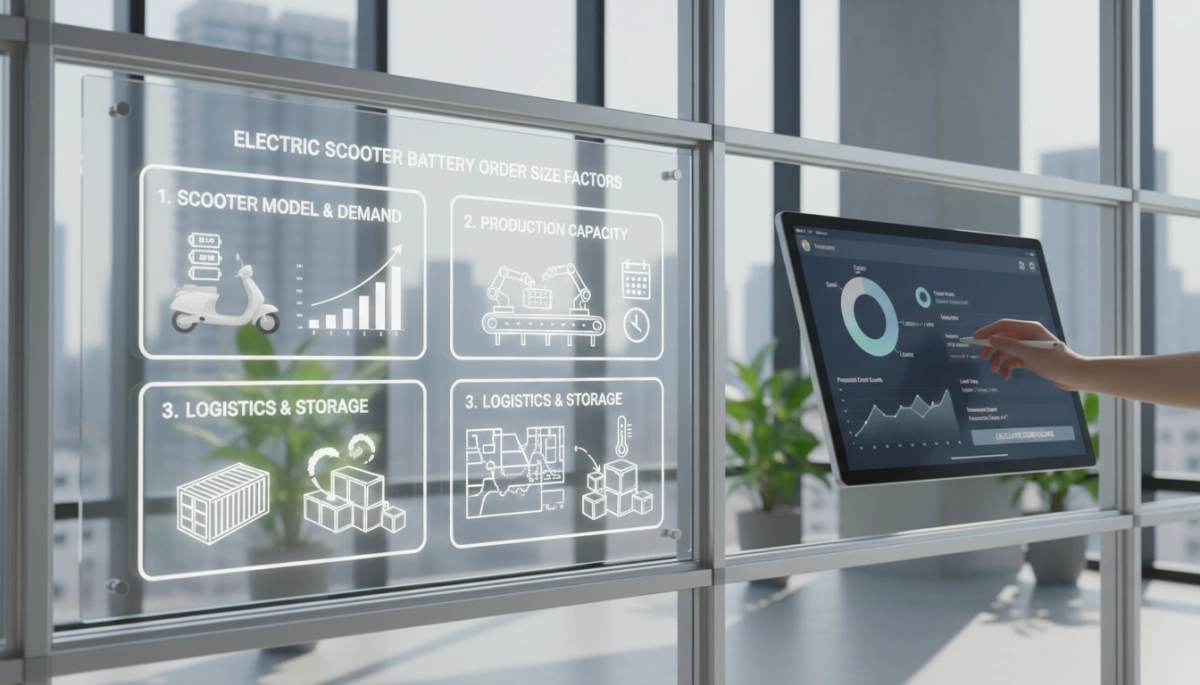
Electric Scooter Battery Order Size Factors

When we negotiate with electric scooter battery manufacturers for the US market, the technical specifications we demand directly dictate the Minimum Order Quantity (MOQ). Customization requires capital, and factories pass that risk onto the importer through higher volume requirements. Let’s break down exactly what drives these numbers.

Voltage Systems: The 24V and 36V Standard

In the 2-wheel mobility sector, 24V and 36V systems are the undisputed industry standards. These voltage platforms hit the perfect sweet spot, balancing sustained power discharge with rapid charging times. Because an off-the-shelf 36v lithium ion battery for electric scooter is practically universally adopted, factories have the components readily available. Sticking to these standard systems usually secures you a much lower, more flexible MOQ.

Energy Density vs. Weight

Upgrading your fleet’s performance means pushing for higher energy density and lighter weights.

  • Lightweight Lithium Cells: Sourcing premium, high-density cells tightens supply chain availability, extending manufacturing timelines and driving up MOQs.
  • Drop-In Lead-Acid Replacements: If you are migrating older scooter designs to modern lithium ion battery pack for electric scooter tech, custom enclosures and connectors are required. You are no longer buying an off-the-shelf part, which guarantees a higher MOQ to offset the tooling costs. If you’re building a brand, knowing exactly how long lithium batteries last under these high-density loads is critical for justifying the larger volume commitment.

Intelligent Features & Smart Prototyping

Today’s consumers expect an electric scooter with removable battery capabilities and smart diagnostics. Integrating a custom battery management system (BMS) for real-time thermal monitoring or hot-swap functionality requires intense R&D.

Adding these intelligent features severely impacts the initial prototyping phase. Factories have to allocate engineering hours to program and test the BMS before bulk manufacturing can even begin, ensuring your custom pack won’t fail in the field.

How Specs Impact Your MOQ at a Glance:

Feature Category Technical Requirement MOQ Impact Production Timeline
Voltage Standard 24V / 36V Systems Low Fast (Standardized)
Energy Density Custom High-Density / Drop-In Lead-Acid Replacements Medium to High Extended (Sourcing Cells)
Smart Tech Custom BMS / Hot-Swap / Predictive Diagnostics Highest Longest (Intensive R&D)

Navigating Global Compliance for Electric Scooter Batteries
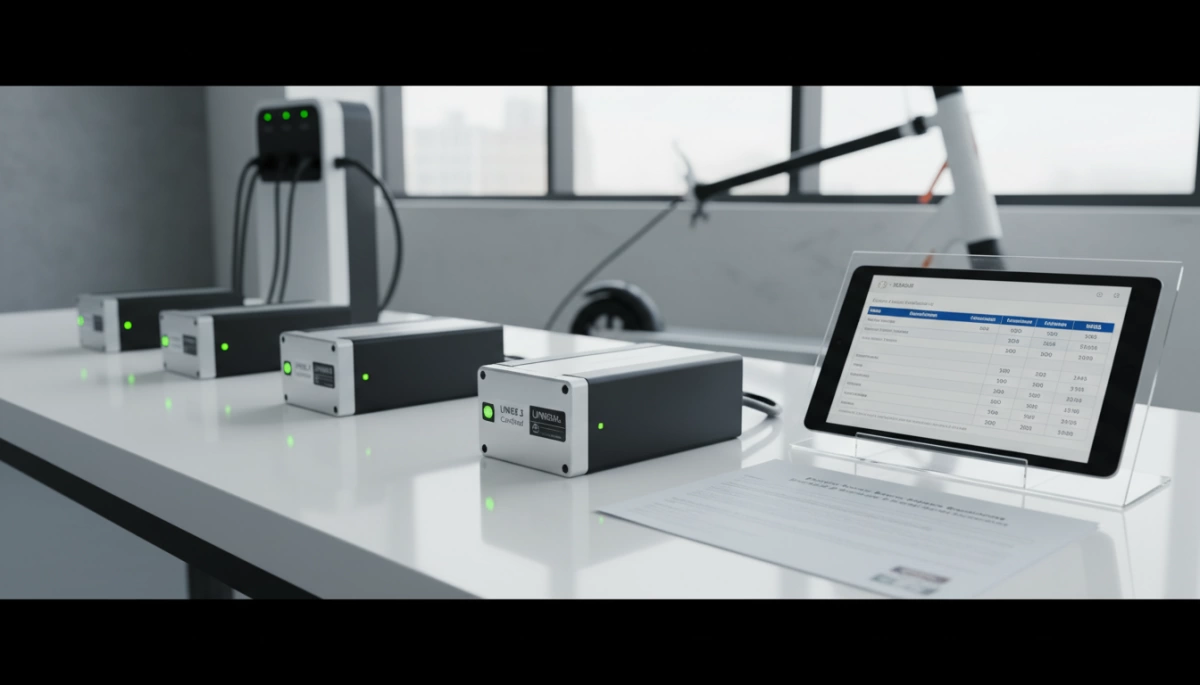
Electric Scooter Battery Compliance and MOQ

When you are importing electric scooters from overseas, compliance is never optional. Understanding the rules keeps your shipments moving and your business out of trouble.

Why Certifications Dictate MOQs

Testing a lithium ion battery pack for electric scooter to meet international standards is expensive. Certified labs charge thousands of dollars to validate a single pack design. To make financial sense of these heavy upfront lab fees, electric scooter battery manufacturers have to set higher Minimum Order Quantities (MOQs). By spreading that flat testing cost across a larger production run of custom rechargeable battery packs, the factory keeps your per-unit cost viable.

Electric Scooter Safety Certifications

We have all seen the headlines about electric scooter battery fires. This is exactly why the industry relies on strict safety benchmarks. Before placing any bulk order, I always verify this “alphabet soup” of mandatory certifications:

  • UN38.3 Certification Lithium Batteries: Absolutely mandatory. You cannot legally ship lithium batteries by air or sea without proving they can handle altitude, thermal, and vibration stress.
  • UL & CE Marks: UL is the gold standard for the US market, ensuring electrical safety, while CE is required for Europe.
  • IEC 62133: The global safety standard for the safe operation of lithium cells and battery packs under fault conditions.
  • ISO 9001: This guarantees the factory uses a consistent, audited quality management system.

Understanding the deep technical specs—like knowing what is the charging voltage for 3.7v lithium ion battery cells—is a great start, but your battery management system (BMS) must actively pass these rigorous lab tests to prevent catastrophic overcharging and short circuits.

The 98.5% Standard and EOL Testing

Never settle for “good enough.” A reliable manufacturer must guarantee a quality-pass rate of at least 98.5%. The only way factories hit this metric is through 100% End-of-Line (EOL) testing.

This means every single 36v lithium ion battery for electric scooter rolling off the line gets plugged in and tested for voltage sag, capacity limits, and BMS response. Whether you are buying standard scooter decks or sourcing power systems for other applications, 100% EOL testing is what ensures dead units don’t end up in your US warehouse.

Logistics, Hazmat Shipping, and Hidden Costs
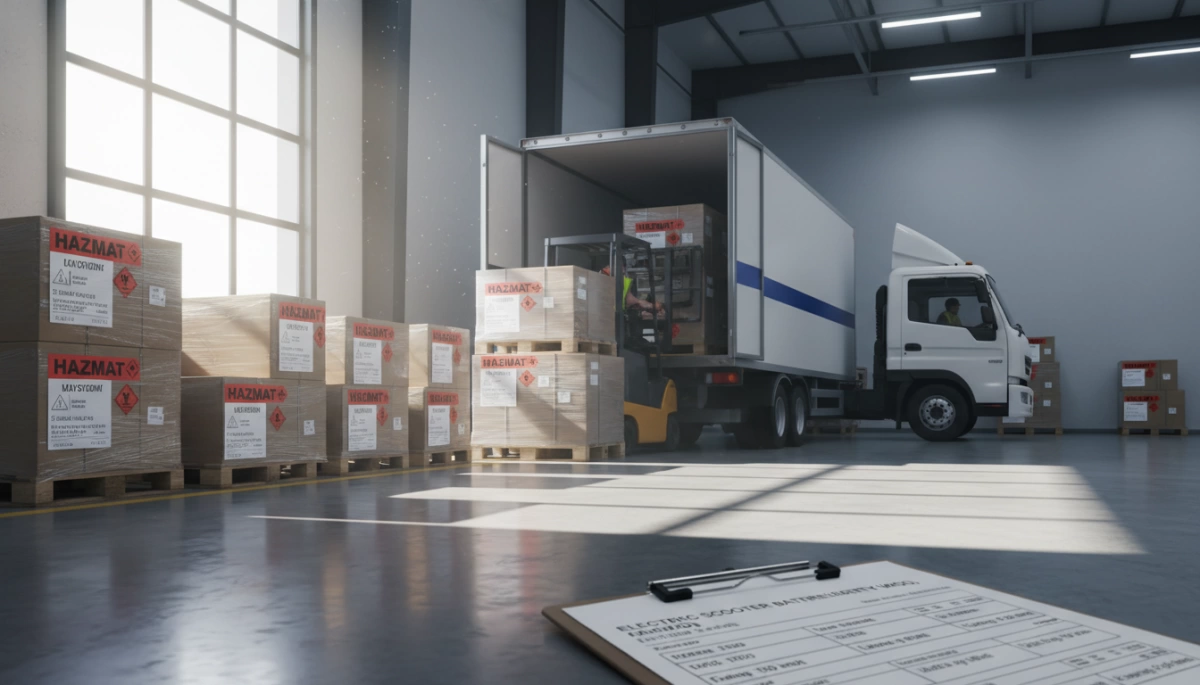
Electric Scooter Batteries MOQ and Hazmat Shipping

When you are importing electric scooters from overseas, the factory sticker price is only part of the equation. Moving large lithium packs across the ocean introduces a massive layer of complexity and hidden costs that can easily kill your profit margins if you aren’t prepared.

The Reality of Hazmat Shipping Lithium Batteries

Under international shipping laws, lithium-ion batteries are strictly classified as Class 9 Dangerous Goods. This classification dictates exactly how we move these products into the United States market.

  • Air Freight is Prohibitive: Flying a batch of 36v lithium ion battery for electric scooter replacements via air is incredibly expensive and severely restricted by strict weight limits. For bulk orders, air freight is completely off the table.
  • Specialized Sea Freight: You are locked into ocean freight. These shipments require specialized handling, specific placement away from heat sources on the vessel, and extensive hazardous materials documentation.
  • Safety First: Stringent packaging and UN38.3 certifications are non-negotiable to prevent electric scooter battery fires during turbulent ocean transit.

Volume Shipping Economics: Why MOQ Isn’t Always Cost-Effective

Here is where many new buyers get tripped up. Hitting the exact minimum order quantity (MOQ) demanded by electric scooter battery manufacturers might seem like the safest financial play, but it often backfires on the logistics side.

Because of the steep surcharges associated with dangerous goods, shipping small volumes is brutally inefficient.

  • The LCL Trap: Shipping Less than Container Load (LCL) means you share container space. Hazmat processing fees, customs broker charges, and origin handling fees are often billed at flat rates. If you only order the base MOQ, those flat fees spread across fewer units, artificially inflating your landed electric scooter battery replacement cost.
  • The FCL Advantage: Scaling up to a Full Container Load (FCL) changes the math in your favor. Whether you are stocking massive 60v dual-motor packs or testing out how long will a 12v 5ah battery last in entry-level kids’ models, filling your own container drastically dilutes the shipping cost per unit.

When negotiating your wholesale electric scooter batteries order, don’t just calculate the factory’s production minimums. You need to model out the volume required to optimize your sea freight and properly absorb those unavoidable hazmat shipping surcharges.

The Importer’s Playbook: Scaling from Prototype to Mass Production

Successful importing isn’t about guessing; it’s about a calculated ramp-up. We don’t expect you to order a full container on day one. In fact, we advise against it. A strategic partnership moves through distinct phases to mitigate risk and ensure your electric scooter battery performance matches your specs perfectly before you commit significant capital.

Step 1: Rapid Prototyping

Never buy blindly. The first step is demanding a custom sample. We turn concepts into production-ready batteries in weeks, allowing you to test real-world metrics like voltage sag and enclosure fit. You need to physically verify the pack performance to know how to tell if a lithium ion battery is bad or if the BMS programming needs adjustment before a single consumer rides it.

Step 2: The Pilot Run

Once the prototype is validated, we move to a pilot run. This involves negotiating a smaller initial MOQ to test your logistical flow and market reception. This stage bridges the gap between engineering samples and full-scale manufacturing, letting you verify quality control without the pressure of massive inventory.

Step 3: Automated Scaling

When your product takes off, we scale with you. Our facility operates 24/7 automated production lines capable of outputting over 100,000+ units monthly. Whether you need standard packs or complex custom rechargeable battery packs, our automated cell sorting and matching ensure consistency even at high volumes to meet peak seasonal demand.

Step 4: Securing After-Sales Engineering Support

We don’t disappear after delivery. A reliable manufacturer acts as an extension of your team. We provide comprehensive technical documentation and root cause analysis for any field issues. If a rider reports a problem, we help you determine if it’s a motor controller issue or if you need a specific electric scooter battery replacement. Your success drives our mission, so we stay engaged long after the sale.

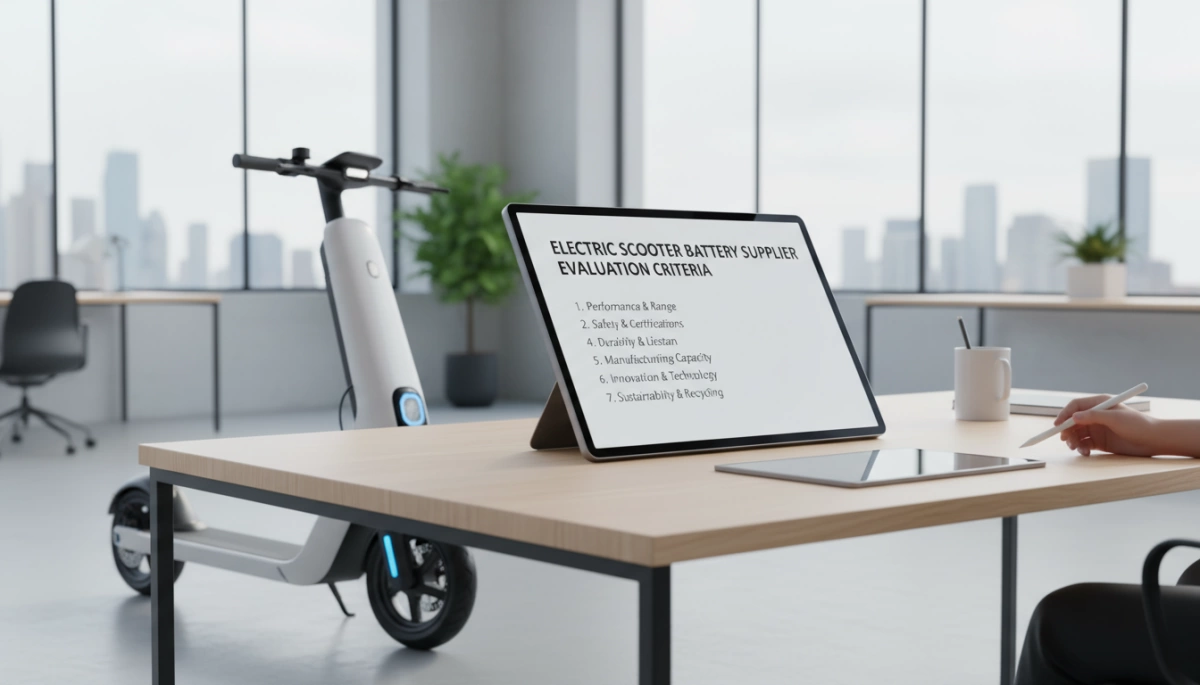
How to Evaluate Electric Scooter Battery Suppliers in China

How to Evaluate Electric Scooter Batteries Suppliers in China

Verify Real Electric Scooter Battery Manufacturers vs. Traders

When you are sourcing an OEM electric scooter battery supplier overseas, the first major hurdle is filtering out the middlemen. You might assume you are negotiating directly with a factory, but you are frequently dealing with a trading company. Why does this matter? Traders add unnecessary cost markups, bottleneck critical engineering feedback, and have absolutely no direct control over the quality of your custom rechargeable lithium battery packs.

Here is how I spot the difference quickly: look at the supplier’s product catalog. Traders typically list a massive, unrelated variety of goods. True electric scooter battery manufacturers are hyper-focused strictly on battery systems, cells, and energy storage.

Look for Scalable Production Capacity

If your scooter brand takes off, your supplier needs the infrastructure to scale seamlessly. A boutique assembly shop might nail the initial prototype but fail completely when transitioning to mass production.

  • The Baseline: Target suppliers with a proven production capacity of at least 100,000+ units per month.
  • The Benefit: This ensures that large orders for electric mobility scooter batteries wholesale won’t result in crippling supply chain delays when your seasonal demand spikes.

Automated Production Lines are Non-Negotiable

When conducting a China battery factory audit, pay close attention to the assembly floor. Relying on manual labor is a major red flag for high-volume lithium ion battery packs for electric scooters because human error invariably leads to pack inconsistency.

You must demand automated machinery in two critical stages of manufacturing:

  • Automated Cell Sorting: Machines test and group individual cells based on precise internal resistance and voltage metrics. Grouping identical cells prevents the internal pack imbalances that drastically reduce an electric scooter’s battery life and performance.
  • Automated Spot Welding: Consistent, machine-controlled welds guarantee strong structural integrity and low-resistance connections. Weak manual welds lead to localized heat buildup and total power failure under high-drain riding conditions.

At Nuranu, we treat these engineering standards as absolute minimums. By utilizing heavily automated sorting and welding on our production lines, we ensure every single battery for an electric scooter that leaves the floor delivers the exact same reliability, thermal stability, and cycle life as your approved engineering prototype.

Step 2: The Technical Audit – Cells and Chemistry

Electric scooter battery supplier evaluation criteria

Once you’ve verified the manufacturer’s legitimacy, the next hurdle is the technical audit. This is where most low-cost suppliers fail. You aren’t just buying a black box; you are buying the specific chemistry and engineering inside it. If a supplier cannot transparently discuss cell sourcing and chemistry tradeoffs, walk away.

Cell Sourcing: Grade A vs. The Rest

The most critical component of any electric scooter battery pack is the cell itself. In China, the market is flooded with “Grade B” cells—units that failed quality control for top-tier EV manufacturers but are repackaged for lower-end scooters.

  • Grade A Cells: We only use fresh, Grade A cells. These ensure consistent voltage and capacity across the entire pack.
  • Proprietary vs. Brand Name: While we work with major international brands, we also utilize verified proprietary cells that pass rigorous testing.
  • The Risk: Beware of suppliers claiming impossible capacities (like a 30Ah pack in a case that only fits 15Ah). If the price is suspiciously low, you are likely getting recycled or B-grade cells that will degrade within months.

Chemistry Selection: NMC vs. LiFePO4

Choosing the right chemistry depends entirely on your scooter’s intended use. We don’t believe in a “one size fits all” approach.

Feature NMC (Lithium-Ion) LiFePO4 (Lithium Iron Phosphate)
Cell Type Typically 21700 lithium-ion battery or 18650 26650 or 32650 cylindrical cells
Energy Density High. Best for compact scooters needing long range. Moderate. Heavier and bulkier.
Cycle Life ~500-1000 cycles ~2000+ cycles
Safety Good (requires quality BMS) Excellent (very stable thermally)
Best For Commuter scooters, portable designs Delivery fleets, heavy-duty usage

For most consumer e-scooters in the US market, NMC is the standard because riders demand lightweight portability. However, for commercial fleets where longevity trumps weight, LiFePO4 vs Lithium-ion battery comparisons often favor LiFePO4.

Voltage Platforms

Your supplier must demonstrate expertise in your specific voltage platform. A factory that specializes in low-speed 24V toys may not have the engineering capability to build a safe, high-discharge 60V lithium battery for electric scooter racing.

  • Standard Commuter: We routinely build 36V lithium battery for electric scooter systems and 48V packs for daily commuting.
  • High Performance: For dual-motor beasts, we engineer 60V and 72V systems capable of handling massive current draws without overheating.

We ensure the voltage platform matches the motor controller perfectly to prevent voltage sag during acceleration.

Step 3: BMS Intelligence – The Brain of the Battery

When figuring out how to evaluate electric scooter batteries suppliers in China, you simply cannot ignore the Battery Management System. If the lithium cells are the muscle of your electric scooter battery pack, the BMS is the brain. A poorly designed BMS is the primary culprit behind electric scooter battery fires. You need a manufacturing partner who deeply understands what a battery control module does to guarantee rider safety and long-term reliability.

Essential BMS Features to Demand

Don’t settle for a basic, off-the-shelf circuit board. When vetting an OEM electric scooter battery supplier, dig into their BMS (Battery Management System) development capabilities. Make sure their systems include:

  • Core Safety Protocols: Strict overcharge, over-discharge, and short-circuit protection are non-negotiable baselines.
  • Active Thermal Management: The system must constantly monitor temperatures to prevent thermal runaway, especially critical for high-performance 48v/60v lithium battery customization.
  • Smart Communication: Demand advanced features like predictive diagnostics and smart communication protocols (CANBus or UART). This ensures the battery talks flawlessly with the scooter’s main controller to optimize range and power delivery.

Nuranu Insight: In-House R&D is Crucial

Here is my Nuranu insight from years in the industry: always verify that the supplier has dedicated, in-house BMS R&D engineers. Many factories just outsource their BMS boards to third-party vendors. If your riders start experiencing electric scooter battery issues or you need a custom firmware update for a new scooter model, an outsourced BMS means you will be waiting weeks for a fix. In-house engineering ensures rapid troubleshooting, seamless integration, and a safer ride for your US customers.

Would you like me to generate the content for Step 4: Certifications & Compliance next?

Step 4: Certifications & Compliance When Evaluating Electric Scooter Batteries Suppliers in China

When I vet electric scooter battery manufacturers, missing paperwork is a hard dealbreaker. If a supplier cannot immediately provide verified testing documents, I walk away. In the US market, non-compliant batteries are a massive liability, often leading to customs seizures or, worse, electric scooter battery fires.

Here is the exact compliance checklist you must demand before partnering with any factory:

Essential Electric Scooter Battery Safety Standards (UL 2271)

  • UL 2271: This is the gold standard for Light Electric Vehicles (LEVs). If you are importing a lithium ion battery pack for electric scooter use into the United States, this certification proves the pack can handle real-world physical and electrical stress.
  • IEC 62133: The fundamental international safety standard for rechargeable cells and battery packs.

Mandatory Shipping Compliance

  • UN38.3 Certification for Battery Shipping: You legally cannot put a lithium battery on an airplane or cargo ship without this. It proves the battery can withstand altitude changes, thermal shifts, vibration, and shock during transit.
  • MSDS (Material Safety Data Sheet): Required by all freight forwarders to handle your international shipment safely.

Factory Quality Management

  • ISO 9001: Always look for an ISO 9001 certified battery factory. This ensures the supplier isn’t just getting lucky with a golden prototype, but actually has strict, repeatable quality control processes on their assembly line.

Whether you are sourcing an off-the-shelf unit or designing a custom pack built around a specific 18650 lithium-ion battery configuration, verifying these documents is non-negotiable. Don’t just take their word for it—ask for the actual certificates and verify the factory’s name exactly matches the paperwork.

Step 5: Testing Protocols & Quality Control (QC)

Electric Scooter Battery Supplier Testing Protocols

When dealing with electric scooter battery manufacturers overseas, you need to watch out for the “Golden Sample” trap. It goes like this: a supplier sends you a flawless, high-performing prototype. You approve it, sign the contract, but the mass-produced units end up being completely unreliable. Never base your decision solely on the prototype. You must ask exactly how they test their mass production units before those batteries ever hit a shipping container headed for the States.

To ensure your electric scooter battery replacement units or OEM builds actually hold up on rough American roads, demand total transparency on their testing protocols. Every reliable China battery factory audit should look for these specific procedures.

Non-Negotiable Battery Testing Protocols

  • Aging Test: This isn’t a quick check. Batteries need to be repeatedly charged and discharged over a set period to verify cell stability. Proper battery pack cycle life testing ensures the battery won’t degrade rapidly after a few months of daily commuting.
  • Vibration Testing: City streets are full of potholes and rough terrain. The battery pack needs to survive constant shaking on a vibration table without internal welds breaking or cells shorting out.
  • Drop Testing: Real-world accidents happen. The outer casing and internal structure must withstand sudden impacts without causing a catastrophic thermal event.
  • 100% EOL (End-of-Line) Testing: Every single battery must be tested before it leaves the factory floor. Random sampling is not enough. Whether they are building a massive 72V system or a standard 36V 10Ah lithium-ion battery pack for an electric kick scooter, EOL testing guarantees the voltage, capacity, internal resistance, and BMS functions are exactly as promised.

If a supplier hesitates, skirts around the details, or gives vague answers about their QC processes, walk away. Your business reputation depends on delivering reliable hardware, not just a good-looking prototype.

Step 6: R&D and Customization Speed

Electric Scooter Battery Supplier R&D Speed

Fast Speed to Market

When evaluating electric scooter battery manufacturers in China, R&D speed is a massive dealbreaker. The US mobility market moves incredibly fast. If a factory takes months just to get a prototype into your hands, your product launch is already falling behind. You need a partner who can turn your concepts into a testable prototype in a matter of weeks, not seasons. Quick turnarounds keep your supply chain agile and ensure you hit the market while the demand is hot.

48v/60v Lithium Battery Customization

Off-the-shelf solutions rarely work for innovative designs. Whether you are designing a brand new ride or sourcing an electric scooter battery replacement, your supplier’s engineering team must be highly adaptable. As an operation deeply committed to environment protection through efficient energy solutions, we know firsthand that a dedicated R&D team makes all the difference in producing safe, long-lasting custom builds.

When auditing a supplier’s customization capabilities, demand flexibility in these core areas:

  • Deck Integration: They must be able to adjust the physical shape and dimensions of your custom rechargeable lithium battery packs so they drop perfectly into your specific scooter deck without wasting space.
  • Custom Wiring: Your supplier should easily swap out or tailor the electric scooter battery connector and wiring harness to match your exact controller setup.
  • Power Scaling: Whether you need a standard setup for short commutes or a high-performance 60v lithium battery for electric scooter applications, their engineers should be able to dial in the voltage and capacity to hit your exact range and speed goals.

Step 7: After-Sales Support & Warranty

Avoid the “Ghosting” Trap

A major headache I see US buyers face when evaluating electric scooter batteries suppliers in China is the infamous “ghosting” risk. You pay the invoice, the shipment clears customs, and suddenly, your factory contact stops replying. When a customer comes to you needing an electric scooter battery replacement, or you encounter unexpected electric scooter battery issues during assembly, a silent supplier is a massive liability.

What to Demand Before You Buy

You need rock-solid guarantees before wiring a single dollar. Whether you are sourcing a standard 36v lithium battery for electric scooter fleets or a high-performance 72v lithium battery for electric scooter models, demand these non-negotiables:

  • Clear Warranty Terms: Do not accept vague promises. Demand a strict 12 to 24-month warranty. Your coverage needs to align perfectly with the average battery life of electric scooter models you sell.
  • English-Speaking Tech Support: Integration issues happen. You need direct access to support staff or engineers who speak clear English to help troubleshoot BMS communication or wiring problems instantly.
  • Defective Unit Replacements: Get the exact replacement policy in writing. If a lithium ion battery pack for electric scooter fails, who pays for the return shipping? How fast do they send the replacement battery electric scooter unit? Addressing defects promptly ties directly into overall pack safety, which is just as critical as understanding whether 26650 LiFePO4 batteries are safe for your specific mobility application.

Wholesale Electric Scooter Batteries Import Guide for Distributors

Technical Vetting: Understanding Battery Specs Before You Buy

Before you sign any purchase order for wholesale electric scooter parts, you need to look under the hood. The market is flooded with generic specs that don’t translate to real-world performance. As a manufacturer with over a decade of experience, we know that successful distribution starts with precise technical vetting.

Voltage and Capacity: 24V vs 36V/48V Systems

Choosing the right voltage platform is critical for matching your target market’s needs. We engineer our systems to align with specific mobility applications, ensuring your inventory moves quickly.

  • 24V Systems: These are the standard for entry-level and low-speed electric mobility devices. They are cost-effective and sufficient for flat terrain and lighter riders.
  • 36V Systems: The sweet spot for most commuter scooters. A 36V lithium battery for electric scooter applications offers a balance of torque and range, ideal for urban environments.
  • 48V Systems: High-performance territory. These packs are designed for speed, hill climbing, and heavier loads, often used in premium or off-road models.

Capacity (Ah) Matters: Voltage determines speed, but Amp-hours (Ah) determine range. We offer high-capacity options that extend ride times significantly compared to standard OEM battery packs.

Cell Chemistry: Li-Ion 18650/21700 vs LiFePO4

The core of any battery pack is the cell itself. We utilize three primary chemistries, each serving a distinct purpose in the electric scooter battery market.

Feature Li-Ion 18650 Li-Ion 21700 LiFePO4 (26650/32650)
Energy Density High Very High Moderate
Weight Light Light Heavier
Cycle Life ~500-800 cycles ~800-1000 cycles 2000+ cycles
Best For Compact, lightweight scooters Long-range, high-performance fleets Heavy-duty, long-lifespan utility

Our Recommendation: For portable consumer scooters, 18650 and 21700 cells are superior due to their high energy density and light weight. For shared fleets or industrial AGVs where longevity outweighs weight concerns, LiFePO4 is the gold standard for safety and cycle life.

Why the BMS is the Brain of Your Battery

A battery without a Battery Management System (BMS) is a liability. The BMS is the critical safety gatekeeper that prevents thermal runaway and ensures longevity. Our custom rechargeable lithium battery systems integrate advanced BMS protocols that actively monitor every cell in the pack.

Key BMS Functions We Engineer:

  • Overcharge Protection: Stops current flow once the battery reaches capacity, preventing swelling and fire risks.
  • Short Circuit Protection: Instantly cuts power if a hardware fault is detected.
  • Cell Balancing: Ensures all cells charge and discharge at the same rate, maximizing the total lifespan of the electric scooter battery pack.
  • Thermal Management: Monitors internal temperatures to prevent overheating during rapid discharge or fast charging.

By prioritizing these specs, you ensure that the products you import are safe, compliant, and ready for the rigorous demands of the US market.

Regulatory Compliance for Wholesale Electric Scooter Batteries: Avoiding Customs Seizures

Batteries Electric Scooter Import Compliance Guide

When importing batteries for electric scooters wholesale, treating compliance as an afterthought is the fastest way to get your shipment seized at the border. US Customs and Border Protection (CBP) does not play around with lithium batteries. As a distributor, you need your paperwork bulletproof before your electric scooter batteries even leave the factory floor.

UN38.3 Certification: The Essential Passport

The UN38.3 certification is completely non-negotiable. Think of it as the passport for your lithium-ion battery pack. This certification proves that the battery has passed rigorous testing for altitude simulation, thermal testing, vibration, and shock. It guarantees the battery won’t catch fire or fail during air or sea transit. If an OEM battery manufacturer cannot provide a verifiable, up-to-date UN38.3 test report for the specific 36V or 48V scooter battery systems you are buying, walk away immediately.

MSDS and IEC 62133 Documentation Checklist

Shipping an electric scooter removable battery means dealing with Class 9 Dangerous Goods. Your freight forwarder and US customs officials will demand a specific set of documents. Keep this checklist handy for every import:

  • MSDS (Material Safety Data Sheet): This document details the chemical properties, handling instructions, and emergency procedures for the battery. It is mandatory for any lithium battery electric scooter shipment.
  • IEC 62133 Standard: This is the international safety benchmark for portable sealed secondary cells. While UN38.3 covers transport safety, IEC 62133 tells customs and your buyers that the battery is safe for daily consumer use, minimizing the risk of thermal runaway.

Whether your shipments consist of standard packs or you are exploring the differences between LiFePO4 and lithium-ion batteries for your catalog, having these documents perfectly aligned prevents costly port storage fees and delays.

Quality Control: Batch Testing vs 100% EOL Testing

Paperwork gets your shipment through customs, but actual build quality is what keeps your distribution business alive. When vetting a factory for your electric scooter replacement battery inventory, you must understand their quality control protocol.

  • Batch Testing: The factory pulls random samples from a production run to test. While this lowers the landed cost, it is a massive risk. It leaves room for defective units to slip through, leading to widespread electric scooter battery issues and returns from your retailers.
  • 100% EOL (End-of-Line) Testing: Every single battery pack is individually hooked up and tested before packaging. They check the exact capacity, voltage stability, and ensure the BMS protection kicks in correctly.

I always demand 100% EOL testing from my factory partners. It costs slightly more upfront, but guaranteeing a safe, reliable cycle life for every single unit is how you build a solid reputation in the wholesale electric scooter parts market.

Shipping Logistics: Handling Class 9 Dangerous Goods

When I manage imports for batteries electric scooters wholesale orders, shipping logistics is the first thing that can make or break the bottom line. Moving hazardous materials into the United States requires exact compliance, and cutting corners here guarantees customs seizures.

Understanding the Dangerous Goods Classification

Every lithium-ion battery pack you import is classified as a Class 9 Dangerous Good. This applies across the board, whether you are bringing in a standard 36v electric scooter battery or a high-capacity 48v lithium battery for electric scooter models.

To legally move these goods into the US market, I always require strict documentation from the factory before the goods ever leave the warehouse floor:

  • UN38.3 Certification: Proves the battery electric scooter units passed rigorous safety testing for altitude, drop, and thermal abuse.
  • MSDS (Material Safety Data Sheet): Required by every shipping line and US customs agent to handle the cargo.

Packaging Requirements for Safe Transit

Preventing thermal runaway during transit is non-negotiable. The US Department of Transportation (DOT) mandates specific packaging protocols for Class 9 materials.

  • Isolated Contacts: Batteries must be individually secured to prevent short circuits. Understanding how the factory handles the battery terminals and posts types maintenance before packing ensures the contacts are fully protected.
  • Blister Packs: Inner packaging must physically separate each electric scooter battery pack.
  • UN-Rated Cartons: The outer boxes must be certified, rigid, and clearly marked with the correct Class 9 hazard diamond and UN number (usually UN3480).

Sea vs. Air Freight: Cost vs. Speed

Choosing how to ship your wholesale electric scooter parts comes down to your budget and timeline. Airlines have severe restrictions on lithium batteries, making sea shipping the standard for bulk orders.

Freight Method Average Transit to US Cost Impact Best Used For
Sea Freight 20-40 Days Lowest Bulk inventory, heavy 60v lithium battery for electric scooter shipments
Air Freight 5-10 Days Extremely High Urgent testing samples, very small lightweight orders

Booking a Freight Forwarder for Hazardous Materials

You cannot use a standard logistics broker for electric scooter batteries. I only work with a freight forwarder who specializes in hazmat and dangerous goods. A specialized forwarder will verify the OEM battery manufacturer documents, navigate the hazardous goods surcharges, and accurately calculate your final landed cost. They act as your firewall, ensuring everything is compliant before US Customs ever inspects the container.

Sourcing Strategy: Choosing the Right Partner

Electric Scooter Battery Sourcing Strategies

Finding a reliable source for batteries electric scooters wholesale isn’t just about the lowest price per unit; it’s about securing your supply chain against failures and delays. As a distributor, your reputation rides on every charge cycle. Here is how to vet a partner that actually delivers.

Factory vs. Trader: Spotting the Middleman

In the battery industry, middlemen are everywhere. They often re-label generic packs and mark up the price without offering real technical support. Dealing directly with an OEM battery manufacturer like Nuranu gives you control over quality and costs.

How to spot a true factory:

  • Production Capacity: A real manufacturer will openly discuss monthly output capabilities (we handle 100,000+ units monthly).
  • Technical Depth: Traders usually can’t answer specific engineering questions about BMS integration or cell chemistry without “checking with the team.”
  • Certifications: Look for factory-specific ISO 9001 certifications and product-specific reports like UN38.3 that list the manufacturer’s name, not a trading company’s.

Custom Battery Pack Solutions and R&D Capabilities

Off-the-shelf solutions don’t always fit the specific chassis or range requirements of modern e-mobility fleets. You need a partner who treats R&D as an extension of your own team.

At Nuranu, we specialize in custom battery pack solutions. Whether you need a specific 24V configuration for a lightweight scooter or a high-capacity 36V system for long-range delivery vehicles, our engineering team moves from concept to production-ready prototypes in weeks, not months. We handle the complex engineering—thermal management, vibration resistance, and BMS customization—so you can focus on selling the finished vehicle.

Warranty Terms and After-Sales Support

The partnership shouldn’t end when the container leaves the dock. A solid warranty is the ultimate sign of confidence in manufacturing quality.

  • Clear Terms: Avoid vague promises. Look for specific coverage on cycle life and BMS performance.
  • Global Support: We provide English-language technical documentation and support to help resolve field issues quickly.
  • Replacement Policy: A reliable partner has a clear process for handling the rare instances of defects, ensuring your operations don’t stall.

We back our products because we test them rigorously. With a 98.5% quality pass rate across 50+ countries, our after-sales support is built on the reality that our batteries are designed to last.

Cost Analysis: Calculating Your True Landed Cost

Electric Scooter Battery Import Cost Guide

When importing batteries electric scooters wholesale, the initial quote you get from an overseas manufacturer is just the starting line. To build a profitable distribution business in the US, I always rely on a strict landed cost calculation to see exactly what I will pay before the inventory ever hits my warehouse.

Factory Price vs. Real Import Costs

It is easy to get excited over a dirt-cheap factory price for an electric scooter battery replacement. But that EXW (Ex Works) or FOB quote rarely tells the whole story. Your real import costs will stack up fast.

Here is what actually eats into your margins when sourcing wholesale electric scooter parts:

  • Inland Freight: Moving the goods from the factory to the foreign departure port.
  • International Freight: The actual ocean or air shipping cost, which fluctuates heavily based on season and fuel costs.
  • Quality Deficits: You must factor in potential duds. Testing your shipment upon arrival is mandatory, and understanding exactly how to check 18650 battery capacity ensures the factory actually delivered the true 36V or 48V specs you paid for.
  • Domestic Transport: Trucking the heavy batteries from a US port (like LA or Newark) to your final distribution center.

Understanding HS Codes and Import Tariffs

If you want your lithium-ion battery pack shipments to clear US Customs without a hitch, you must nail the regulatory paperwork.

  • Accurate HS Codes: Lithium batteries generally fall under HS Code 8507.60. Classifying them incorrectly to save a few bucks is a rookie mistake that leads to severe penalties, audits, or seized shipments.
  • Import Tariffs: The US heavily taxes certain tech imports. Depending on the country of origin (especially China), you will likely face additional Section 301 tariffs. Always confirm the current import tariffs with a licensed customs broker before finalizing your purchasing budget.

Hazardous Goods Surcharges and Insurance

Electric scooter batteries are not regular cargo. Because of the inherent fire risks, shipping them is expensive and heavily scrutinized.

  • Hazmat Fees: Transporting Class 9 Dangerous Goods requires specialized handling, documentation, and specific container placement. Your freight forwarder will pass these mandatory hazardous material surcharges directly to your invoice.
  • Comprehensive Insurance: Never skip marine or freight insurance on a lithium battery electric scooter shipment. If a container is damaged, waterlogged, or delayed, comprehensive insurance is the only thing protecting your capital. Always build the premium into your final unit cost.

FAQs: Importing Electric Scooter Batteries Wholesale

Navigating the logistics of bringing in a bulk electric scooter battery order can feel like a maze. Over my years of importing, I’ve heard the same crucial questions from distributors. Here is the straight talk on what you need to know to secure your supply chain.

Do I Need a Specific License to Import Lithium Batteries?

For the US market, you don’t need a specialized federal “battery license.” However, you must be a registered importer with a customs bond. Because you are moving Class 9 Dangerous Goods, you must use carriers, freight forwarders, and warehouses that hold specific hazardous materials handling certifications from the DOT.

What is the Difference Between UN38.3 and MSDS?

I see this mix-up all the time when sourcing wholesale electric scooter parts.

  • UN38.3 Certification: This is the physical stress test passport. It proves your 36V/48V scooter battery systems won’t fail under pressure, drop, vibration, or altitude changes during transit.
  • MSDS (Material Safety Data Sheet): This is your handling instruction manual. It lists the chemical makeup, potential hazards, and emergency response protocols for your lithium-ion battery pack. You absolutely need both to get on a boat or plane.

How Do I Verify if a Manufacturer is Legitimate?

Don’t just take their word for it. To spot a real OEM battery manufacturer instead of a trader taking a cut:

  • Demand their IEC 62133 Standard and UN38.3 test reports, then verify the registration numbers directly with the issuing testing laboratory.
  • Ask detailed technical questions. For example, if you ask about whether 21700 and 18650 batteries are interchangeable for your custom battery pack solutions, a real factory engineer will immediately explain the necessary BMS and casing adjustments, while a trader will just say “yes.”
  • Request a live video call to see their end-of-line testing equipment and spot-welding stations.

Can I Ship Electric Scooter Batteries by Air?

Yes, but prepare your wallet. Air freight for lithium batteries is expensive and strictly regulated. They can only fly on dedicated cargo aircraft (never passenger flights). The batteries must be packaged according to strict thermal runaway prevention standards, and the state of charge must be reduced to 30% or lower. I generally only use air freight for urgent prototypes or critical replacements.

What Happens if My Shipment Gets Stuck at Customs?

When a shipment of electric scooter batteries gets flagged, it almost always boils down to a paperwork mismatch or unpaid import tariffs.

  • The Fix: Work quickly with your customs broker. Provide the missing documentation, ensure you are using the correct HS Codes (usually 8507.60 for lithium-ion), and pay any outstanding duties.
  • The Reality: If your shipment lacks proper UN38.3 documentation or is misdeclared to avoid hazmat fees, US Customs and Border Protection (CBP) will seize the goods. They may even destroy the shipment at your expense, so getting compliance right from day one is non-negotiable.

Would you like me to draft the next section on calculating your true landed costs and import tariffs?

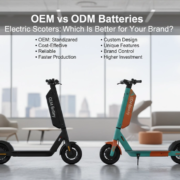
OEM vs ODM Batteries for Electric Scooters Guide

Are you struggling to source the right power for your micro-mobility fleet? Choosing the perfect battery partner can make or break your product’s success and your riders’ safety.

As an industry insider, I can tell you that launching a successful brand is about much more than a sleek design. It comes down to one critical supply chain decision: OEM vs ODM Batteries Electric Scooters: Which Is Better for Your Brand?

You might already know that OEM offers rapid scaling, while ODM provides custom engineering. But which route will actually get your product to market faster and protect your bottom line?

In this guide, you’re going to learn exactly how to navigate this choice, step by step. I’ll break down the core technical requirements, from high-discharge platforms to custom BMS development, and show you exactly what to look for in a reliable manufacturing partner.

So if you’re looking to build a safer, more reliable scooter fleet and scale your operations without costly hardware failures, this guide is for you.

Let’s dive right in.

The OEM Route: Scalable Manufacturing

When we talk about OEM battery pack production (Original Equipment Manufacturer), we are essentially talking about execution. In this model, you provide the specs, the blueprints, and the design files, and the factory brings it to life. We aren’t reinventing the wheel here; we are building your wheel, exactly how you designed it, but at a scale you can’t achieve in a garage.

What is OEM Battery Production?

Simply put, an OEM partnership means the manufacturer acts as your production arm. You retain all intellectual property rights to the battery design, the BMS (Battery Management System) logic, and the form factor. The factory’s job is to source the cells (whether LiFePO4 vs Lithium-Ion for scooters), assemble the packs, and ensure they meet your strict criteria. This is the go-to route for established brands that have already invested heavily in their own engineering.

Who Should Choose OEM?

This route isn’t for everyone. It works best if:

  • You have a finalized design: Your engineering team has already cracked the code on the voltage platform (be it a 36V electric scooter battery or a high-power 60v battery for electric scooter) and casing dimensions.
  • You need white-labeling: You want your brand logo on the casing, not the factory’s. White-label battery manufacturing allows you to market the product entirely as your own.
  • Volume is king: You are looking to scale up for a fleet deployment or a major retail launch and need thousands of units, not dozens.

Key Capabilities to Look For

If you are handing over your blueprints, you need to trust the hands building them. When vetting an electric scooter battery manufacturer for OEM work, I look for four non-negotiable pillars:

  • Manufacturing Scale: Can they handle the heat? You need a partner capable of churning out 100k+ units annually without bottlenecks. If they can’t scale with your sales, they are a liability.
  • Automated Production: Human error is the enemy of battery safety. Look for factories utilizing automated battery cell sorting and spot-welding on 24/7 lines. Automation ensures that every single electric scooter battery pack is identical to the last.
  • Reliability Metrics: Don’t just take their word for it; ask for the data. A solid partner should boast a 98.5% pass rate (or higher) on first-pass yield.
  • Quality Assurance: This is where safety happens. Your partner must be an ISO 9001 battery factory. Furthermore, they must perform rigorous battery end-of-line testing (EOL) to verify capacity and safety functions before shipping. This includes ensuring compliance with UN38.3 battery certification and IEC 62133 safety standard requirements so your goods don’t get stuck in customs.

The ODM Route: Custom Solutions & Technical Partnership

ODM Battery Solutions for Electric Scooters

ODM Lithium Battery Design Explained

If you need a power source built completely from the ground up, the ODM (Original Design Manufacturer) route is your best bet. As an ODM partner, we take ownership of the entire engineering and manufacturing process for your electric scooter battery. Instead of settling for an off-the-shelf layout, we design the exact specifications your brand requires.

Who Needs an ODM Battery Partner?

This manufacturing route is ideal for US brands launching scooters with unique form factors. If your new design features a slim steering stem, an unconventional folding deck, or requires highly specific performance outputs—like a high-torque 60v lithium battery for electric scooter applications—an ODM partnership ensures the battery fits perfectly into your physical and technical constraints.

Key Benefits of Custom Scooter Batteries

  • Rapid Product Development: We take your raw concept and turn it into a production-ready electric scooter battery pack fast, significantly cutting down your time-to-market.
  • Advanced R&D: We engineer the optimal cell chemistry and thermal management systems for your specific rider base. During the design phase, technical safety decisions—like determining exactly how and if you can mix 18650 batteries for specific voltage requirements—are handled entirely by our engineering team to maximize efficiency.
  • Custom BMS Development: A reliable Battery Management System is non-negotiable for the US market. We integrate smart BMS technology featuring predictive diagnostics, active thermal monitoring, and strict safety protections to maximize the battery life of electric scooters and prevent critical failures in the field.

ODM Capabilities Overview

ODM Feature What It Means for Your Brand
Form Factor 100% custom shapes to fit unique scooter chassis designs.
Development Speed Streamlined transition from initial R&D to mass production.
Smart Protections Custom BMS cut-offs tailored to your specific motor draw.
Ideal Candidates Innovative mobility brands needing specialized performance.

Quick Comparison Matrix: OEM vs. ODM

OEM vs ODM Electric Scooter Batteries

Deciding between an OEM or ODM partnership often comes down to your timeline, budget, and how unique your electric scooter battery needs to be. As your manufacturing partner, we support both paths, but understanding the trade-offs is crucial for your supply chain strategy.

Here is a breakdown of how these two manufacturing routes compare for micro-mobility power solutions:

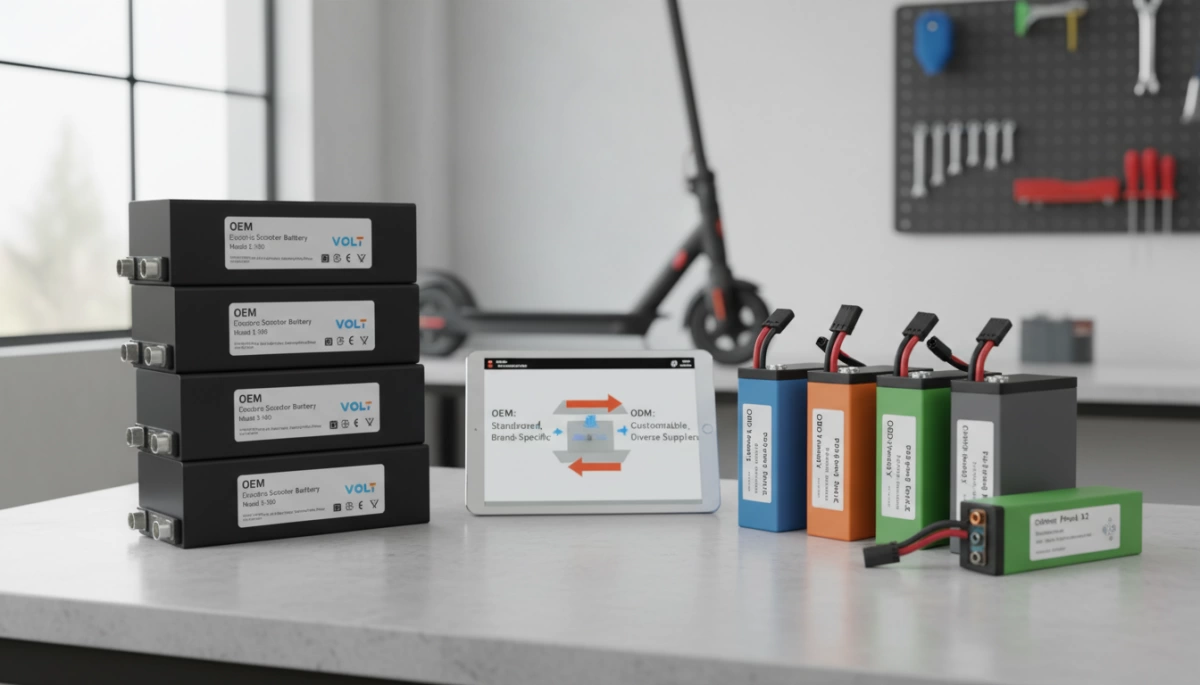
Feature OEM (Original Equipment Manufacturer) ODM (Original Design Manufacturer)
Best For Brands needing proven, standard 24V, 36V, or 48V scooter batteries quickly. Innovators requiring unique shapes, custom BMS development, or specific high-performance metrics.
Time to Market Fast (Weeks). We utilize existing designs and tooling to accelerate production. Medium. Requires time for design, prototyping, and validation before mass production.
R&D Required Low. You leverage our pre-validated engineering and safety certifications. High. Involves deep collaboration on cell chemistry (like 21700 vs 18650 batteries) and thermal management.
Cost Investment Lower Upfront. Minimal tooling fees; cost efficiency comes from volume. Higher Upfront. Includes NRE (Non-Recurring Engineering) costs for molds and custom electronics.
Scalability High. Ready for immediate volume scaling (100k+ units). Scalable. Once the prototype is approved, we transition to mass manufacturing.

If your goal is to hit the market immediately with a reliable, standard solution, OEM is the efficient choice. However, if your vehicle requires a battery with a non-standard form factor or specialized discharge rates to outperform competitors, the ODM route allows us to build a custom rechargeable lithium battery system tailored exactly to your specs.

Core Technical Requirements for Scooter Batteries

When defining the specs for your next electric scooter battery pack, we focus on four non-negotiable technical pillars. These requirements ensure your product balances performance, safety, and market compliance.

Voltage Platforms & Capacity

We engineer systems around standard platforms that dominate the micro-mobility market. While we customize for specific motor requirements, most commercial and consumer scooters rely on established voltage architectures to ensure compatibility and efficiency.

  • 24V Systems: Ideal for lightweight, last-mile commuter scooters and neighborhood cruisers.
  • 36V Systems: The industry standard for balancing speed and torque, commonly found in the average 36v lithium battery for an electric scooter.
  • Custom Platforms: For high-performance needs, we scale up to meet specific power demands.

High Energy Density & Cell Selection

Riders demand range, but they refuse to carry heavy, bulky vehicles. We solve this by utilizing high-energy-density lithium-ion cells (18650 and 21700 formats). This approach maximizes the electric scooter battery life while keeping the overall vehicle weight manageable. Understanding how to choose the right 18650 battery chemistry is vital for optimizing this power-to-weight ratio.

Fast Charging for Fleet Availability

For shared mobility operators and delivery fleets, downtime equals lost revenue. Our battery designs prioritize thermal management to support faster charging cycles without degrading cell health. This ensures your fleet spends more time on the road and less time tethered to a wall.

Mandatory Global Certifications

You cannot scale a brand if your products get stuck at customs. We build compliance into the design phase, ensuring every pack is ready for global distribution.

Certification Purpose
UN38.3 Mandatory safety testing for shipping lithium batteries internationally (air/sea).
IEC 62133 The global benchmark for safety requirements in portable sealed secondary cells.
UL / CE Critical safety and conformity standards for entering US and European markets.
ISO 9001 Ensures our manufacturing quality management systems meet international standards.

After-Sales Support: OEM vs ODM Batteries Electric Scooters

As an entrepreneur in the mobility space, I always stress that choosing between OEM vs ODM batteries electric scooters isn’t just about the initial manufacturing—it is about what happens after the pallets arrive. In the highly competitive US market, your brand reputation hinges entirely on reliability.

If a rider faces electric scooter battery issues, they do not blame the factory in Asia; they blame your brand. Bad support leads to negative reviews, safety liabilities, and tanked sales. A solid post-delivery support system from your manufacturing partner prevents minor glitches from escalating into costly recalls. It guarantees that when a customer needs an electric scooter battery replacement, you have the backing to resolve it instantly.

Essential Support Features for Electric Scooter Batteries

Whether you run standard 36V setups or high-performance 60 volt electric scooter battery systems, your battery supply chain strategy must include comprehensive post-sale backing. Here is the non-negotiable support matrix I require from any battery manufacturer:

Support Feature Real-World Impact on Your Scooter Brand
Technical Documentation Clear integration manuals, safety guidelines, and spec sheets. This ensures your team fully understands the technical nuances, like the difference between protected and unprotected 18650 batteries used in your packs.
Application Engineering Support Direct access to engineering teams. They help you seamlessly integrate the electric scooter battery pack with your motor controller and custom BMS development.
Field Issue Resolution Fast, data-driven root cause analysis. If a battery drops voltage early or fails, you need a partner who can diagnose the issue down to the individual cell level immediately.
Robust Warranty Programs Ironclad, hassle-free guarantees. If an electric scooter replacement battery is required due to a manufacturing defect, your partner should absorb the battery cost for electric scooter replacements without a fight.

Securing these support pillars ensures your electric scooter brand remains reliable, safe, and profitable long after the initial sale.

FAQ: Choosing the Right Battery Partner

When deciding on OEM vs ODM Batteries Electric Scooters, getting the right answers upfront saves time and capital. As a seasoned partner in the micro-mobility space, I hear these core questions from new and established US brands daily.

OEM vs ODM: The Main Difference

When brands ask me to explain the core difference, I keep it simple:

  • OEM (Original Equipment Manufacturer): You utilize our existing, fully tested battery designs and white-label them for your brand. It is built for massive scale.
  • ODM (Original Design Manufacturer): We act as your engineering partner for a ground-up ODM lithium battery design, creating a completely unique pack tailored to your scooter’s specific chassis and performance specs.

The Fastest Route to Launch

If speed to market is your ultimate goal, OEM battery pack production wins effortlessly. Because the engineering, automated battery cell sorting, and compliance testing are already finished, you completely bypass the R&D phase. You can launch a reliable electric scooter with lithium battery in weeks instead of the months required for an ODM build.

Custom BMS Development: Is It Necessary?

Do you really need a custom Battery Management System? It depends entirely on your use case:

  • Go Standard: If you are running typical 24V 36V 48V scooter batteries for standard commuter models, an off-the-shelf BMS handles temperature control, balancing, and standard safety perfectly.
  • Go Custom: If you are building high-performance off-road models, a rental fleet requiring advanced GPS telemetry, or a fast battery swap electric scooter, then custom BMS development is absolutely mandatory to prevent field failures and common electric scooter battery issues.

Mandatory International Shipping Certifications

You cannot build a profitable battery supply chain strategy if your shipments get seized at customs. Shipping any lithium ion battery pack for electric scooter into the United States requires strict testing:

  • UN38.3 Battery Certification: Non-negotiable for global air and sea transport. It proves your packs can handle pressure, thermal, and vibration stress without incident.
  • IEC 62133 Safety Standard: The international baseline for lithium-ion cell and pack safety.
  • UL Certification (e.g., UL 2271): While sometimes optional depending on the exact state, having UL certification is heavily expected in the US market to secure insurance and consumer trust.
  • Warehousing Protocol: Earning the certifications is only step one; maintaining quality post-transit is step two. Understanding proper logistics and how to store LiFePO4 batteries or standard lithium packs in your US warehouses ensures they hit the streets at 100% capacity.

10 Things to Consider When Buying Bulk Electric Scooter Batteries

Matching Voltage to Motor Requirements

Have you ever deployed a fleet of scooters only to receive complaints that they struggle up minor hills or suddenly lose top speed? When we consult with buyers looking for wholesale electric scooter batteries, the very first technical hurdle we tackle is voltage. Getting this wrong doesn’t just hurt performance; it destroys the rider experience and ultimately inflates your long-term electric scooter battery replacement cost due to premature component wear.

Think of voltage as the “pressure” that pushes electrical current from the battery to the scooter’s motor. It serves as the baseline that dictates both your top speed and overall power delivery.

  • Speed and Torque Control: An electric scooter battery 36v system offers a vastly different ride profile than an electric scooter battery 48v setup. Higher voltage pushes more power through the controller, delivering punchier acceleration and higher top-end speed.
  • Operating Efficiency: To achieve the same power output (wattage), a higher voltage system requires less current (amps). Lower current means less heat generated in the wiring and motor, extending the lifespan of the entire powertrain.

Evaluating Your Target Application

You must precisely match your battery’s voltage to the environment where the scooters will operate. Procuring fleet electric scooter batteries for a flat downtown campus requires a completely different specification than outfitting high-performance dual-motor consumer models.

System Voltage Ideal Use Case Application Notes
24V Light-duty & Entry-level Standard for kids’ models or very lightweight, short-distance flat-terrain commuters.
36V Urban Commuters & Shared Fleets The industry sweet spot. A 36v lithium battery for electric scooter provides the perfect balance of cost, range, and adequate speed for city sharing programs.
48V to 72V High-performance & Off-road Built for premium consumer scooters needing aggressive hill-climbing torque and heavy payload capacities.

The Impact of Voltage Sag

One of the most frustrating issues a rider can face is voltage sag. This occurs when a rider demands maximum power—like accelerating from a dead stop or climbing a steep incline. Under this heavy load, the battery’s voltage momentarily drops.

If you are sourcing a lithium ion battery pack for electric scooter fleets that is undersized for the motor controller’s demand, this sag becomes severe. The scooter will noticeably bog down, speed will crawl, and in worst-case scenarios, the sudden voltage drop can trick the controller into thinking the battery is dead, prompting an abrupt mid-ride shutdown. We eliminate this by ensuring the battery pack’s continuous discharge rating comfortably exceeds the peak draw of the motor, guaranteeing a smooth, relentless power band from a full charge down to the last mile.

2. Selecting the Optimal Cell Chemistry

When evaluating 10 things to consider when purchasing batteries electric scooters in bulk, the underlying cell chemistry dictates everything from daily range to long-term safety. The US market demands uncompromising reliability, especially for fleet operators managing hundreds of units on active city streets. We generally narrow the field down to two dominant chemistries: standard Lithium-Ion and Lithium Iron Phosphate (LiFePO4).

Standard Lithium-Ion (18650/21700 Cells)

If your application prioritizes a lightweight build with maximum power output, a standard lithium ion battery pack for electric scooter models is the standard choice.

  • High Energy Density: Packs more usable energy into a much smaller, lighter footprint.
  • Consumer-Friendly: Ideal for retail consumer scooters where portability and weight matter most.
  • Proven Performance: Utilizing standard 18650 cells for electric scooters keeps the scooter deck slim while delivering the burst power needed for steep inclines.

The Case for LiFePO4 Scooter Batteries (26650/32650 Cells)

For heavy-duty, commercial applications like shared mobility fleets, durability and safety must trump weight. Transitioning to a rugged 32650 LiFePO4 battery changes the operational game.

  • Thermal Stability: Extremely resistant to overheating, making them perfect for brutal summer heatwaves across the US.
  • Maximum Safety: Inherently stable chemistry with a near-zero risk of thermal runaway or battery fires.
  • Extended Lifespan: Easily handles 2,000 to 3,000+ deep charge cycles, vastly outperforming standard lithium-ion life expectancies.

Chemistry and Total Cost of Ownership (TCO)

The chemistry you select for wholesale electric scooter batteries directly impacts your bottom line. While standard lithium-ion packs might offer a lower initial electric scooter battery replacement cost, LiFePO4 scooter batteries drastically lower your fleet’s Total Cost of Ownership (TCO). Because fleet electric scooter batteries take a daily beating from multiple riders, the massive cycle life of LiFePO4 means fewer mid-season replacements, reduced vehicle downtime, and a significantly higher return on investment when reviewing your bulk battery quotes.

3. Capacity and True Range (Ah and Wh)

When you are sourcing fleet electric scooter batteries, the numbers on the spec sheet can be misleading if you don’t know what to look for. Many buyers focus solely on Amp-hours (Ah), but that only tells part of the story. To understand the true range your scooters will deliver on the street, you need to calculate Watt-hours (Wh).

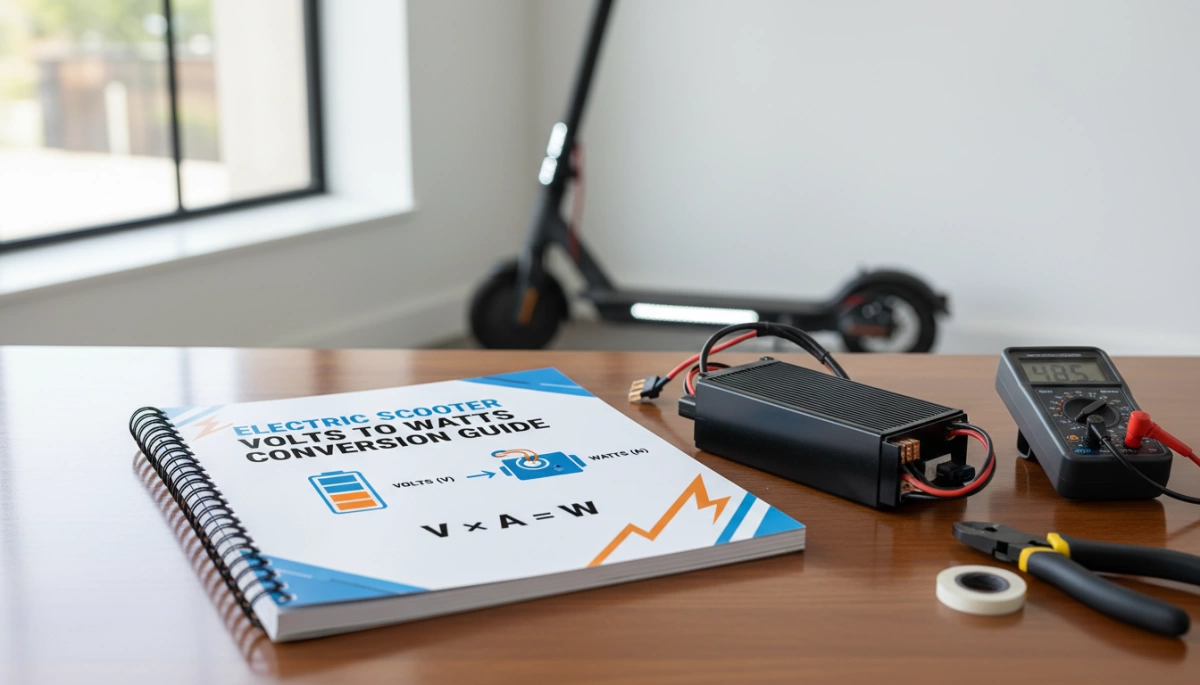
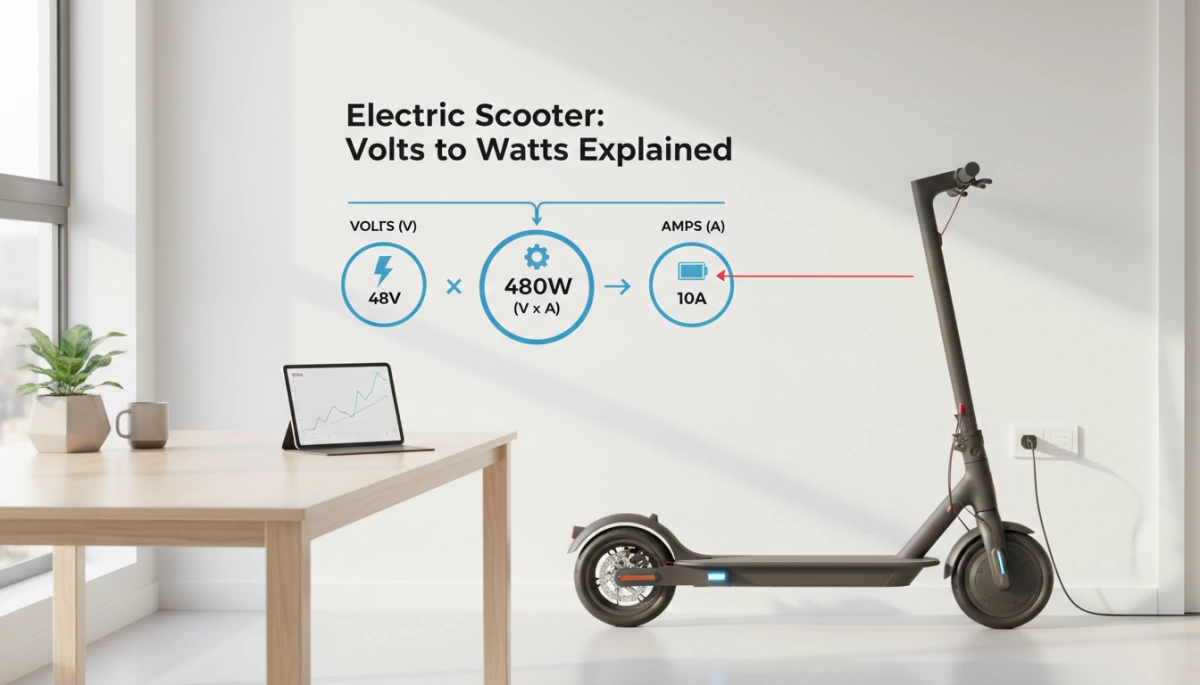
Here is the simple math: Voltage (V) x Amp-hours (Ah) = Watt-hours (Wh).

Why does this matter? A 36V 10Ah battery and a 48V 7.5Ah battery might look different, but they both offer roughly 360Wh of energy. However, the 48V system will likely deliver that power more efficiently. Watt-hours are the fuel in the tank; they are the only reliable metric for predicting real-world mileage.

Watch Out for “Label Capacity” vs. Real Capacity
In the bulk market, especially with generic suppliers, we see a lot of “capacity inflation.” A sticker might say 15Ah, but the actual cells inside are low-grade and only deliver 12Ah under load. This kills your fleet’s efficiency and ROI.

At Nuranu, we don’t play guessing games. We use high-quality cells (like 18650 or 21700 formats) and validate every pack with battery charge and discharge cycle testing. When we quote a custom rechargeable lithium battery system at 500Wh, you get 500Wh of usable energy, ensuring your riders don’t get stranded halfway through a trip.

4. The Critical Role of an Advanced Scooter Battery BMS

When I talk to clients about sourcing wholesale electric scooter batteries for the US market, I always remind them that the cells are only half the story. The brain of the operation is the scooter battery BMS (Battery Management System). Without a rock-solid BMS, even a premium lithium ion battery pack for electric scooter fleets will fail early or become a major liability.

The Baseline: What a Standard BMS Does

Think of the BMS as a 24/7 security guard for your power supply. At a minimum, any pack you source needs a reliable BMS to handle:

  • Overcharge Protection: Cuts the charging current before cells get dangerously full.
  • Short-Circuit Prevention: Instantly severs power if it detects a fault, preventing safety hazards.
  • Cell Balancing: Ensures all individual cells charge and discharge at the same rate, which maximizes your overall electric scooter battery lifespan.

Why Fleet Operators Need a Smart BMS

If you are managing fleet electric scooter batteries, a basic BMS just won’t cut it. You need a smart BMS. When you have hundreds of scooters pounding the pavement from Seattle to Miami, you cannot rely on guesswork.

A smart BMS delivers serious ROI through:

  • Real-Time Monitoring: Track voltage drops, temperature spikes, and exact cycle counts remotely.
  • Predictive Diagnostics: Flag degrading packs before a scooter actually leaves a rider stranded on the sidewalk.
  • Automated Protection: Safely powers down the pack during off-season storage. (Knowing exactly how to activate the 18650 lithium battery sleep mode is something a smart BMS should handle automatically to prevent irreversible deep-discharge damage).
  • Data Integration: Syncs seamlessly with your fleet’s backend software via Bluetooth or cellular modules.

When you’re comparing bulk battery quotes, dig into the manufacturer’s BMS programming capabilities. Investing in advanced management tech upfront is the easiest way to slash your long-term electric scooter battery replacement cost.


Would you like me to draft the next section on “Thermal Management for Extreme Environments” so we can keep building out the outline?

5. Thermal Management for Extreme Environments

When I advise clients on the 10 things to consider when purchasing batteries electric scooters in bulk, I always point to the weather. The reality of urban deployment in the US is brutal. We are talking about pounding summer heat in Phoenix, freezing winters in Chicago, and constant, heavy usage. These drastic temperature swings are a leading cause of electric scooter battery issues.

If you ignore thermal management, extreme conditions will severely impact how long lithium-ion batteries last and quickly drain your maintenance budget. You need a lithium ion battery pack for electric scooter fleets specifically engineered to survive the elements.

Must-Have Thermal Protections

Do not commit to wholesale electric scooter batteries unless they feature the following built-in safeguards:

  • Heat Dissipation Materials: Look for high-grade aluminum enclosures and advanced thermal potting compounds that actively pull heat away from the core.
  • Proper Cell Spacing: Packing 18650 cells for electric scooters too tightly creates dangerous hot spots. Smart engineering leaves precise spacing for passive cooling and thermal stability.
  • Automated Thermal Cut-Offs: Your scooter battery BMS must use active temperature sensors to instantly cut power if the pack gets too hot or too cold, completely eliminating the risk of electric scooter battery fires.

6. Global Safety Certifications and Compliance

When you’re sourcing wholesale electric scooter batteries, safety is the absolute bottom line. You might ask, are electric scooter batteries safe? They are—but only if they carry the right credentials. For the US market, cutting corners here isn’t an option.

The Non-Negotiables for US and Global Markets

To legally and safely operate or sell within the United States and abroad, your battery systems must meet strict regulatory standards.

  • UL 2272: This is the gold standard in the US. It evaluates the electrical drive train system and battery/charger combinations to prevent electric scooter battery fires.
  • CE: Mandatory for entering the European market, proving the product meets health, safety, and environmental protection standards.
  • IEC 62133: The global safety standard for secondary lithium cells and batteries used in portable applications.

If your OEM electric scooter battery supplier cannot instantly produce these valid certificates, walk away. When we engineer solutions like our 60v 2ah 18650 lithium battery pack for one wheel electric balance scooters, passing these global compliance benchmarks is hardwired into our R&D process from day one.

Avoiding Liability and Product Recalls

Skipping certifications to shave a few dollars off your bulk battery quotes is a guaranteed way to sink your business. Importing and deploying uncertified lithium electric scooter battery packs exposes you to severe risks:

  • Catastrophic Liability: If an untested battery fails, catches fire, or causes injury, your company absorbs 100% of the legal and financial fallout.
  • Forced Recalls: US Customs (CBP) and the Consumer Product Safety Commission (CPSC) actively seize uncertified mobility devices at the border and issue mandatory, costly recalls for non-compliant products that make it through.
  • Brand Destruction: In the low-speed mobility market, consumer trust is everything. A single thermal event linked to a cheap, uncertified battery will permanently damage your reputation.

7. Shipping and Transport Legality (UN38.3)

UN38.3 Certification for Lithium Battery Shipping

The Logistical Nightmare of Lithium Batteries

Importing a lithium ion battery pack for electric scooter fleets into the US isn’t like shipping a box of consumer electronics. Lithium batteries are heavily regulated as Class 9 Dangerous Goods. I’ve seen buyers secure incredible bulk battery quotes, only to watch their entire shipment get seized at the port because they lacked the right paperwork.

When you’re dealing with wholesale electric scooter batteries, customs officials and freight forwarders do not mess around. Without proper documentation, your sea or air freight will be grounded immediately, racking up massive daily storage fees or facing total confiscation by port authorities.

Why You Need a UN38.3 Certified Scooter Battery

To legally transport these batteries globally, your electric scooter battery manufacturers must hold a valid UN38.3 certification. This is a non-negotiable international standard that proves the cells and the assembled packs can survive the brutal conditions of transit.

Here is exactly what UN38.3 testing guarantees for your shipment:

  • Altitude Simulation: Ensures the battery won’t expand or vent in an unpressurized cargo hold during air freight.
  • Thermal Testing: Verifies chemical stability during extreme temperature swings inside shipping containers.
  • Vibration and Shock: Proves the structural integrity of the pack can handle rough ocean swells and heavy physical turbulence.
  • Short Circuit Protection: Confirms the external wiring and BMS remain safe even under extreme stress.

Whether you are ordering a massive pallet of custom fleet packs or standard 36V 10Ah LG 18650 lithium-ion battery packs for 10-inch electric kick scooters, that UN38.3 test report is your golden ticket. Always demand to see this documentation from the factory before transferring any funds or finalizing your logistics plan.

8. Manufacturing Scalability and Minimum Order Quantities (MOQs)

When evaluating the 10 Things to Consider When Purchasing Batteries Electric Scooters in Bulk, a supplier’s ability to scale is a make-or-break factor for your US operations. Spring and summer ridership spikes can drain your inventory fast, and if your supplier can’t keep up, you leave money on the table.

Vetting True Production Capacity

I always advise my partners not to just take a vendor’s word for it. You need to work with electric scooter battery manufacturers who have proven, massive throughput.

  • Target Output: Look for a facility genuinely capable of producing 100,000+ units monthly to ensure you never face a bottleneck.
  • Quality at Scale: High volume means nothing if the failure rate spikes. Automated production lines are mandatory for reliable wholesale electric scooter batteries.
  • Inventory Readiness: When you finally receive those massive shipments, holding them requires care. Knowing how to store 18650 batteries safely in your domestic warehouses is just as crucial as the manufacturing process itself to protect your investment.

Balancing MOQs for Testing and Peak Seasons

Getting aggressive bulk battery quotes shouldn’t force you into a massive blind purchase right out of the gate.

  • Low Initial MOQs: You need the flexibility to order a small batch first. This gives you room to run real-world field tests on your custom rechargeable lithium battery systems before fully committing.
  • Rapid Scaling: Once those prototypes pass your tests, your manufacturer must act as a true partner, pivoting instantly to high-volume production so you are fully stocked before the busy season hits.

9. Quality Control and End-of-Line (EOL) Testing

When purchasing wholesale electric scooter batteries, the facility’s environment dictates the product’s actual lifespan in the real world. There is a massive reliability gap between a manually assembled lithium ion battery pack for electric scooter setups and one built in an automated, high-tech clean room.

Clean Room Automation vs. Manual Assembly

  • Manual Assembly: Highly vulnerable to human error, inconsistent spot welding, and contamination. Even a speck of dust or a slight bit of humidity trapped inside the casing during hand assembly can lead to serious electric scooter battery issues or premature failure.
  • Automated Clean Rooms: As a serious OEM electric scooter battery supplier, we know that utilizing dust-free, fully automated assembly lines is the only way to scale. Robotic precision ensures exact cell spacing, flawless structural welds, and airtight sealing to handle the harsh vibrations of US city streets.

Demand 100% EOL Testing

To protect your bottom line, you must demand a 98.5%+ pass rate to avoid dead-on-arrival units and brutal electric scooter battery replacement costs. Achieving this consistency requires zero shortcuts on the factory floor:

  • Automated Cell Sorting: Before a single weld happens, robotic machines must test and group standard 18650 cells for electric scooters by voltage, capacity, and internal resistance. This guarantees the entire pack stays perfectly balanced during charge and discharge cycles.
  • 100% EOL Verification: Every completed electric scooter battery pack must pass strict End-of-Line (EOL) testing. This includes rigorous charge/discharge simulations, BMS data communication checks, and thermal stress tests. Do not accept random batch sampling; every single battery must prove it works before it goes into a shipping crate.

If you look closely at the difference between a lead-acid battery and a lithium battery for electric vehicles, it becomes obvious why modern lithium-ion energy systems require this level of extreme quality control. Tight manufacturing tolerances and 100% testing are the only surefire ways to guarantee a long electric scooter battery life and keep your fleet operational.

10. Prototyping Speed and Engineering Support

Battery Manufacturer Engineering Support

When we help clients source wholesale electric scooter batteries, we always stress that speed to market is everything. The timeline from a basic concept to a production-ready unit dictates whether you hit your launch window in the competitive US market.

You don’t just need a vendor; you need a partner. Reliable electric scooter battery manufacturers should act as a direct extension of your own engineering team.

Why Engineering Partnerships Matter

  • Rapid Prototyping: Moving quickly from a design brief to a fully tested electric scooter battery pack keeps your fleet rollout on schedule.
  • Custom Design: Building custom rechargeable lithium battery systems requires tight collaboration to match exact voltage, BMS, and spatial constraints.
  • Field Issue Resolution: Post-launch support is non-negotiable. A dedicated engineering partner helps troubleshoot real-world problems, effectively lowering your overall electric scooter battery replacement cost. Sometimes, solid support involves practical troubleshooting—like guiding local technicians on how to bring a 18650 battery back to life after a deep discharge, rather than instantly scrapping the pack.
  • Ongoing Warranty Support: Always choose an OEM electric scooter battery supplier that stands by their product with strong warranties long after the initial delivery.

If your supplier goes silent after the container ships, you take on massive operational risk. Demand a manufacturing partner who supports your battery deployment for its entire lifespan.

Why Top Brands Partner with nuranu for Custom Battery Solutions

Custom Battery Solutions for Electric Scooters Bulk

When you are sourcing fleet electric scooter batteries, you need more than just a vendor; you need a manufacturing partner who understands the grind. At nuranu, we have spent over 10 years mastering the unique power demands of low-speed mobility. As a leading OEM electric scooter battery supplier, we know exactly what it takes to keep your riders moving across city streets, campus grounds, and suburban neighborhoods safely and efficiently.

We don’t just assemble cells and ship them out. We design and build custom rechargeable lithium battery systems specifically engineered to handle the pounding heat, freezing winters, and constant vibration that US urban environments dish out on a daily basis.

Our Core Manufacturing Advantages

Here is exactly why top mobility brands choose to work with us over other electric scooter battery manufacturers:

  • Rapid Prototyping: In the mobility market, time is money. We take your exact specifications and turn them into functional prototypes fast. Whether you are looking to integrate a highly efficient 36v lithium battery for a lightweight commuter model or a complex, high-capacity setup for off-road use, our engineering team gets it in your hands for testing without the endless back-and-forth delays.
  • 24/7 Automated Quality Control: Manual assembly leaves too much room for human error. We utilize clean-room environments with fully automated cell sorting, spot welding, and comprehensive end-of-line (EOL) testing. This rigorous 24/7 QC process guarantees a 98.5%+ pass rate. For your business, that means drastically reducing out-of-the-box failures, unexpected electric scooter battery replacement costs, and safety liabilities.
  • Dedicated Engineering Partnerships: We operate directly as an extension of your own R&D team. From customizing the scooter battery BMS (Battery Management System) for optimal predictive diagnostics to ensuring strict UN38.3 compliance for hassle-free sea and air freight to the United States, we provide continuous, dedicated support. We are there from the initial concept phase straight through to post-launch field issue resolution.

When you are reviewing bulk battery quotes and planning your next major scooter rollout, having a reliable factory partner completely changes the game. We deliver the consistency, rapid scalability, and uncompromising quality your fleet demands to stay profitable and on the road.

Frequently Asked Questions (FAQs)

What is the standard lifespan of fleet electric scooter batteries?

For commercial operations, a standard lithium ion battery pack for electric scooter typically lasts between 300 to 500 charge cycles. In the real world, this translates to about 1 to 2 years of heavy daily use. The actual electric scooter battery lifespan depends heavily on urban environments—pounding heat, freezing cold, and constant deep discharges degrade cells faster. Upgrading to more robust chemistries can push that lifespan closer to 3 to 5 years, which drastically reduces your overall electric scooter battery replacement cost.

How do minimum order quantities (MOQs) impact bulk battery quotes?

Volume directly drives your pricing. When evaluating bulk battery quotes, a higher MOQ absorbs the initial engineering, tooling, and setup costs on the manufacturing floor. While we offer flexible initial runs for prototyping and field testing, committing to larger production runs for wholesale electric scooter batteries significantly lowers your per-unit cost and secures better supply chain priority during peak manufacturing seasons.

Why is a UN38.3 certified scooter battery mandatory for shipping?

Lithium batteries are legally classified as dangerous goods. A UN38.3 certified scooter battery has passed rigorous international testing for thermal stability, extreme vibration, shock, and overcharging. Without this certification, you legally cannot ship the batteries via air or sea freight. If you try, your shipments will be flagged, delayed, or outright seized by US Customs. This certification is an absolute non-negotiable for importing power systems into the United States.

Can I replace lead-acid batteries with LiFePO4 scooter batteries?

Yes, you absolutely can, and it is a highly recommended upgrade. LiFePO4 scooter batteries are significantly lighter, charge faster, and offer a much longer cycle life compared to heavy, outdated lead-acid blocks. They are ideal for high-use fleet electric scooter batteries. However, you must ensure the voltage perfectly matches your current motor controller and that you supply a compatible lithium charger. Exploring the benefits of the 32650 LiFePO4 battery can help you understand why this chemistry is becoming the gold standard for durability and safety in modern mobility upgrades.

Electric Scooters Volts to Watts Conversion Guide Explained

Decoding Electric Scooter Specs: Volts, Amps, and Watts

For OEMs and fleet managers, understanding the relationship between electric scooter voltage vs wattage is critical for designing reliable mobility solutions. It’s not just about raw numbers; it’s about how these metrics interact to define the speed, torque, and range of your vehicle. Here is the breakdown of the core electrical concepts that drive our custom battery engineering.

Volts (V) – The Pressure

Think of Voltage as the “push” or pressure behind the electricity. It determines how fast energy can be delivered to the motor. In the low-speed mobility sector, we primarily engineer solutions around two standard platforms:

  • 24V Systems: Optimized for standard e-scooters and AGVs requiring sustained discharge and rapid charging capabilities.
  • 36V Systems: Designed for professional-grade applications, offering higher discharge rates and the “push” needed for better acceleration and hill-climbing performance.

Amps (A) & Amp-hours (Ah) – The Current and Capacity

While voltage is the pressure, Amps (A) represent the volume of electricity flowing through the system at any given moment. This flow is what generates the torque to get the scooter moving.

Amp-hours (Ah), on the other hand, represent the size of your “gas tank.”

  • Ah Rating: Tells you how much energy is stored.
  • Real-World Impact: A higher Ah rating means a larger capacity, allowing the scooter to run longer between charges. When we design a lithium ion battery for electric scooter applications, maximizing Ah within a compact enclosure is key to extending fleet uptime.

Watts (W) & Watt-hours (Wh) – The Total Power

Watts are the ultimate measure of your scooter’s performance. This is the figure that tells you how powerful the motor is.

  • Watts (W): Calculated by multiplying Volts x Amps. This determines top speed and climbing ability.
  • Watt-hours (Wh): This is the true indicator of range. While Ah measures capacity, Wh measures the total energy available to do work.

To accurately calculate scooter wattage requirements or estimate range, you must look at the Watt-hours. A 36v electric scooter battery with high Wh will consistently outperform lower-energy alternatives, ensuring your riders reach their destination without range anxiety.

How to Calculate Volts to Watts for Your Electric Scooter

Electric Scooter Volts to Watts Conversion Guide

Understanding the relationship between voltage and wattage is essential when designing or upgrading electric mobility systems. As manufacturers, we often guide clients through these calculations to ensure their electric scooter motor kit with battery selection matches their performance goals. The math is straightforward, but getting it right determines whether your scooter climbs that hill or stalls halfway up.

The Formula in Action

The basic formula for electrical power is Watts (W) = Volts (V) × Amps (A).

Let’s look at a real-world scenario using one of our standard configurations. Suppose you are integrating a 36V Nuranu lithium battery into a mid-range commuter scooter. If the scooter’s controller draws a peak current of 15 Amps, here is how you calculate the peak power output:

  • Voltage: 36V
  • Current: 15A
  • Calculation: 36 × 15 = 540
  • Result: 540 Watts of peak power.

This calculation helps you verify if a specific electric scooter battery 36V pack can deliver enough raw power to the motor without overheating the system. For professional applications, such as delivery fleets or industrial AGVs, we often customize the BMS (Battery Management System) to handle higher amperage for sustained periods, ensuring reliable torque under load.

Quick Reference Conversion Chart

To save you time, we’ve compiled a reference table for common electric scooter voltage vs wattage configurations found in the US market. This chart assumes peak controller output to help you estimate potential motor performance.

System Voltage Controller Current (Amps) Peak Power Output (Watts) Typical Application
24V 10A 240W Entry-level / Kids’ Scooters
24V 20A 480W Standard Commuter Scooters
36V 15A 540W Mid-Range Mobility
36V 20A 720W High-Performance Commuter
48V 20A 960W Heavy-Duty / Uphill Capability
48V 30A 1440W Pro/Off-Road Scooters

If you are looking to build a custom solution, such as a 6V lithium battery setup for smaller auxiliary systems or a high-voltage powertrain, our engineering team can help match the right cells to your specific power requirements.

Speed, Torque, and Range: How the Numbers Impact the Ride

Electric Scooter Volts to Watts Explained

Understanding electric scooter voltage vs wattage is the secret to knowing exactly how your ride will perform on the pavement. These numbers dictate everything from your top speed to how well you handle steep hills on your daily commute.

Higher Voltage vs. Higher Amperage

Not all 500W motors behave the same way. The power delivery heavily depends on the system’s voltage:

  • 24V Systems: Running a 500W motor on a standard 24v electric scooter battery requires a high amount of amperage. Pushing more amps creates excess heat, which drains efficiency and accelerates wear on your internal components.
  • 36V Systems: Generating that same 500W through an electric scooter battery 36v requires significantly fewer amps. This keeps the motor and controller running cooler, maximizing your energy efficiency and extending the lifespan of your hardware.

Hill Climbing and Acceleration

When you hit a tough incline, continuous wattage isn’t enough—you rely on peak wattage. Peak wattage is the absolute maximum burst of power your motor can produce. A high peak wattage directly translates to aggressive off-the-line acceleration and the raw torque necessary to conquer steep hills without your scooter bogging down.

Battery Life and Range

If you want to know how far you can travel, focus on Watt-hours (Wh). This is the true indicator of the battery capacity of electric scooter systems.

  • The Formula: You don’t need an advanced electric scooter range calculator to figure this out. Simply divide your battery’s total Watt-hours by your scooter’s average efficiency. A standard commuter scooter uses about 15 Wh per mile.
  • The Real-World Range: A 360Wh battery divided by 15 Wh per mile gives you an estimated range of 24 miles on a single charge.
  • The Chemistry: Maximizing those Watt-hours comes down to the cells powering your deck. Researching and choosing an 18650 lithium battery or a lithium polymer battery for your electric vehicle will drastically improve your long-term range retention, weight distribution, and overall reliability.

Scooter Battery Upgrade: Lead-Acid to Lithium

Electric Scooter Battery Upgrade Benefits

I’ve seen firsthand how a simple electric scooter battery replacement can completely transform an older fleet. Swapping out outdated lead-acid units for high-wattage lithium power is the smartest operational upgrade you can make, instantly optimizing your electric scooters volts to watts conversion for actual road performance.

The Weight Advantage

Dropping a custom lithium ion battery for electric scooter into your deck cuts the power source weight by up to 70%. This massive reduction instantly improves your scooter’s Watt-to-weight ratio without needing a larger motor.

  • Faster Acceleration: Less dead weight means your controller translates Watts into speed much faster.
  • Better Handling: A lighter scooter is significantly easier to maneuver on busy city streets.
  • Peak Efficiency: Your motor doesn’t have to work as hard to push a heavy frame, making every single Watt count toward your range.

Electric Scooter Battery Life and ROI

You don’t need to redesign your entire scooter to get better performance. Working with custom electric scooter battery manufacturers allows you to drop a high-power lithium pack straight into your existing setup. The return on investment is obvious the moment you look at the longevity:

  • Triple the Lifespan: Lithium upgrades easily last three times as long as traditional lead-acid bricks.
  • Consistent Capacity: Because modern lithium-ion batteries don’t suffer from a memory effect, you get reliable electric scooter battery life without permanently losing capacity after partial charges.
  • Long-Term Savings: While the initial swap requires an investment, eliminating the cycle of constant lead-acid replacements drastically lowers your maintenance overhead.

Safety and Compliance in High-Power Scooter Batteries

When we talk about calculating an electric scooter volts to watts conversion to maximize speed and torque, we have to talk about safety. Pushing higher wattage through a system naturally generates more heat. If that heat isn’t managed correctly, you risk component failure or, worse, electric scooter battery fires.

The Critical Role of the Electric Scooter Battery BMS

An advanced electric scooter battery BMS (Battery Management System) is absolutely non-negotiable for high-power rides. Think of the BMS as the onboard security detail for your lithium ion battery for electric scooter. It actively monitors the pack to ensure every individual cell operates within safe limits. Whether your system uses larger custom cells or standard formats—and understanding what an 18650 battery size is helps you appreciate how tightly these energy-dense cells are packed—the BMS is what keeps the thermal dynamics in check.

Key BMS protections include:

  • Overcharge Protection: Instantly stops the charging cycle when the battery is full, preventing thermal runaway and extending the overall electric scooter battery life.
  • Short-Circuit Protection: Cuts power immediately if a fault is detected, protecting the motor, the wiring, and the rider.
  • Thermal Management: Throttles output if the electric scooter battery pack gets too hot during aggressive riding or steep hill climbs.

Industry Standards and Certifications

Are electric scooter batteries safe? Yes, but only if they are built and tested to strict standards. Before any high-wattage battery upgrade hits the US market, it needs to pass rigorous safety checks.

We look for the following non-negotiable benchmarks:

  • 100% End-of-Line (EOL) Testing: Every single battery must be tested under full electrical load before it ever leaves the factory floor. No random sampling; every unit is verified.
  • UN38.3 Certification: This guarantees the battery is safe for transport and can handle altitude, extreme thermal variations, and heavy vibration shocks.
  • IEC 62133 & CE: The gold standard global certifications confirming the battery meets strict, standardized electrical safety requirements.

Upgrading your wattage is the best way to boost your scooter’s performance, but relying on tested, certified components with a smart BMS is what actually guarantees you get home safely.

10 Best Electric Scooter Battery Manufacturers for 2026

What Separates a Tier-1 Battery Manufacturer from the Rest?

As someone deeply involved in the mobility hardware sector, I see firsthand the headaches procurement officers and fleet managers face: unpredictable voltage drops, painful supply chain bottlenecks, and the devastating brand damage of safety recalls. Finding a top-tier electric scooter battery manufacturer is not just about placing an order for a standard 36v electric scooter battery. It is about partnering with a factory that engineers out failure long before the product hits the pavement.

When we evaluate the market, here is exactly what separates true tier-one producers from basic, off-the-shelf resellers.

Advanced Battery Management Systems (BMS)

The brain of any custom electric scooter battery pack is its BMS. A tier-one electric scooter battery BMS (Battery Management System) features custom thermal management and predictive diagnostics. This intelligent hardware is non-negotiable if you want to prevent electric scooter battery fires and drastically extend cycle life. It actively balances cells, mitigates charging extremes, and cuts power before catastrophic thermal runaway can begin.

Safety & Global Certifications

We never compromise on compliance, and neither should you. A legitimate OEM scooter battery manufacturer designs packs specifically to pass stringent electric scooter battery safety certifications. Without absolute compliance to UN38.3 (required for global shipping), IEC 62133, and UL standards, your product is a liability. These certifications guarantee consumer safety and ensure your inventory never gets stalled at customs.

Scalable Scooter Battery Production

There is a massive operational gap between a reseller importing generic packs and a manufacturer running a state-of-the-art facility. True manufacturers utilize automated, ISO 9001-certified clean rooms. This infrastructure guarantees precise, scalable scooter battery production. Whether we are scaling up a custom electric scooter removable battery or pushing high volumes of a standard 48v lithium battery for electric scooter applications, the quality remains identical from unit one to unit ten thousand.

Cell Chemistry Expertise

Hardware requirements are evolving, and so must the chemistry.

  • Lithium-Ion (18650/21700): A premium lithium ion battery for electric scooter remains the gold standard for lightweight, folding consumer models needing maximum energy density.
  • Lithium Iron Phosphate (LiFePO4): For specialized fleet and rental applications, tier-one factories are shifting toward the LiFePO4 scooter battery. While slightly heavier, it operates as an incredible deep cycle scooter battery, offering up to three times the cycle life and superior thermal stability with virtually zero fire risk.

An elite manufacturer does not just sell you a battery; they engineer the precise chemistry to match your operational demands.

The 10 Best Electric Scooter Battery Manufacturers

Top 10 Electric Scooter Battery Makers

When you are sourcing power systems for your mobility fleet or consumer products, partnering with the right manufacturer is everything. The US market demands high performance, reliable deep cycle scooter batteries, and strict safety standards to prevent electric scooter battery fires. Based on engineering capability, cell quality, and scalable production, here are the top 10 battery manufacturers in the industry today.

1. Nuranu (Top Pick for Custom OEM & B2B Solutions)

As a dedicated OEM scooter battery manufacturer, we design our power solutions specifically for the rigorous demands of the North American market. We know that off-the-shelf solutions don’t always cut it, which is why we specialize in creating the perfect custom electric scooter battery pack for your specific chassis. We integrate advanced electric scooter battery BMS (Battery Management System) tech to monitor cell health, balance loads, and ensure maximum thermal safety. Our goal is to extend electric scooter battery life while providing a scalable supply chain. For an idea of our engineering standards in lightweight mobility, you can look at the architecture of our 48v lithium ion battery packs, which deliver reliable power without unnecessary bulk.

2. CATL (Contemporary Amperex Technology Co. Limited)

CATL is an undisputed global giant. While they are famous for powering full-sized EVs, their massive production scale makes them a dominant force for high-capacity mobility fleets. They are heavily invested in highly durable LiFePO4 scooter battery technology, making them the standard for heavy-duty commercial rentals that sit outside in extreme temperatures.

3. LG Energy Solution

LG manufactures some of the most energy-dense cells currently available. If you are building high-speed commuter scooters that need to be carried up stairs, an LG lithium ion battery for electric scooter applications ensures maximum range without adding dead weight to the scooter deck.

4. Samsung SDI

Samsung’s 18650 and 21700 cylindrical cells are the gold standard for high-discharge power. They are incredibly popular in the electric scooter battery replacement market because they offer consistent voltage, great acceleration punch, and reliable thermal stability over hundreds of charge cycles.

5. Panasonic

Famous for setting the industry benchmark in cell longevity, Panasonic’s chemistry is undeniably premium. Their cells are the perfect foundation if you want to offer a premium electric scooter removable battery setup where long-term durability and safety are your main selling points to consumers.

6. BYD

BYD is a pioneer in battery safety tech. Their intense focus on lithium iron phosphate chemistry means their packs are incredibly safe, virtually eliminating the risk of thermal runaway. They are an excellent, rugged choice for a 36v electric scooter battery configuration used in high-abuse urban sharing programs.

7. EVE Energy

EVE has quickly climbed the ranks by offering highly reliable cylindrical and prismatic cells. They provide an outstanding balance between cost and performance, making them a solid partner for brands looking to achieve scalable scooter battery production without sacrificing quality control.

8. BAK Battery

BAK specializes in cost-effective lithium cylindrical cells. They are a massive supplier for consumer-level, folding commuter scooters. They provide reliable, everyday power that keeps the eventual electric scooter battery replacement cost manageable for your end-user.

9. MANLY Battery

If you need flexibility for different product lines, MANLY is a strong contender. They have a vast lineup of LiFePO4 options and are quick to adapt to specific voltage requirements—whether you need a lightweight 24v battery for electric scooter setups or a heavier, high-torque 60v pack.

10. Ufine Battery

Ufine rounds out our list with a strong focus on custom, lightweight power solutions. They are a highly capable manufacturer when you need specialized form factors, compact footprints, or a simple 12v electric scooter battery for ultra-portable, short-range mobility devices.

Lithium-Ion vs. LiFePO4: Which Scooter Battery is Better?

Best Electric Scooter Battery Types Comparison

As an industry-leading 10 Best Electric Scooter battery manufacturer, I regularly help clients choose the right cell chemistry. When designing a custom electric scooter battery pack, the debate almost always comes down to two main options: standard Lithium-Ion (Li-ion) and Lithium Iron Phosphate (LiFePO4).

The right choice depends entirely on how the scooter is used on American streets—whether it’s a lightweight city commuter or a heavy-duty rental fleet.

Standard Lithium-Ion (Li-ion)

  • Best For: Portable, lightweight, and folding commuter scooters.
  • The Pros: It offers maximum energy density. This means you get a lighter weight and a longer range in a much smaller physical footprint.
  • The Use Case: If you need a standard lithium ion battery for electric scooter to carry up apartment stairs or throw in the trunk of your car, Li-ion is the clear winner.

Lithium Iron Phosphate (LiFePO4)

  • Best For: Heavy-duty scooters, delivery mopeds, and commercial rental fleets.
  • The Pros: While slightly heavier, a LiFePO4 scooter battery offers up to 3x the cycle life. Most importantly, it features superior thermal stability to prevent electric scooter battery fires (virtually zero fire risk).
  • The Use Case: Ideal for intense daily use and fleet operators. If you want to dive deeper into why commercial operators prefer this chemistry, check out our guide on navigating the pros and cons of lithium iron phosphate (LFP) batteries.

Quick Comparison Table

Feature Lithium-Ion (Li-ion) Lithium Iron Phosphate (LiFePO4)
Energy Density High (Lighter weight) Medium (Slightly heavier)
Cycle Life 500 – 1,000 charge cycles 2,000 – 3,000+ charge cycles
Safety Profile Requires strict BMS monitoring Superior (Extremely stable chemistry)
Ideal Application Commuter electric scooter battery replacement Heavy-duty 48v lithium battery for electric scooter fleets

Both chemistries perform exceptionally well when paired with a highly engineered electric scooter battery BMS, but matching the right chemistry to your specific ride is what guarantees long-term power and safety.

How to Maximize Electric Scooter Battery Life

Even if you source your pack from a top 10 best electric scooter battery manufacturer, bad daily habits will destroy your investment. Whether you ride a daily commuter or manage a rental fleet, extending your electric scooter battery life comes down to three simple rules.

Best Charging Practices

  • Avoid the Extremes: Never drain your battery down to 0%. Try to keep your charge between 20% and 80% for daily use to avoid stressing the cells.
  • Don’t Overcharge: Leaving your charger plugged in 24/7 wears down a lithium ion battery for electric scooter. Unplug it once it hits full capacity.

Temperature Management During Storage

  • Store Indoors: Extreme weather is a battery killer. A freezing Midwest garage or a scorching hot Southwest trunk will permanently degrade your cells. Always store your scooter at room temperature.
  • Cool Down Before Charging: Never plug in your scooter immediately after a long, aggressive ride. Let the pack cool down first.

Why the Internal BMS Does the Heavy Lifting

You can’t manually monitor every cell inside your deck, which is why an advanced electric scooter battery BMS (Battery Management System) is critical. At Nuranu, we engineer our BMS units to handle the invisible work. Our custom systems actively balance voltage, manage thermal output, and run continuous predictive diagnostics to prevent electric scooter battery fires.

If you are upgrading a scooter or building a custom pack, understanding the chemistry matters. Looking closely at how long a 21700 battery lasts under real-world stress shows exactly why a premium BMS is non-negotiable. Smart hardware paired with good charging habits guarantees you won’t be paying for an early electric scooter battery replacement.