10 Best Electric Scooter Battery Manufacturers for 2026

What Separates a Tier-1 Battery Manufacturer from the Rest?

As someone deeply involved in the mobility hardware sector, I see firsthand the headaches procurement officers and fleet managers face: unpredictable voltage drops, painful supply chain bottlenecks, and the devastating brand damage of safety recalls. Finding a top-tier electric scooter battery manufacturer is not just about placing an order for a standard 36v electric scooter battery. It is about partnering with a factory that engineers out failure long before the product hits the pavement.

When we evaluate the market, here is exactly what separates true tier-one producers from basic, off-the-shelf resellers.

Advanced Battery Management Systems (BMS)

The brain of any custom electric scooter battery pack is its BMS. A tier-one electric scooter battery BMS (Battery Management System) features custom thermal management and predictive diagnostics. This intelligent hardware is non-negotiable if you want to prevent electric scooter battery fires and drastically extend cycle life. It actively balances cells, mitigates charging extremes, and cuts power before catastrophic thermal runaway can begin.

Safety & Global Certifications

We never compromise on compliance, and neither should you. A legitimate OEM scooter battery manufacturer designs packs specifically to pass stringent electric scooter battery safety certifications. Without absolute compliance to UN38.3 (required for global shipping), IEC 62133, and UL standards, your product is a liability. These certifications guarantee consumer safety and ensure your inventory never gets stalled at customs.

Scalable Scooter Battery Production

There is a massive operational gap between a reseller importing generic packs and a manufacturer running a state-of-the-art facility. True manufacturers utilize automated, ISO 9001-certified clean rooms. This infrastructure guarantees precise, scalable scooter battery production. Whether we are scaling up a custom electric scooter removable battery or pushing high volumes of a standard 48v lithium battery for electric scooter applications, the quality remains identical from unit one to unit ten thousand.

Cell Chemistry Expertise

Hardware requirements are evolving, and so must the chemistry.

  • Lithium-Ion (18650/21700): A premium lithium ion battery for electric scooter remains the gold standard for lightweight, folding consumer models needing maximum energy density.
  • Lithium Iron Phosphate (LiFePO4): For specialized fleet and rental applications, tier-one factories are shifting toward the LiFePO4 scooter battery. While slightly heavier, it operates as an incredible deep cycle scooter battery, offering up to three times the cycle life and superior thermal stability with virtually zero fire risk.

An elite manufacturer does not just sell you a battery; they engineer the precise chemistry to match your operational demands.

The 10 Best Electric Scooter Battery Manufacturers
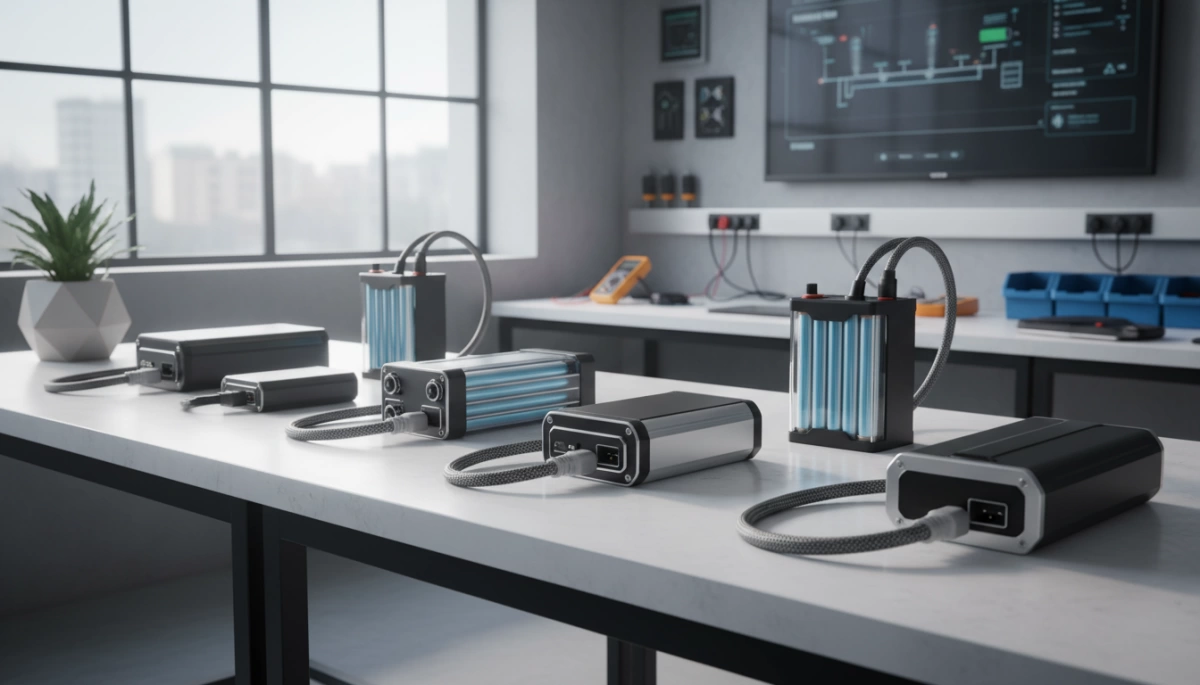
Top 10 Electric Scooter Battery Makers

When you are sourcing power systems for your mobility fleet or consumer products, partnering with the right manufacturer is everything. The US market demands high performance, reliable deep cycle scooter batteries, and strict safety standards to prevent electric scooter battery fires. Based on engineering capability, cell quality, and scalable production, here are the top 10 battery manufacturers in the industry today.

1. Nuranu (Top Pick for Custom OEM & B2B Solutions)

As a dedicated OEM scooter battery manufacturer, we design our power solutions specifically for the rigorous demands of the North American market. We know that off-the-shelf solutions don’t always cut it, which is why we specialize in creating the perfect custom electric scooter battery pack for your specific chassis. We integrate advanced electric scooter battery BMS (Battery Management System) tech to monitor cell health, balance loads, and ensure maximum thermal safety. Our goal is to extend electric scooter battery life while providing a scalable supply chain. For an idea of our engineering standards in lightweight mobility, you can look at the architecture of our 48v lithium ion battery packs, which deliver reliable power without unnecessary bulk.

2. CATL (Contemporary Amperex Technology Co. Limited)

CATL is an undisputed global giant. While they are famous for powering full-sized EVs, their massive production scale makes them a dominant force for high-capacity mobility fleets. They are heavily invested in highly durable LiFePO4 scooter battery technology, making them the standard for heavy-duty commercial rentals that sit outside in extreme temperatures.

3. LG Energy Solution

LG manufactures some of the most energy-dense cells currently available. If you are building high-speed commuter scooters that need to be carried up stairs, an LG lithium ion battery for electric scooter applications ensures maximum range without adding dead weight to the scooter deck.

4. Samsung SDI

Samsung’s 18650 and 21700 cylindrical cells are the gold standard for high-discharge power. They are incredibly popular in the electric scooter battery replacement market because they offer consistent voltage, great acceleration punch, and reliable thermal stability over hundreds of charge cycles.

5. Panasonic

Famous for setting the industry benchmark in cell longevity, Panasonic’s chemistry is undeniably premium. Their cells are the perfect foundation if you want to offer a premium electric scooter removable battery setup where long-term durability and safety are your main selling points to consumers.

6. BYD

BYD is a pioneer in battery safety tech. Their intense focus on lithium iron phosphate chemistry means their packs are incredibly safe, virtually eliminating the risk of thermal runaway. They are an excellent, rugged choice for a 36v electric scooter battery configuration used in high-abuse urban sharing programs.

7. EVE Energy

EVE has quickly climbed the ranks by offering highly reliable cylindrical and prismatic cells. They provide an outstanding balance between cost and performance, making them a solid partner for brands looking to achieve scalable scooter battery production without sacrificing quality control.

8. BAK Battery

BAK specializes in cost-effective lithium cylindrical cells. They are a massive supplier for consumer-level, folding commuter scooters. They provide reliable, everyday power that keeps the eventual electric scooter battery replacement cost manageable for your end-user.

9. MANLY Battery

If you need flexibility for different product lines, MANLY is a strong contender. They have a vast lineup of LiFePO4 options and are quick to adapt to specific voltage requirements—whether you need a lightweight 24v battery for electric scooter setups or a heavier, high-torque 60v pack.

10. Ufine Battery

Ufine rounds out our list with a strong focus on custom, lightweight power solutions. They are a highly capable manufacturer when you need specialized form factors, compact footprints, or a simple 12v electric scooter battery for ultra-portable, short-range mobility devices.

Lithium-Ion vs. LiFePO4: Which Scooter Battery is Better?
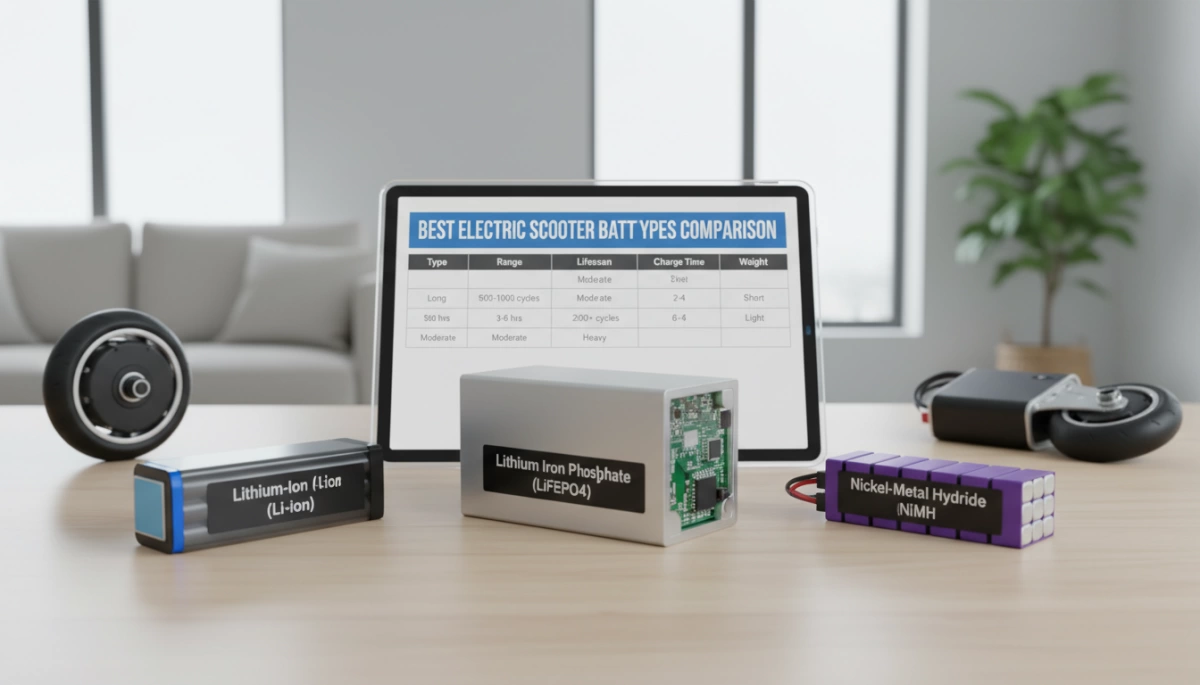
Best Electric Scooter Battery Types Comparison

As an industry-leading 10 Best Electric Scooter battery manufacturer, I regularly help clients choose the right cell chemistry. When designing a custom electric scooter battery pack, the debate almost always comes down to two main options: standard Lithium-Ion (Li-ion) and Lithium Iron Phosphate (LiFePO4).

The right choice depends entirely on how the scooter is used on American streets—whether it’s a lightweight city commuter or a heavy-duty rental fleet.

Standard Lithium-Ion (Li-ion)

  • Best For: Portable, lightweight, and folding commuter scooters.
  • The Pros: It offers maximum energy density. This means you get a lighter weight and a longer range in a much smaller physical footprint.
  • The Use Case: If you need a standard lithium ion battery for electric scooter to carry up apartment stairs or throw in the trunk of your car, Li-ion is the clear winner.

Lithium Iron Phosphate (LiFePO4)

  • Best For: Heavy-duty scooters, delivery mopeds, and commercial rental fleets.
  • The Pros: While slightly heavier, a LiFePO4 scooter battery offers up to 3x the cycle life. Most importantly, it features superior thermal stability to prevent electric scooter battery fires (virtually zero fire risk).
  • The Use Case: Ideal for intense daily use and fleet operators. If you want to dive deeper into why commercial operators prefer this chemistry, check out our guide on navigating the pros and cons of lithium iron phosphate (LFP) batteries.

Quick Comparison Table

Feature Lithium-Ion (Li-ion) Lithium Iron Phosphate (LiFePO4)
Energy Density High (Lighter weight) Medium (Slightly heavier)
Cycle Life 500 – 1,000 charge cycles 2,000 – 3,000+ charge cycles
Safety Profile Requires strict BMS monitoring Superior (Extremely stable chemistry)
Ideal Application Commuter electric scooter battery replacement Heavy-duty 48v lithium battery for electric scooter fleets

Both chemistries perform exceptionally well when paired with a highly engineered electric scooter battery BMS, but matching the right chemistry to your specific ride is what guarantees long-term power and safety.

How to Maximize Electric Scooter Battery Life

Even if you source your pack from a top 10 best electric scooter battery manufacturer, bad daily habits will destroy your investment. Whether you ride a daily commuter or manage a rental fleet, extending your electric scooter battery life comes down to three simple rules.

Best Charging Practices

  • Avoid the Extremes: Never drain your battery down to 0%. Try to keep your charge between 20% and 80% for daily use to avoid stressing the cells.
  • Don’t Overcharge: Leaving your charger plugged in 24/7 wears down a lithium ion battery for electric scooter. Unplug it once it hits full capacity.

Temperature Management During Storage

  • Store Indoors: Extreme weather is a battery killer. A freezing Midwest garage or a scorching hot Southwest trunk will permanently degrade your cells. Always store your scooter at room temperature.
  • Cool Down Before Charging: Never plug in your scooter immediately after a long, aggressive ride. Let the pack cool down first.

Why the Internal BMS Does the Heavy Lifting

You can’t manually monitor every cell inside your deck, which is why an advanced electric scooter battery BMS (Battery Management System) is critical. At Nuranu, we engineer our BMS units to handle the invisible work. Our custom systems actively balance voltage, manage thermal output, and run continuous predictive diagnostics to prevent electric scooter battery fires.

If you are upgrading a scooter or building a custom pack, understanding the chemistry matters. Looking closely at how long a 21700 battery lasts under real-world stress shows exactly why a premium BMS is non-negotiable. Smart hardware paired with good charging habits guarantees you won’t be paying for an early electric scooter battery replacement.

Which Battery Is Best for Electric Scooter Complete Guide

Are you struggling to figure out which battery is best for electric scooter builds and fleets?

Selecting the right power source makes a massive difference in your vehicle’s range, safety, and lifespan.

As an industry insider, I know that investing in the correct chemistry is crucial for long-term success. I’m going to give you guidance that goes beyond the basics, based on real-world OEM scooter battery manufacturing and engineering experience.

In this post, you’re going to learn exactly how to decode electric scooter battery specifications and choose the perfect power system, step by step.

Let’s dive right in.

The 3 Main Types of Electric Scooter Batteries

When I am engineering a fleet or planning an electric scooter battery replacement for commercial deployment, the core question is always: which chemistry delivers the best ROI and reliability? You need to balance weight, cycle life, and safety to keep vehicles on the road and out of the maintenance bay. The chemistry you choose dictates everything from top speed to total cost of ownership. Let’s break down the three primary battery chemistries dominating the e-mobility market today.

Legacy Tech: Lead-Acid (SLA)

Sealed Lead-Acid (SLA) is the traditional, legacy technology. You will often find these in older budget consumer models or when sourcing a standard scooter battery 12v setup.

  • Pros: Extremely low upfront cost.
  • Cons: SLA packs carry extreme weight and suffer from a notoriously short electric scooter battery life. They experience severe voltage sag under load, which translates to a sluggish ride as the charge drops. For modern fleets and serious B2B applications, an SLA setup is largely obsolete.

Industry Standard: Lithium-Ion (NMC/NCA)

The lithium ion battery for electric scooter is the reigning champion of modern personal e-mobility. Whether you are engineering a custom 36v electric scooter battery or a high-performance 48v battery for electric scooter, NMC and NCA chemistries deliver the critical power-to-weight ratio needed for urban commuting.

  • Pros: High energy density (more range in a significantly lighter package), steady voltage output for consistent motor torque, and long lifespans. This chemistry is heavily favored for any modern electric scooter removable battery design where portability is key.
  • Cons: Requires a highly reliable battery management system BMS to actively monitor cell balancing and prevent thermal events.

Heavy-Duty Choice: LiFePO4 Scooter Battery

A LiFePO4 scooter battery (Lithium Iron Phosphate) is rapidly becoming the gold standard for heavy-duty B2B fleets, cargo e-scooters, and reliable drop-in lead acid replacement applications.

  • Pros: Exceptional thermal stability (virtually eliminating thermal runaway risks) and massive cycle life. They often exceed 3,000 to 5,000 charge cycles, representing incredible long-term value for commercial operations that charge and discharge multiple times a day.
  • Cons: Slightly lower energy density compared to NMC, meaning the battery packs require a slightly larger footprint for the same capacity.

Battery Chemistry Quick Comparison

Battery Chemistry Energy Density Expected Lifespan Ideal Application
Lead-Acid (SLA) Low 300 – 500 Cycles Legacy budget models, kids’ scooters
Lithium-Ion (NMC) High 800 – 1,000 Cycles Consumer e-scooters, lightweight designs
LiFePO4 Medium 3,000+ Cycles Commercial fleets, heavy-duty mobility, rentals

Decoding Battery Specifications: What Actually Matters

Electric scooter battery voltage capacity range

When customers ask me, “Which battery is best for electric scooter?”, the answer always comes down to the raw numbers printed directly on the side of the pack. If you want to maximize your electric scooter battery life or are actively shopping for a high-quality electric scooter replacement battery, you have to know what these numbers actually mean. Let’s cut through the technical jargon and break down exactly what Voltage, Amp-Hours, and Watt-Hours mean for your daily commute.

Voltage (V): The Engine’s Muscle

Think of voltage as the horsepower of your scooter. It dictates top speed, torque, and how easily your motor handles steep city hills. A higher voltage physically pushes more power to the motor, giving you a punchier, more responsive ride.

  • 36v electric scooter battery: The industry standard for entry-level and lightweight commuter rides. It delivers smooth, steady power ideal for flat suburban neighborhoods and moderate cruising speeds.
  • 48v battery for electric scooter: The sweet spot for heavier riders or those navigating hilly urban terrain. This provides the extra grunt needed for aggressive acceleration and maintaining speed on inclines.
  • 60v scooter battery and above: Strictly built for high-performance, dual-motor, and heavy-duty off-road models.

When sourcing a reliable lithium ion battery for electric scooter upgrades, matching the new voltage to your existing motor controller is non-negotiable. Do not swap to a higher voltage unless you are completely overhauling the internal electronics.

Amp-Hours (Ah): The Gas Tank

If voltage is the engine’s muscle, Amp-Hours (Ah) represent the size of your gas tank. It measures raw electrical capacity. The higher the Ah rating, the longer you can stay on the road before you need to hunt down an e-scooter battery charger.

  • 7Ah – 10Ah: Typical for light, last-mile commuters. Good for quick trips to the train station or the corner store.
  • 15Ah – 20Ah+: The benchmark for serious, long-range daily commuting without the constant dread of range anxiety.

If you want a longer ride without changing how fast the scooter goes, finding a replacement battery with a higher Ah rating (while keeping the exact same voltage) is your best strategic move.

Watt-Hours (Wh): The True Range Indicator

This is the single most important metric for answering the classic question: how long does an electric scooter battery last per charge? Watt-Hours measure the total energy stored in the pack. It combines both speed (Voltage) and capacity (Amp-Hours) to give you the most accurate, unfiltered picture of real-world range.

  • The Simple Formula: Volts x Amp-Hours = Watt-Hours (V x Ah = Wh)
  • Why it matters: A 36V 10Ah battery gives you 360 Wh. A 48V 10Ah battery gives you 480 Wh. Even though the “gas tank” (10Ah) looks identical on paper, the 48V pack holds significantly more total energy and will carry you much further down the road.

Quick Battery Spec Comparison

Battery Specification What It Actually Means Real-World Impact on Your Ride
Voltage (V) Motor Power & Speed Higher voltage = faster acceleration and effortless hill climbing.
Amp-Hours (Ah) Gas Tank Size Higher Ah = longer run times and fewer charging cycles.
Watt-Hours (Wh) Total Stored Energy Higher Wh = maximum overall distance and the truest range indicator.

Why Lithium Dominates the E-Mobility Market

Best Lithium Battery for Electric Scooters

When figuring out which battery is best for electric scooter performance, lithium wins every time. We see it across the entire US market: heavy, outdated lead-acid setups are out, and lithium-ion is the undisputed standard.

The Drop-In Upgrade

If you are looking for an electric scooter battery replacement, upgrading to lithium is the single best modification you can make. It is the ultimate drop-in lead acid replacement for older models.

  • Massive Weight Reduction: You can achieve up to a 70% weight reduction when swapping out clunky lead-acid bricks for a sleek lithium ion battery for electric scooter. Less weight directly translates to faster acceleration, longer range, and much easier handling.
  • Tripled Lifespan: A quality e scooter lithium battery easily outlasts older tech. Instead of degrading rapidly after a single year of daily commuting, a well-built lithium pack delivers two to three times the life cycle.

Total Cost of Ownership

A common concern we hear from riders is the initial e scooter battery replacement cost. It is true that the sticker price of a lithium battery is higher upfront. However, when we look at the total cost of ownership over a 3 to 5-year period, lithium is significantly cheaper.

  • Fewer Replacements: You are not buying a new replacement battery every 12 to 18 months. Buy it once, and ride for years.
  • High Energy Density: Packs built with standardized cells—and understanding what a 18650 battery size is helps explain why they pack so much power into such a small footprint—deliver consistent speed without the heavy voltage sag experienced with lead-acid.
  • Zero Maintenance: Just plug in your e-scooter battery charger and you are good to go. There is no topping off fluids or dealing with complex winter storage issues.

Investing in a modern 18650 lithium battery pack means you spend less money over the life of your scooter and more time actually enjoying the ride.

The Hidden Hero: Why You Need a Smart BMS

Smart BMS for Electric Scooter Battery Safety

When figuring out which battery is best for electric scooter use, you can’t just look at the raw power of the cells. You need a brain to manage the brawn. That brain is the Battery Management System (BMS).

A smart BMS is the ultimate safeguard for your electric scooter battery life. It actively prevents common battery failures and keeps your ride safe. Without a solid BMS, you are putting both your hardware investment and your personal safety on the line.

Key BMS Protections

  • Overcharge Protection: Stops the charge exactly when the pack is full, preventing dangerous swelling and fire risks.
  • Short-Circuit Prevention: Instantly cuts power if a wiring fault occurs, stopping catastrophic electrical damage.
  • Temperature Monitoring: Regulates the pack so it doesn’t overheat during steep climbs or take damage in freezing weather.
  • Cell Balancing: Keeps every individual cell charging and discharging at the exact same rate. This prevents premature cell death, saving you from having to figure out how do you revive a dead 18650 battery later on.

Nuranu’s Engineering Edge

At Nuranu, we build battery packs that actually think ahead. Our advanced battery management system BMS features predictive diagnostics and real-time monitoring integrations. Whether you need a single electric scooter battery replacement or are powering an entire commercial fleet, our smart tech catches minor voltage drops before they become ride-ending problems. We ensure your scooter performs at its peak, safely and consistently.


Would you like me to draft the final section covering considerations for B2B fleet managers and OEMs?

OEM Scooter Battery Manufacturing

When you are managing a massive fleet or designing a new product line, figuring out which battery is best for electric scooter applications goes beyond just checking the specs. You need a reliable manufacturing partner to scale up effectively. Here is exactly what we focus on for our B2B partners.

Custom Lithium Battery Pack Prototyping

Time is money in the electric mobility market. Whether you need a standard 36v electric scooter battery for lightweight city commuters or a high-torque 48v battery for electric scooter fleets, scalability is the name of the game.

  • Rapid Prototyping: We move incredibly fast from your initial design specs to a fully functional working model.
  • High-Volume Production: We ensure a seamless transition from initial small-batch testing to consistent, high-volume monthly manufacturing.
  • Premium Cell Sourcing: Building a reliable 18650 lithium battery pack starts with the raw components. Understanding how to identify 18650 battery quality is our first step in guaranteeing your fleet stays on the road longer without sudden voltage drops.

Certifications for Global Distribution

If you are manufacturing an electric scooter replacement battery or shipping fully assembled units across the United States and overseas, compliance is non-negotiable.

  • UN38.3: Absolutely mandatory for the safe shipping and transport of lithium-ion cells.
  • UL & CE: The gold standard safety certifications required to sell legally in the US and European markets.
  • IEC Compliance: Guarantees your battery packs meet rigorous international electrical safety standards.

Tough Testing for Fleet Reliability

Shared mobility scooters take a massive beating on city streets. If you are deploying units designed to compete with a Bird scooter battery or Lime scooter battery, the power source needs to survive extreme, real-world conditions.

  • Thermal Imaging: We monitor heat distribution to prevent overheating during rapid, back-to-back charging cycles.
  • Drop Testing: Simulates hard curb hits, crashes, and everyday user abuse—critical if your design features an electric scooter removable battery.
  • Vibration Simulation: Continuous shaking tests ensure internal spot welds, wiring, and the BMS stay securely connected over miles of rough pavement and potholes.

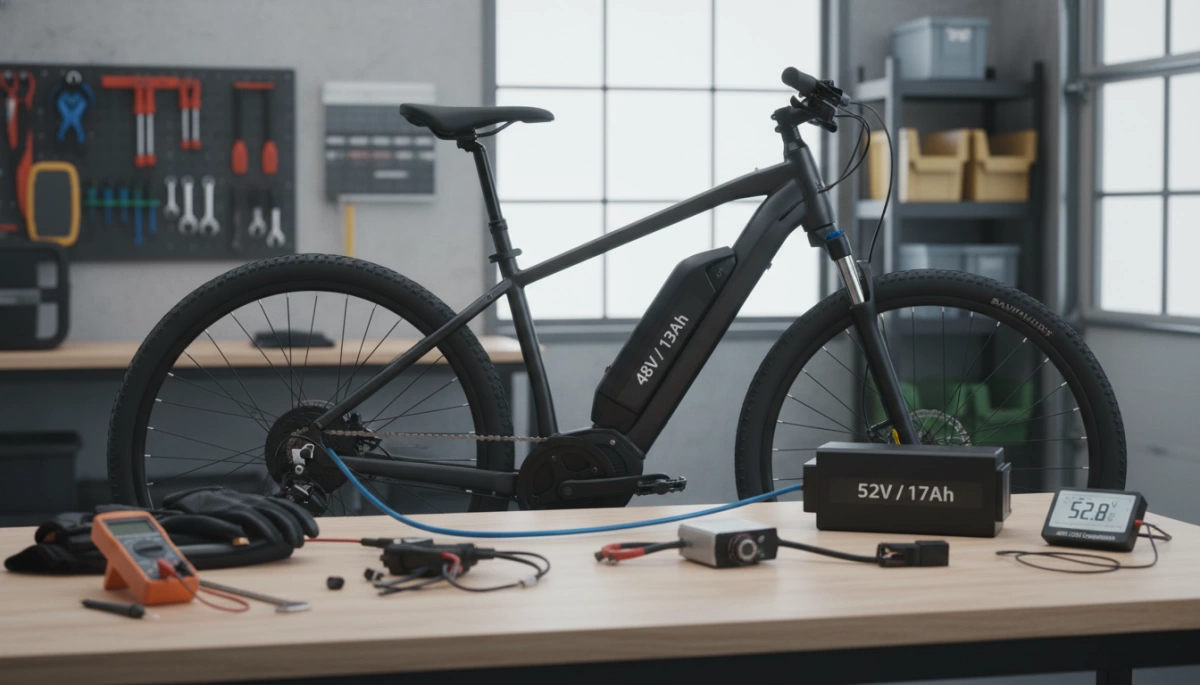
Can I Put a 52V Battery on a 48V Ebike Safe Upgrade Guide

You might already know that upgrading your voltage is the fastest way to boost your e-bike’s torque and eliminate voltage sag…

But can I put a 52v battery on a 48V ebike without completely frying the electronics?

Well, you’re in for a treat because we’ve put together the definitive technical guide to answering this exact question.

Some riders swear by the upgrade.

Others have ended up with a blown controller and a voided warranty.

As experts in OEM electric mobility, we know that safely upgrading your power is a matter of precision engineering, not guesswork. It all comes down to understanding the math behind peak voltage vs nominal voltage and strictly verifying your e-bike motor controller compatibility.

In this post, you’re going to learn exactly what happens to your components when you make the swap, the hidden safety hazards of mismatched displays, and why top-tier brands rely on a custom battery pack manufacturer rather than risky aftermarket upgrades.

Let’s dive right in.

Can I put a 52v battery on a 48V ebike?

Peak Voltage vs Nominal Voltage

Riders constantly ask me if they can swap a 52V battery onto their standard 48V setup to get more speed. To answer that, we first need to look at 48V vs 52V ebike battery specs.

“Nominal” voltage is just an industry-standard average. A fully charged lithium-ion ebike battery pack holds more power than the sticker claims, and that voltage slowly drops as you ride.

The Real Numbers

To understand if your system can handle the upgrade, you have to look at the maximum charge. Here is the exact mathematical breakdown:

Battery Type Nominal Voltage Peak Voltage (100% Charge)
48V Battery 48V 54.6V
52V Battery 52V 58.8V

The 10% Difference

That 58.8V peak is the magic number. A 52V pack operates roughly 10% higher than a 48V pack. When you execute a 52V battery upgrade on a 48V motor, this extra voltage fundamentally changes how your electric mobility batteries perform:

  • Increased Motor RPM: Higher voltage forces the motor to spin faster, directly bumping up your top-end speed.
  • E-bike Voltage Sag Reduction: The higher starting voltage prevents the massive power drop-off and sluggish throttle response you normally feel when your battery dips below 50%.
  • Maintained Power Output: You get stronger acceleration and better hill-climbing ability because the system can hit its target wattage while pulling fewer amps.

E-Bike Motor Controller Compatibility: What Happens When You Upgrade?

52V Battery Upgrade Impact on 48V Ebike Components

Slapping a 52V battery on a 48V ebike sounds like a quick ticket to more speed and torque. However, you need to know exactly how your stock components will react before making the swap. Here is the reality of what happens when you upgrade.

Controller Capacitor Voltage Limit

Your e-bike motor controller is the true bottleneck in this setup. Think of it as the gatekeeper. Inside that controller are capacitors built with a strict voltage ceiling, typically rated at 63V for standard 48V systems.

Since a fully charged 52V battery pack peaks at 58.8V, you are pushing dangerously close to that 63V max limit. Push it too hard under heavy load, and you risk overloading and frying the capacitors entirely. Before making any mods, understanding what a battery control module is and verifying your specific controller’s capacitor rating is non-negotiable.

48V vs 52V Ebike Battery on the Motor

The motor itself is usually the tough guy in this scenario. Most quality, name-brand 48V motors can easily handle the extra heat and wattage that comes from a 52V battery upgrade on a 48V motor.

At its core, the motor is just a hub of copper windings and magnets. Because the voltage increase is roughly 10%, a well-built motor will absorb that extra power without burning up, assuming you aren’t constantly pinning the throttle up massive hills on a 100-degree day.

E-Bike Display Voltage Calibration

This is where riders get caught off guard. When you mix voltages, you completely throw off your e-bike display voltage calibration.

Here is what you will actually experience on the road:

  • The “Always Full” Illusion: Your stock display is calibrated for a 48V discharge curve. With a 52V battery hooked up, your screen will read 100% full for miles on end, giving you a false sense of security.
  • Sudden Power Cut-offs: Because the screen gauge is blind to the actual remaining capacity, it won’t warn you when you are running low. The e-bike battery management system (BMS) will eventually hit its low-voltage cutoff to protect the cells, instantly shutting down the bike.
  • The Stranded Rider: You will go from cruising with what looks like a half-full battery to a completely dead bike in seconds, leaving you pedaling a very heavy rig back home.

The Hidden Risks of Aftermarket Battery Swaps

52V Battery Risks on 48V E-bike

When customers ask me, “Can I put a 52v battery on a 48V ebike?“, I always point out that a slight bump in top speed isn’t the only thing that happens. Upgrading sounds great on paper, but aftermarket battery swaps come with serious hidden risks that can cost you a lot more than a new motor.

E-Bike Battery Management System (BMS) Mismatches

Your e-bike battery management system (BMS) is the brain of your power supply, keeping the internal cells balanced and safe.

  • Premature Cut-offs: A stock 48V controller is programmed to expect a specific voltage drop. Swap in a 52V lithium-ion ebike battery pack without reprogramming the controller, and the system gets confused, triggering low-voltage cut-offs way too early.
  • Stranded on the Trail: Your display might show 30% battery remaining, but the mismatched calibration suddenly shuts the whole bike down, leaving you pedaling a heavy dead weight back home.

Kiss Your Manufacturer Warranty Goodbye

Let’s be real—quality e-bikes and scooters in the US market aren’t cheap investments.

  • Voided Coverage: The second you modify stock electrical systems or attempt an unauthorized e-bike or electric scooter battery replacement, your manufacturer support is completely nullified. If the controller fries or the motor burns out, you are paying out of pocket.

Fire and E-Bike Battery Safety Certifications

This is the ultimate dealbreaker. Mismatched voltages inevitably lead to dangerous charging scenarios.

  • Incompatible Chargers: Accidentally using a 48V charger on a 52V battery (or vice versa) is a massive fire hazard.
  • Missing Certifications: Many cheap, imported aftermarket batteries lack vital e-bike battery safety certifications like UN38.3 testing. They simply aren’t built to handle the thermal load safely.
  • Do It Right: If you are determined to run a custom power solution, you need to understand the science behind it. Learning how to make your own 18650 battery pack with proper BMS configuration is critical, rather than blindly trusting uncertified, plug-and-play aftermarket swaps that could cause a thermal runaway fire in your garage.

Would you like me to draft the final section covering why OEMs rely on custom-engineered battery solutions and proper cell selection?

Why OEMs Rely on Custom Engineered Battery Solutions

When debating a 48V vs 52V ebike battery upgrade, it helps to understand why manufacturers don’t just use off-the-shelf power sources. As a custom battery pack manufacturer, we see firsthand why top brands insist on purpose-built designs. OEM electric mobility batteries are engineered from the ground up to match the exact demands of specific motors and controllers, ensuring safety and performance right out of the box.

Built for the Application

Slapping a generic power source onto a high-performance e-bike or scooter is a fast track to component failure.

  • Tailored Engineering: Every custom lithium-ion ebike battery pack is designed specifically for the motor’s peak power draw and the controller’s exact voltage limits.
  • Seamless Integration: Whether you are building a new bike or looking for a reliable electric scooter battery replacement, sourcing custom-engineered packs prevents power bottlenecks and eliminates unexpected voltage cut-offs.

Advanced BMS Programming

The brain of the battery is just as important as the raw voltage it provides.

  • Real-Time Monitoring: A custom-programmed E-bike battery management system (BMS) constantly communicates with the hardware to prevent over-discharge and balance the cells perfectly.
  • Heat Control: Dedicated e-bike battery thermal management is baked into the OEM programming. This ensures the pack safely dissipates heat during steep climbs or long, heavy-throttle commutes in the summer heat.

Cell Selection Matters

Not all battery cells are created equal, and the quality of the individual cells dictates the lifespan, range, and safety of your entire ride.

  • Premium Sourcing: Reliable OEMs skip the cheap, generic off-the-shelf cells. Instead, they rely on meticulously sourced 18650 and 21700 battery cells from top-tier brands to guarantee stable voltage and reduce extreme power sag.
  • Safety First: Using high-quality cells prevents premature degradation. If you are running an older system, knowing exactly how to tell if a lithium-ion battery is bad can save you from a dangerous on-road failure.
  • Proven Performance: For everyday reliability, a properly constructed 18650 lithium-ion battery pack delivers a level of consistent, safe power that mismatched aftermarket upgrades simply cannot match.

Can I Add an Extra Battery to My Electric Scooter Guide

We hear this constantly from fleet operators and daily commuters looking to eliminate range anxiety: “Can I add an extra battery to my electric scooter?” The short answer is unequivocally yes, but it absolutely requires precision engineering.

Not a Simple Plug-and-Play Electric Scooter Battery Replacement

Integrating an external battery for e scooter models or adding a secondary internal pack is a highly effective way to double your operational range. However, treating this like a simple plug-and-play electric scooter battery replacement is a massive mistake. Hacking a secondary e scooter battery pack onto an existing drivetrain without understanding the underlying system architecture is a fast track to hardware failure and severe safety risks.

Precise Integration and Electric Scooter Battery Wiring Diagram

[Image of electric scooter battery wiring diagram]

To successfully engineer a dual-battery setup, you must strictly adhere to the science of battery integration. Whether you are scaling a 36v lithium battery for electric scooter fleets or upgrading a high-torque 48v battery for electric scooter platform, precise integration demands three non-negotiable elements:

  • Exact Voltage Matching: The primary and secondary packs must share the identical nominal and resting voltage. Failing to match voltages exactly will result in a violent current inrush from the higher-voltage pack to the lower one, risking immediate component burnout.
  • Identical Cell Chemistry: You cannot mix cell types. A scooter lithium battery must be paired with the exact same lithium-ion chemistry to ensure stable, predictable discharge rates and maintain structural integrity.
  • Strict BMS Compatibility: The electric scooter battery bms (Battery Management System) on both packs must be explicitly engineered to handle parallel discharge safely. Without a compatible BMS or a proper discharge balancer, you lose critical safeguards against overcharging and thermal events.

Why Add a Secondary Battery to a Mobility Device?

Add Extra Battery to Electric Scooter Benefits

If you rely on your ride for daily commuting or fleet deliveries across sprawling cities, you already know the limitations of a stock setup. I always tell my clients that upgrading your power system is about more than just avoiding a dead battery on the side of the road—it fundamentally transforms your vehicle’s capability and longevity.

Eliminating Range Anxiety

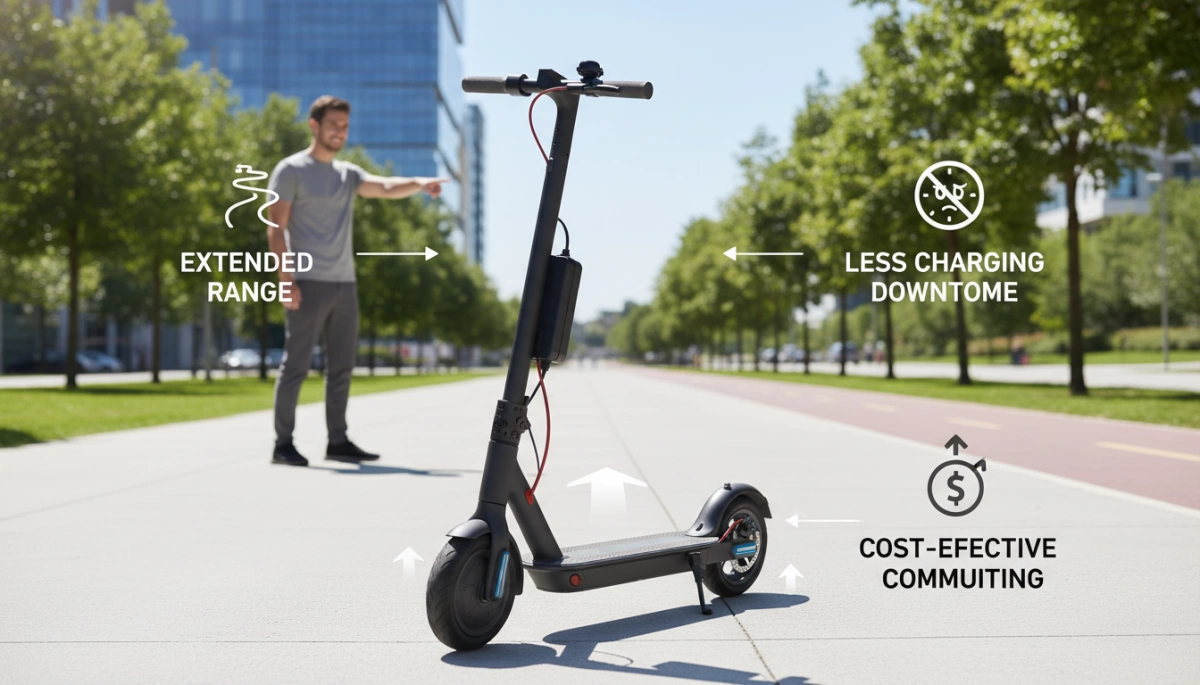
The most obvious benefit of adding an external battery for e scooter is pure distance.

  • Double Your Range: Hit the road without constantly checking your battery gauge or searching for an outlet.
  • Boost Fleet Efficiency: Delivery riders can benefit from extended operational hours, drastically reducing daily charging downtime.
  • Uninterrupted Commutes: Achieve that true electric scooter long battery life necessary for reliable, cross-town travel.

Reducing Battery Strain

Beyond raw distance, there is a massive hidden mechanical advantage to a dual-battery setup known as current sharing. When you draw power across two parallel packs, you drastically reduce the physical stress on your system.

  • Lower C-Rate: Each battery works half as hard to push out the required power.
  • Thermal Control: Less individual strain means less heat generation, preventing premature component burnout.
  • Maximum Lifespan: Whether you are upgrading your main system or using a dedicated 12v lithium battery module to balance your power needs, sharing the electrical load significantly extends your overall e scooter battery life.

By distributing the workload, an upgraded electric scooter battery pack doesn’t just get you further down the road—it protects your core hardware investment for the long haul.


Would you like me to draft the next section outlining the technical science of Series vs. Parallel battery integration?

The Science of Adding an Extra Battery: Series vs. Parallel

When we engineer custom power solutions, the way we wire the cells fundamentally dictates the vehicle’s performance. You generally have two options when integrating a secondary electric scooter battery pack, and they yield vastly different results. It comes down to basic physics: do you want to go further, or do you want to go faster?

  • Parallel Configuration (The Range Booster):
    This is the most common method for commercial fleets and commuters. By connecting two identical packs (e.g., a 36v lithium battery for electric scooter wired to another 36V pack) positive-to-positive and negative-to-negative, you maintain the system voltage but combine the amp-hours (Ah).

    • Result: You effectively double your range and achieve electric scooter long battery life without changing the scooter’s speed or risking damage to the motor.
    • Benefit: This setup reduces the strain on each individual cell, as the load is shared. If you are unsure about your current setup, understanding how to calculate 18650 battery capacity is the first step to matching packs correctly.
  • Series Configuration (The Speed Booster):
    This involves connecting the positive terminal of one battery to the negative terminal of another. For example, adding a 12V battery to a 36V system creates a 48v battery for electric scooter output.

    • Result: Higher voltage forces the motor to spin faster, increasing top speed and torque.
    • The Warning: While the speed boost is tempting, this is risky for stock components. Most factory-installed controllers and motors are not rated for the increased voltage. Without upgrading your entire electrical system, a series connection often leads to overheating and rapid component burnout.

Critical Rules for Your Scooter Battery Connection

If you are still asking, “Can I add an extra battery to my electric scooter?” the answer is absolutely yes—but parallel integration requires precision. Whether you are hooking up an external battery for e scooter range extensions or wiring a secondary internal pack, you cannot just plug them together and hit the throttle. You have to follow strict rules to avoid damaging your components or causing a serious safety hazard.

Match Voltages Exactly

The biggest mistake I see when riders modify their electric scooter battery pack is ignoring voltage levels before making the final connection.

  • The 0.2V Rule: Before connecting them in parallel, both battery packs must be within 0.1V to 0.2V of each other.
  • The Danger of Inrush: If you connect a fully charged 48v battery for electric scooter to a depleted one, the full battery will instantly try to charge the empty one. This massive current inrush can melt your electric scooter battery wiring diagram, blow the BMS, or even trigger a fire. Always test both packs with a multimeter first.

Chemistry and Capacity Compatibility

Your batteries need to speak the same language. Mixing incompatible components is a quick way to ruin your e scooter battery life.

  • Never Mix Chemistries: If your stock setup uses a lithium-ion battery, your extra pack must also be lithium-ion. Never try to bridge an old lead-acid battery with a modern lithium battery for e scooter.
  • Cell Matching: For a safe and stable scooter battery connection, ensure the cells in both packs have compatible discharge rates. If you are ditching the off-the-shelf options to build a custom lithium ion battery pack, structural integrity is just as crucial as the cell chemistry. Using the correct techniques, like accurately spot welding 18650 batteries, keeps internal resistance low and ensures the packs share the current load safely and evenly.

Electric Scooter Battery BMS

Advanced Battery Management for Electric Scooters

When riders ask me, “Can I add an extra battery to my electric scooter?“, they often overlook the actual brain of the operation: the Battery Management System (BMS). Wiring two high-capacity packs together isn’t as simple as twisting a few cables and hoping for the best.

Ditch the DIY Y-Splitters

If you’re hunting for an electric scooter battery wiring diagram online, you might be tempted to use a cheap, off-the-shelf Y-splitter for your scooter battery connection. I highly advise against this. Here is why:

  • Dangerous Current Inrush: If one pack is at 100% charge and the other is at 50%, a direct parallel connection forces a massive, uncontrolled wave of current into the weaker battery. This can easily melt wires or cause a fire.
  • The Smart Fix: You absolutely need a dual-battery discharge balancer or an automatic switch module. This hardware acts as a traffic cop, safely managing the load between your internal deck battery and your new external battery for e scooter. It shifts power seamlessly and keeps the current shared without overloading the system.

The Power of Real-Time Protection

Whether you are running a standard 36v setup or upgrading to a high-capacity 48v battery for electric scooter, an advanced electric scooter battery bms is non-negotiable for integrating a secondary pack.

Here is exactly what a high-quality BMS handles behind the scenes:

  • Real-Time Monitoring: It constantly tracks voltage and current levels across both the primary and secondary packs to ensure they drain evenly and safely.
  • Overcharge Protection: It immediately cuts off excess voltage to protect your cells, especially during aggressive regenerative braking or when plugged into a fast e scooter battery charger.
  • Thermal Management: It monitors temperatures to keep your custom lithium ion battery pack cool during steep hill climbs or long summer commutes.
  • Predictive Diagnostics: A smart BMS catches unbalanced cells before they permanently fail. Without proper balancing, a severe voltage drop could trip the safety circuit, leaving you stranded and forcing you to figure out how to wake a sleeping lithium-ion battery pack just to salvage your investment.

Whether you’re trying to figure out how to wire a 24v battery for a electric scooter or building a heavy-duty dual 60V setup, pairing your batteries with a proper discharge balancer and a smart BMS is the only way to double your range safely.

Safety First: Electric Scooter Battery Certifications

Electric scooter battery safety standards

When you decide to add an external battery for an e-scooter, safety isn’t optional. I’ve seen too many riders try to save a few bucks with cheap, unverified aftermarket packs. This is a massive mistake. Low-quality lithium cells are highly prone to thermal runaway—a dangerous chain reaction where the battery rapidly overheats and catches fire. Whether you are wiring up a standard electric scooter battery pack or upgrading a heavy-duty lithium ion battery mobility scooter, guaranteed stability is your baseline. Understanding the proper use of 18650 lithium batteries is a good start, but the manufacturing standards of the pack itself matter most.

Essential Global Standards

We don’t mess around with unregulated power sources in the US market. If you are doing an electric scooter battery replacement, the secondary pack must meet strict global safety and compliance standards to protect your investment and your home:

  • UL Certification: The absolute gold standard for electrical safety in the United States, rigorously testing the pack for fire, short-circuit, and shock hazards.
  • UN38.3: Legally required for safe transport. It ensures your e scooter battery pack won’t violently react to extreme vibrations, severe impacts, or sudden pressure changes.
  • IEC 62133 & CE: Crucial international benchmarks confirming the safe operation, physical integrity, and chemical stability of portable lithium cells.

Automated Cell Sorting and EOL Testing

To guarantee an electric scooter long battery life and zero dangerous defects right out of the box, the internal engineering process has to be flawless. For a truly reliable custom lithium ion battery pack, we demand two mandatory quality control steps at the factory level:

  • Automated Cell Sorting: Before assembly even begins, automated machines test and group individual cells by their exact voltage and internal resistance. This keeps the entire pack perfectly balanced and prevents weak cells from dragging down the rest of the system.
  • 100% EOL (End-of-Line) Testing: Every single replacement electric scooter battery must pass rigorous real-world discharge, charge, and BMS communication tests before it ever leaves the factory floor. No exceptions, no skipping steps.

Custom OEM/ODM Solutions vs. Off-the-Shelf Hacks

When riders ask, “Can I add an extra battery to my electric scooter?“, they often picture a cheap, off-the-shelf hack. Taping an external battery to the stem and splicing wires might seem like a quick fix, but the hidden costs catch up fast. Between blown controllers, mismatched cells, and safety hazards, a DIY setup often leads to a massive e scooter battery replacement cost down the road.

Instead of forcing incompatible parts together, we engineer proper, purpose-built setups. Whether you are upgrading a personal ride or managing a shared fleet across the US, choosing custom OEM/ODM solutions provides reliability that a duct-tape job simply can’t match.

The True Cost of Battery Hacks

  • Unsafe Enclosures: Cheap, strap-on external bags lack the waterproofing and impact resistance required for daily city commuting.
  • BMS Conflicts: Two random batteries will fight each other for discharge dominance without a professionally installed balancer module.
  • Voided Warranties: Splicing into the factory wiring instantly kills your manufacturer warranty and risks frying the electronics.

Why Proper Engineering Wins

Building a reliable electric scooter with removable battery capabilities requires precision. By leveraging rapid prototyping and scalable manufacturing, we create enclosures that seamlessly integrate with your scooter’s existing geometry.

Here is exactly what a professional custom integration delivers:

  • Custom Voltage Platforms: Seamlessly matched systems engineered for your specific ride, whether you need a dedicated 24V setup, a dependable 36v electric scooter battery pack, or a high-torque 48v battery for electric scooter applications.
  • Swappable Enclosures: Engineered mounts that click perfectly into place, keeping the custom lithium ion battery pack locked down and safe from heavy road vibrations.
  • Long-Term Reliability: Professionally matched cell chemistries maximize electric scooter long battery life without risking thermal runaway.

If you are serious about doubling your range, skip the sketchy parallel wiring hacks. Proper engineering guarantees you get those extra miles safely, efficiently, and exactly how the scooter was meant to be ridden.

Which EV Scooter Battery Is Best Lithium ion vs LiFePO4

If your ride is dying halfway through your commute, you are probably asking the ultimate question: which EV scooter battery is best? Whether you are fed up with mobility scooter battery problems, planning a full electric scooter battery replacement, or sourcing a custom EV battery pack OEM, the chemistry inside your pack dictates everything from range to safety. We have seen firsthand how the wrong battery can ruin a great chassis.

Let’s break down the three main chemistries dominating the market so you know exactly what is powering your motor.

Lithium-Ion (Li-ion): The High-Performance Standard

When we look at high energy density scooter battery options, standard Lithium-Ion is the reigning champion. Typically built using 18650 or the newer, larger 21700 cylindrical cells, this chemistry packs the most punch into the smallest footprint.

  • Maximum Range: Ideal for a 36V electric scooter battery upgrade where you need maximum Ah without adding bulk.
  • Lightweight: Keeps the overall weight of the scooter down, improving handling and acceleration.
  • Best Use Case: High-speed daily commuters, premium retail scooters, and sleek designs requiring a compact e scooter removable battery.

Lithium Iron Phosphate (LiFePO4): The Durability Champion

If you want a battery that outlasts the scooter itself, we highly recommend Lithium Iron Phosphate. Built with robust 26650 or 32650 cells, the LiFePO4 scooter battery lifespan is legendary. While slightly heavier and bulkier than standard Li-ion, it is the undisputed king of reliability.

  • Extreme Lifespan: Offers 4 to 5 times the charge cycles of standard Li-ion packs.
  • Top-Tier Safety: The most stable and safe electric scooter battery chemistry available, highly resistant to thermal runaway.
  • Best Use Case: Heavy-duty mobility scooter lithium battery replacements, B2B rental fleets, and off-road electric scooters where longevity outweighs extreme top speed.

Sealed Lead-Acid (SLA/AGM): The Outdated Budget Option

You will still find Sealed Lead-Acid (or AGM) batteries in older mobility devices, kids’ toys, or as cheap mobility scooter batteries. We generally advise moving away from this technology. While the initial scooter battery price is incredibly low, the long-term value simply is not there.

  • The Drawbacks: Extremely heavy, suffers from voltage sag, and typically dies after 300 charge cycles.
  • The Upgrade: If you have an older setup, like a razor electric scooter battery running on SLA, we almost always recommend a lead-acid to lithium scooter conversion to drop weight and triple your ride time.
  • Best Use Case: Strictly for extreme budget constraints or replacing a battery for a scooter that sees very infrequent, light use.

Decoding the Specs: Voltage (V) and Capacity (Ah)

Best EV Scooter Battery Voltage and Capacity Comparison

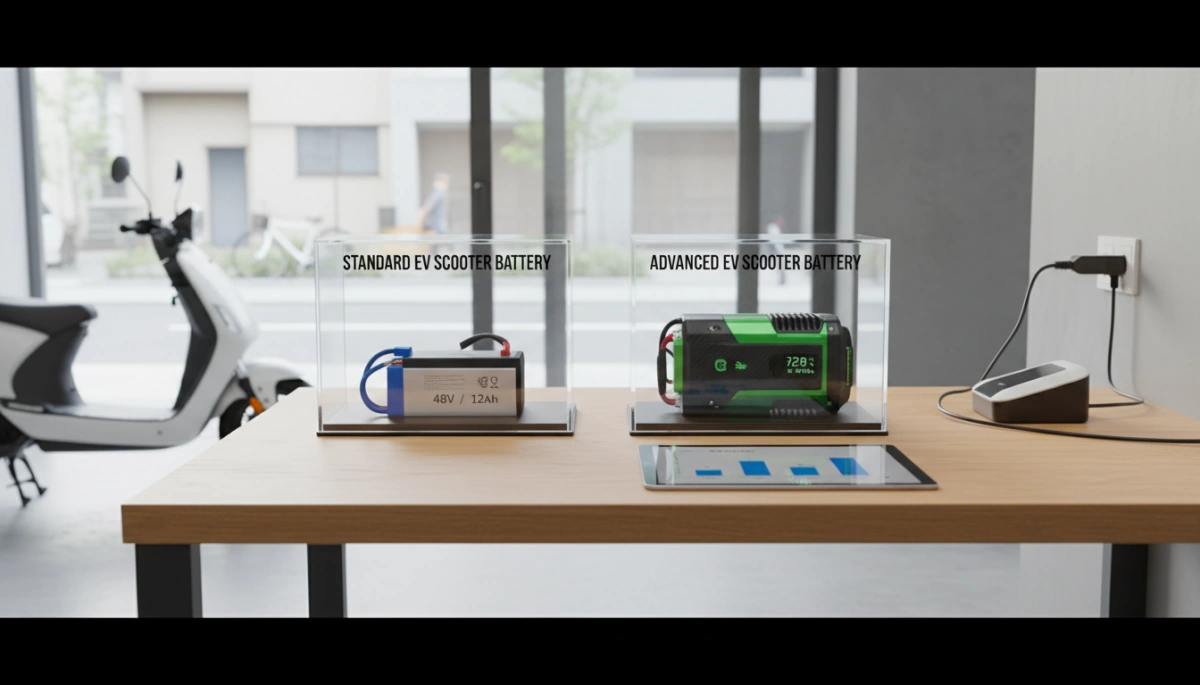
When we ask which EV scooter battery is best, we have to look past the brand name and check the numbers. If you are riding through busy city streets or commuting across a sprawling US campus, performance comes down to two main specs: voltage and capacity. Think of your electric scooter battery pack like a car’s powertrain.

Voltage (The “Muscle”): 24V vs. 36V vs. 48V+

Voltage (V) is the sheer muscle pushing your motor. It dictates your torque, acceleration, and ability to climb steep hills. Higher voltage simply equals more raw power.

Let’s settle the 24V vs 36V scooter battery debate and look at the heavier options:

  • 24V: This is the entry-level tier. It is standard for light mobility devices or a basic electric razor scooter battery. It works great for flat, paved neighborhoods, but struggles quickly on inclines.
  • 36V: The everyday commuter standard. A 36V electric scooter battery upgrade is the sweet spot for balancing decent top speeds with reliable torque for moderate hills.
  • 48V+: Built for pure performance. A 48V scooter battery (or even a 60V setup) is what you will find in dual-motor beasts, models built for heavier riders, and off-road scooters.

Capacity (The “Gas Tank”): Amp-hours (Ah) and Watt-hours (Wh)

If voltage is the engine’s muscle, capacity is your gas tank. Looking at your electric scooter range vs battery capacity Ah tells you exactly how far you can ride before you need to hunt down an electric scooter battery charger.

  • Amp-hours (Ah): This measures the volume of your “fuel.” A 15Ah battery holds more charge than a 10Ah battery of the same voltage, giving you a longer ride.
  • Watt-hours (Wh): This is the ultimate metric for your e-scooter’s range. It measures total energy pack capacity ($V \times Ah = Wh$). Always compare the Wh when shopping for a replacement battery for an electric scooter to get the most accurate range estimate.

Keep in mind that as you stack up charging cycles, your “gas tank” naturally shrinks. If you notice a sudden, massive drop in your daily range, it is worth checking the pack’s overall health. Knowing how to judge if a 18650 lithium battery is damaged can save you time and money by helping you pinpoint whether a few degraded cells are bringing down your entire scooter’s performance.

Which EV Scooter Battery Is Best? The Brains of the Pack

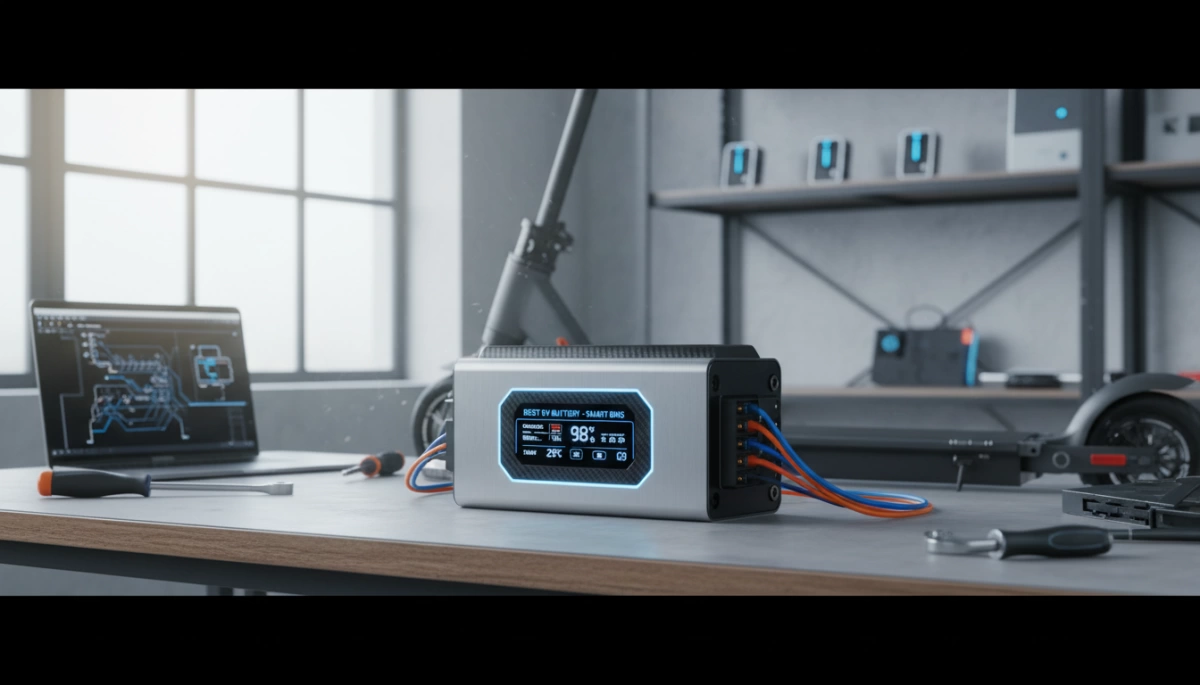
Best EV Scooter Battery with Advanced BMS Features

Electric Scooter Battery Management System (BMS)

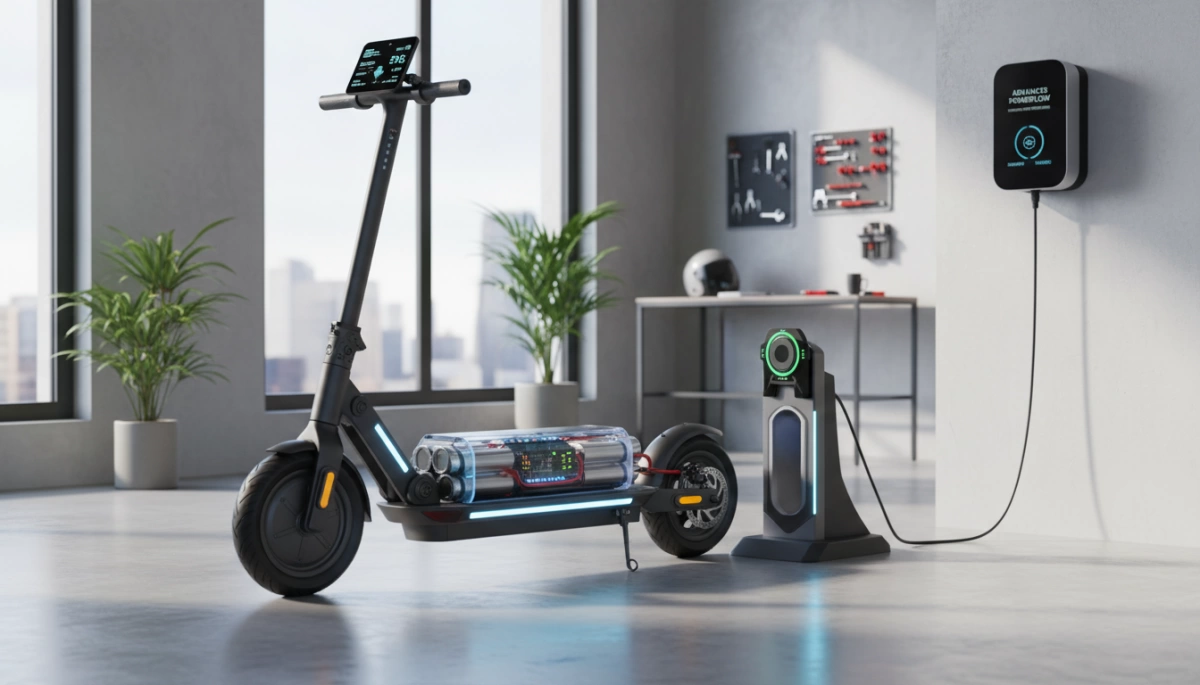
When riders ask me which EV scooter battery is best, they usually focus entirely on the cells. But the real hero is the Battery Management System (BMS). Think of the BMS as the brain of your electric scooter battery pack. It actively controls how power flows in and out. Without a solid BMS, even top-tier cells will fail early or become a major safety hazard.

If you ever need to disassemble an 18650 battery pack for a repair or inspection, you will immediately see the BMS circuit board wired directly to the individual cell groups. This small board is the absolute deciding factor in your electric scooter long battery life.

Key Features for Safe Electric Scooter Battery Chemistries

A smart BMS protects your investment, whether you are running a standard 36v electric scooter battery upgrade or a massive 60v high-speed setup. It takes the guesswork out of charging and riding.

Here is exactly what a high-quality BMS does behind the scenes:

BMS Feature Why It Matters for Your Scooter
Overcharge Protection Stops the electric scooter battery charger from pushing too much voltage, preventing swelling and fire risks.
Thermal Management Cuts off power if your high energy density scooter battery gets too hot during steep hill climbs or heavy use.
Cell Balancing Charges all internal cells evenly. This is crucial to avoid an expensive and premature electric scooter battery replacement.
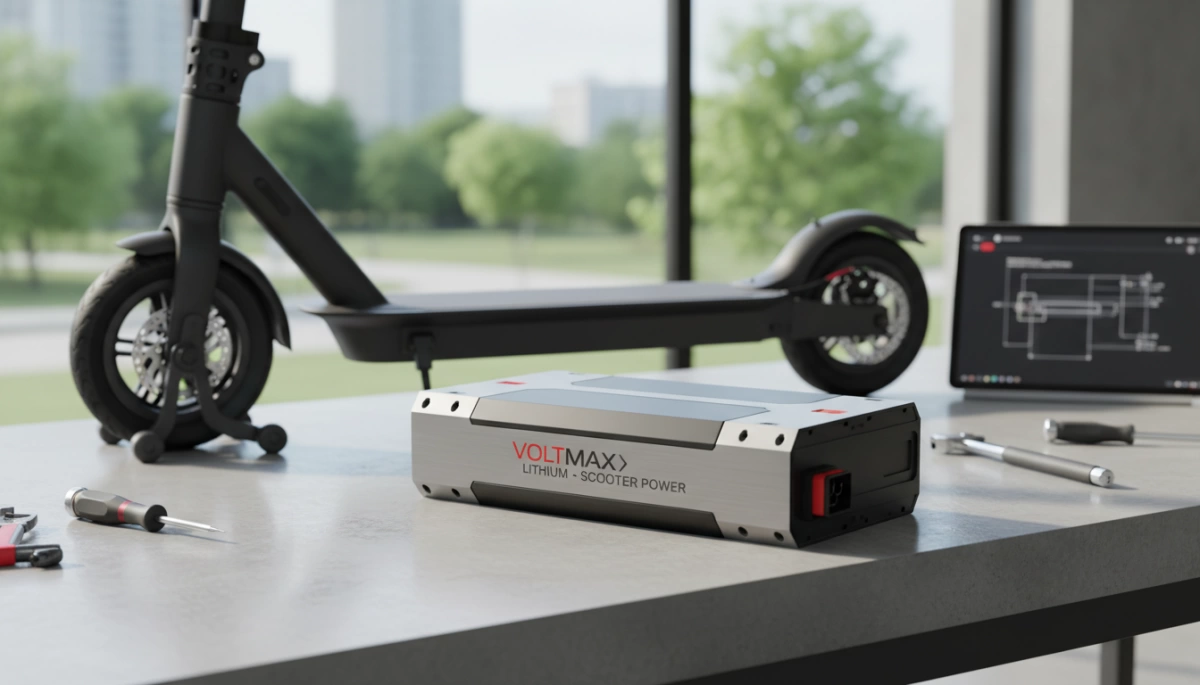
Fault Diagnostics Instantly shuts down the system if wires cross, avoiding dangerous electric scooter common issues battery bms failures.

When evaluating a direct replacement or an external battery for e scooter models, I always check the BMS specifications first. A reliable BMS guarantees safe electric scooter battery chemistries perform correctly, maximizes your daily range, and gives you complete peace of mind on the road.

Quality Control and Safety Certifications: The Non-Negotiables

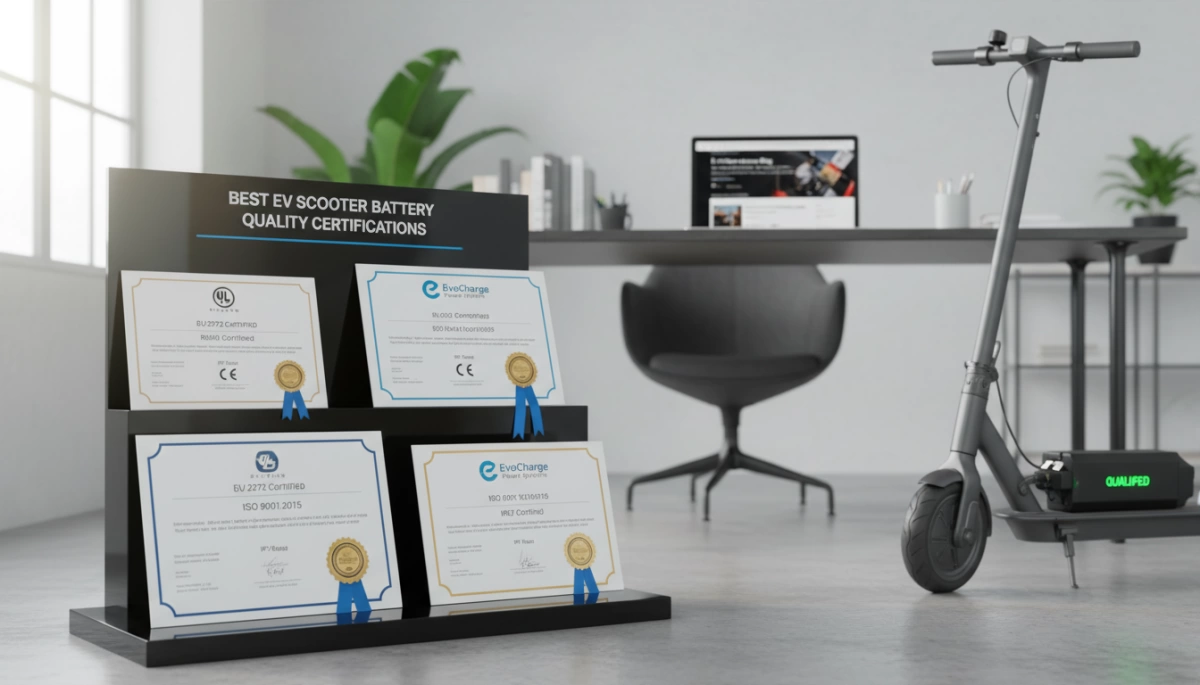
Best EV Scooter Battery Quality Certifications

When you are trying to figure out which EV scooter battery is best, the conversation absolutely must start with safety. We see a lot of US riders looking for an electric scooter battery replacement guide because their cheap, off-brand battery died completely after just a few months of riding.

Why Off-Brand Batteries Are a Liability

Bargain-bin scooter replacement batteries are a massive liability. They often lack basic protection circuits, making them prone to overheating, rapid degradation, or even catastrophic failure. To guarantee you are running safe electric scooter battery chemistries, the pack needs built-in safeguards. Understanding the critical differences between protected 18650 batteries vs unprotected 18650 batteries is vital here; a reliable lithium ion battery for electric scooter always utilizes highly vetted, protected cells paired with a smart BMS to prevent thermal runaway.

The Global Benchmarks

You shouldn’t just take a manufacturer’s word for battery safety. Look for the hard proof. For any reliable lithium battery mobility scooter or high-speed kick scooter, these global certifications are the absolute baseline:

  • UN38.3: A strict requirement for safe transport. A UN38.3 certified scooter battery proves the pack can handle altitude drops, thermal shock, and intense vibration without catching fire.
  • UL Certification: The gold standard in the United States for electrical and fire safety. If it doesn’t have a UL mark, you shouldn’t park it inside your house.
  • IEC 62133 & CE: Essential international safety standards for secondary lithium cells.
  • ISO 9001: Demonstrates that the B2B electric scooter battery manufacturer maintains rigorous, consistent quality control standards across their entire production facility.

The Importance of Manufacturing Excellence

Building a premium e scooter battery pack isn’t just about slapping random cells together with nickel strips. It requires high-tech precision and automated oversight. This is exactly why we focus so heavily on the critical factors to consider when designing and manufacturing 18650 lithium batteries at scale.

  • Automated Sorting: Before any assembly begins, machines automatically sort every single cell by exact voltage and internal resistance. This guarantees the pack stays perfectly balanced for years.
  • End-of-Line (EOL) Testing: Rigorous EOL testing ensures every battery pack that leaves our floor performs exactly to its rated spec. It simulates real-world load and charging cycles so there are no dead cells and no weak links.

Why OEMs & Fleets Choose Custom EV Battery Packs

When figuring out which EV scooter battery is best for a commercial fleet or a new product line, grabbing a standard electric scooter battery pack just doesn’t cut it. As a B2B electric scooter battery manufacturer, we see firsthand why off-the-shelf options often fail under the rigorous demands of the US market.

The Problem With Off-the-Shelf Scooter Batteries

Generic batteries force designers into a corner. You often have to compromise on weight distribution, deck space, or power output just to fit a pre-made box into your frame. Furthermore, if you are analyzing the lifespan benefits of a LiFePO4 vs lithium-ion battery for your specific use case, standard retail packs rarely offer the exact cell configuration you need. A generic scooter battery 36v setup might severely bottleneck a high-torque motor or cause the system to overheat during back-to-back rental rides.

The Value of Custom Engineering

Custom EV battery packs OEM solutions allow us to build the power source around the vehicle, rather than the other way around. Custom engineering guarantees that the battery voltage, continuous discharge rate, and physical footprint are perfectly matched to your specific motor and chassis.

Key advantages of a custom-built solution:

  • Tailored Dimensions: We design the pack to fit the exact geometry of the scooter deck, allowing for a high energy density scooter battery without bulking up the frame.
  • Optimized Communications: A custom electric scooter battery management system (BMS) is programmed to talk flawlessly with your proprietary motor controllers, preventing unexpected shutoffs.
  • Enhanced Durability: Fleet batteries need robust vibration dampening and waterproofing that generic replacements simply do not provide.

Off-the-Shelf vs. Custom OEM Packs

Feature Off-the-Shelf Battery Custom EV Battery Pack
Fit & Design Standardized, rigid dimensions Tailored to exact chassis geometry
Performance Basic BMS, average discharge limits Optimized for specific motor specs
Fleet Reliability Variable, prone to wear under stress Built for continuous commercial use
Best Used For Basic electric scooter battery replacement OEM production & ride-share fleets

When your brand’s reputation hinges on delivering an electric scooter long battery life, investing in a custom-engineered battery pack is the only way to guarantee consistent, safe, and top-tier performance on the road.