
Applications of Rechargeable Lithium Polymer Battery Pack

Applications of Rechargeable Lithium Polymer Battery Pack

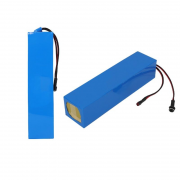
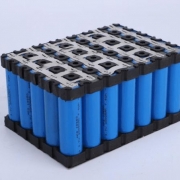
A lithium polymer battery pack is made of a number of lipo cells. The configuration of these cells determines their voltage, capacity, and C rating. They can be arranged in parallel or series, depending on the type of battery. Arrangements of these cells affect the capacity and voltage of the battery pack. It is important to avoid mixing different types of cells because they will not work well together. A poorly matched pack can lead to underperformance.

Another application of rechargeable lithium polymer battery pack is in medical devices. These batteries can be used in radios and media devices, as they are lighter and offer more power. They can also be used in electric vehicles. These batteries are lightweight and compact, making them an ideal choice for such applications. They can provide power for a long time and can be easily transported. Some of these batteries are designed to be reusable.

Rechargeable lithium polymer battery is an excellent choice for electric vehicles. Its high energy density makes it a desirable option for electric vehicles. This type of battery is also great for radio-controlled devices. Its compact design makes it easy to carry and transport. In addition to automobiles, the lithium polymer battery is also used for other applications. It can power personal digital assistants and pagers, and can be found in many other devices.

In addition to these devices, the lithium polymer battery is the ideal solution for various industrial applications. Its low cost makes it an ideal choice for many uses. Its high capacity makes it an excellent choice for a wide range of industries. Whether it is an oil-injection system or a pager, the battery is an excellent solution. And it is a great option for electric vehicles. Those who use it in their daily lives will love the versatility of this type of battery.

The lithium polymer battery has been in development for over a decade. Its replacement for nickel-metal hydride batteries is a major step in the evolution of digital products. China-based electronics manufacturers, in particular, are focusing on developing new products based on consumer preferences. In addition to providing power for electric vehicles, the high-end technology of the rechargeable lithium polymer battery is an excellent solution for the medical industry.

How to Detect the Charging Loss of an 18650 Lithium Battery Pack

How to Detect the Charging Loss of an 18650 Lithium Battery Pack

How to detect the charging loss of an 18650 lithium battery pack?
1. Battery consumption performance: battery voltage does not go up and capacity decreases. Measure directly with a voltmeter, if the voltage across the 18650 battery is lower than 2.7V or there is no voltage. Indicates that the battery or battery pack is damaged. The normal voltage is 3.0V ~ 4.2V (generally the 3.0V battery will cut off the voltage, the 4.2V battery voltage will be fully charged, and some have 4.35V).
2. If the battery voltage is lower than 2.7V, you can use the charger (4.2V) to charge the battery. After ten minutes, if the battery voltage has rebounded, you can continue to charge until the charger indicates that it is fully charged, and then check the full voltage.
If the fully charged voltage is 4.2V, it means that the battery is normal. It should be that the power consumption was too much in the last use, and the battery is cut off. If the fully charged voltage is much lower than 4.2V, it means the battery is damaged. If the battery has been used for a long time, it can be judged that the battery life has expired and the capacity is basically exhausted. should be replaced. Basically there is no way to fix it. After all, lithium batteries have a lifespan, not infinite.
3. If the 18650 lithium battery pack is measured and the battery has no voltage, there are two situations at this time. One is that the battery was originally good, and it was caused by long-term power loss storage. This kind of battery has a certain probability of recovery. Generally, it is activated by a lithium battery pulse. It is possible to recharge the battery several times in a short period of time by using an instrument (lithium battery charging and discharging instrument). Generally, the repair cost is not low, and it is better to buy a new one. Another possibility is that the battery is completely worn out, the battery separator is broken down, and the positive and negative electrodes are short-circuited. There is no way to fix this kind of thing, just buy a new one.
18650 lithium battery pack battery repair method principle:
1. The metal surface of the 18650 lithium battery pack that has been used for a long time will be oxidized to a certain extent, which will lead to poor contact between the mobile phone battery and the mobile phone, and the use time of the lithium battery will be shortened. Rusty substances that make the battery better in contact with the phone.
2. The low temperature can change the electrolyte inside the lithium battery pack and promote the chemical reaction of the battery that has just been frozen. The use of lithium batteries is actually a charging and discharging process. During this time, the negative and positive charges in the battery collide with each other. When the lithium battery is placed in a low temperature environment, the microstructure of the lithium film on the surface of the lithium battery and the electrolyte, as well as their interface will change significantly, resulting in a temporary inactivity inside the battery and a reduction in leakage current. So after charging again, the standby time of the phone will increase.
The cycle life of the lithium battery pack is about 600 times. If there are too many charging times, the thermal motion of the molecules will gradually destroy the microstructure of the internal molecular arrangement, and the efficiency of storing electric charges will gradually decrease.

How to DIY a 12v LiFePO4 Battery Pack From a 32650 LiFePO4 Battery Cell

How to DIY a 12v LiFePO4 Battery Pack From a 32650 LiFePO4 Battery Cell

Nowadays, many rechargeable electrical appliances in life use lithium batteries, such as soft packs, cylindrical, rectangular and so on. Among them, cylindrical lithium batteries are divided into various models according to their size, such as the most common 18650, 22650, 32650 and so on. The number 18 in the model like 18650 indicates the diameter of the battery, 65 indicates the length of the battery, and 0 indicates that the battery is a cylinder.

The voltage of a single-cell lithium battery is generally 3.2V to 3.7v, and the voltage used by many electronic devices is 12V, so we need to use multiple lithium batteries to form a group to achieve 12v, and the lithium battery assembly also needs to be equipped with a protective plate.

The main purpose of the protection board is to play overload protection, short circuit protection, overheat protection, low voltage protection, overvoltage protection, battery balance, overcharge protection, etc., mainly to protect the battery from being damaged.

Since the capacity of a single battery is relatively small, 12 32650 lithium batteries are prepared, four are connected in series to form a group of 12V, and then three groups of 12V are connected in parallel to increase the capacity and voltage.

Assembling the battery requires the use of nickel tape, high temperature tape, and battery brackets.

Generally, the connection of lithium batteries is to use spot welding to bring the nickel to the point. If there is no spot welding machine, you can use sandpaper to polish both ends of the battery, and then you can use an electric soldering iron to weld.

Get the battery line, measure the voltage, and see if the capacity is the same. Don’t put the different ones together.

Then install the battery and battery holder and arrange them in a positive and negative order.

Then wrap the heat resistant tape around it.

Connect the batteries with nickel tape, a soldering iron will do without a spot welder. By the way, stick the protective plate on top of the tape.

For the effect of spot welding of nickel strips, it is necessary to distinguish which one is connected with which one, otherwise it will cause a short circuit.

Then solder the protection board and the plug. Generally, the protection board will indicate the connection method in detail, and it is enough to connect with wires.

If you feel that one plug is too few, you can add another one, and the 12V lithium battery is completed.

Use and Maintenance of Electric Vehicle Lithium Batteries

Use and Maintenance of Electric Vehicle Lithium Batteries

In recent years, lithium battery electric vehicles have been the development direction of various countries. It can be seen from the market and the investment of various car companies that they have made efforts in electric vehicles. Now, there is a trend of lithium battery electric vehicles replacing internal combustion engine vehicles in some parts of our country, because lithium batteries have strong sailing ability, ranging from more than 100 kilometers to 500 kilometers of Tesla, and you get what you get for every penny, so in the price It is also more expensive than an internal combustion engine car. So, for lithium battery electric vehicles, how should we use and maintain them?

1. It should be checked regularly during use. You can contact the sales center or the maintenance department of the agent for inspection, repair or matching. If there is a need to replace the new battery, it should be replaced in time to avoid unnecessary troubles during driving. In fact, regular inspections can virtually save you money.

2. It is forbidden to be in a power-loss state. Storing the battery in a power-deficient state is prone to sulfation, and the lead sulfate crystals adhere to the plate, which will block the ion channel, resulting in insufficient charging and a decrease in battery capacity. In this case, the longer the idle time, the more severe the battery damage. To have a good battery, we should recharge it once a month.

3. Try to avoid large current discharge. When starting, going uphill, or carrying people, we should try to reduce the amount of slamming on the accelerator, because this will instantly discharge a large current and damage the physical properties of the battery plate.

4. It is forbidden to expose electric vehicles in the sun. An environment with excessively high temperature will increase the internal pressure of the battery and cause the battery to lose water, causing a decrease in battery activity and accelerating the aging of the plates.

5. Electric vehicles should be cleaned in accordance with normal car washing methods. During the cleaning process, more attention should be paid to the water flowing into the charging parts of the car body to avoid short circuit of the car body lines.

In summary, we can use and maintain lithium battery electric vehicles from these aspects to increase its service life.

The Difference Between a Lead-Acid Battery and a Lithium Battery for Electric Vehicles

The Difference Between a Lead-Acid Battery and a Lithium Battery for Electric Vehicles

In today’s China, there are thousands of international famous brands of electric vehicles on the market at this stage, and the two factions of electric vehicles with lead-acid batteries and lithium batteries have their own characteristics and advantages. Although electric vehicles are rapidly transforming For so many years, many people have been confused about the choice of batteries for a long time, and they do not know what the difference between the two is. Well, today we will talk about the difference between lead-acid batteries for electric vehicles and lithium batteries for electric vehicles.

The difference between lead-acid and lithium battery electric vehicles.

1. The appearance design of lithium battery is better than that of lead-acid battery.

Lithium batteries need to be much smaller in size and quality than lead-acid batteries. In most cases, the total weight of lead-acid batteries is 16-30 kg, and the size is relatively large; while the total weight of lithium batteries is 3 in most cases. -3.0KG, the body is relatively small, so it is light for riding and convenient for shipping. In most cases, lithium battery electric vehicles are light and beautiful, easy to move, and many lithium battery electric vehicles can also be folded.

1. Durability and battery life:

The service life of lead-acid batteries is usually 2 years, while lithium batteries are more durable, with a lifespan of 4-5 years; and lead-acid batteries are usually fully charged and discharged within 300 cycles, while lithium batteries are fully charged and discharged. more than five hundred times.

2. Volume quality and ease of operation.

Compared with the lightweight body of only 2.5/3 kilograms of lithium batteries, lead-acid batteries of the same capacity usually weigh about 16/30 kilograms; not only the battery quality is relatively large, but also the volume; The disassembly design makes it more convenient and quick to carry.

3. Market price and cost performance.

At this stage, the mainstream lead-acid batteries on the market are about 450 yuan, while the price of lithium batteries is more expensive at 1,000 yuan; the prices of the two types of batteries are different, and the corresponding electric vehicle prices are also relatively different. At the same time, the warranty period of lithium battery is 1 year longer than that of lead acid, and the warranty period is 2 years.

4. Cruising range and battery capacity.

The same is a 48V battery. Under the condition of full power, the cruising range of lead-acid/lithium battery electric vehicles is almost the same. In fact, the key lies in factors such as speed and motor size. Naturally, lead-acid batteries will slightly exceed lithium batteries in terms of battery capacity.

In general, lead-acid batteries are the most numerous. The price of lead-acid batteries is the lowest and most common. China is the largest producer and exporter of lead-acid batteries in the world. It contains relatively few polluting components and has good recyclability. The disadvantage is that the specific volume is small. In other words, under the same capacity, the battery weight and volume are large. At this stage, most of the lead-acid batteries are transformed from floating charge batteries. Float rechargeable batteries reject fast charging and high-current discharge. Although professional and technical personnel have spent a lot of effort and made fruitful improvements, they can be put into practical use, but their lifespan is still very unsatisfactory. Which one is better depends on your own cost budget and needs. However, considering that after the announcement of the new national standard national policy, electric vehicles must be changed to the registered side before they can ride on the road normally, so it is best to choose an electric vehicle that meets the standard.

Winter Maintenance Guide for Electric Vehicle Lithium Batteries

Winter Maintenance Guide for Electric Vehicle Lithium Batteries

For batteries, the focus is often on capacity and energy density, and these data can often intuitively reflect the length of cruising range. But what we should note is that most batteries are electrochemical products. Since it is related to chemistry, its performance has a great relationship with temperature. Let’s first look at the effect of temperature on battery performance through data.

The capacity of the battery is most closely related to the cruising range. How much does temperature affect the battery capacity? It can be seen that when the discharge current is 100A, the battery capacity shrinks by 1.7% and 7.7% respectively from 20°C to 0°C and then to -20°C. This means that even if the temperature is as low as -20°C, the battery can still reach more than 90% of the nominal capacity. It can be said that the effect of temperature on battery capacity is relatively small. However, this does not mean that we can ignore the effect of temperature on the battery. According to the information provided by experts, under the condition that the charging current is 5A, the charging time at the ambient temperature of -25℃ is 63% slower than the charging time at 25℃.

Battery life is also a concern. According to the data, if a battery with a capacity of 3500mAh works in an environment of -10°C, after less than 100 charge and discharge cycles, the power will rapidly decay to 500mAh, and it will basically be scrapped. That is to say, in a working environment of -10°C, if you charge and discharge once, the battery will be scrapped and replaced after three months. This figure may be a bit exaggerated, but low temperatures do drastically shorten battery life.

Therefore, regarding the impact of low temperature on the battery, the conclusion is that although the low temperature environment has little effect on the discharge performance of the battery, it will seriously affect the charging performance of the battery and greatly shorten the life of the battery.

There are two main aspects to the battery technology winter solution for low temperature environment, one is the progress of battery technology, and the other is the maintenance of electric vehicle battery in winter.

For electric vehicle lithium battery maintenance methods in winter: In addition to relying on the technological progress of lithium battery factories, consumers can also perform winter maintenance of electric vehicle batteries through some simple methods. So how do you go about doing it? First, pay attention to the charging method, try not to charge the battery under low temperature conditions, and the same is true for high temperatures. When the high temperature exceeds 30 °C, the charging needs to increase the current input. Second, when charging in winter, you can use the method of charging several times. When the battery is charged, you can charge more at one time. Third, maintain a full power state. In winter, when the battery discharge exceeds 50%, the electrolyte will be in danger of freezing. Therefore, in winter, the battery should try to keep it above 50% of the power. Fourth, every other period Time to start the car, charge it, don’t let the battery discharge too much, don’t let the electric car sit outside for too long in the winter. In this way, I believe that our lithium battery electric vehicle will be safe this winter.

How to Charge the 26650 LiFePO4 Battery

How to Charge the 26650 LiFePO4 Battery

To recharge the 26650 LiFePO4 battery, you need to first understand how the battery works. Normally, this type of battery takes three to six hours to fully charge. There are different types of batteries, and different charging times. Some products do not have a built-in charger. Other brands sell the batteries separately. To determine which type of battery you should use, check the manufacturer’s manual.

Some of the most common types of 26650 batteries are INR and IMR. Choosing the right one depends on the battery type and application. IMR and INR batteries are better suited for motorcycles than unprotected ones. Nonetheless, protected 26650 batteries are more expensive and have smaller capacity than unprotected versions. It is best to check the instructions and follow them carefully.

To ensure proper battery performance, purchase batteries that have the same chemistry. You should avoid using older batteries that may not be compatible with current standards. Some of the latest models have protection features that prevent overcharging. Then, make sure you get a properly sized charger. This will protect your battery and prevent the battery from overheating. Also, the battery should fit into the compartment.

The 26650 battery can be used for motorcycles, and it has a long shelf life. The 26650 can deliver up to 20 Amps continuously and 40 Amps for a short period of time. However, you should avoid disassembling or incorrectly disposing of it. You should also make sure you do not expose the battery to extreme temperatures. If not, it can overheat and catch fire. Intelligent chargers are safe for the 26650 lithium ion battery packs. You can also find them online at affordable prices.

When charging the 26650 LiFePO4 battery, it is important to be careful when using the charger. It is possible to use the same charger for other batteries, but if the charger does not have the appropriate adapter, the battery may not work properly. The batteries should be charged with a USB port. This way, you can use the battery on the go without having to worry about damaging the batteries.

If you want to use the battery as a flashlight, you can use a charger that supports both types. It is important to use a suitable charger when using a 26650. The power of a lithium cell is determined by the current it can handle. If the voltage is higher, the longer the battery will last. In the case of an 18650, you will need to buy a new adapter for a new battery.

The 26650 LiFePO4 battery is a size C lithium battery that can be recharged. These batteries can be recharged by an intelligent battery charger. This charger uses a micro-USB port to identify the battery. It can be used in the same way as the standard 26650 battery. If you don’t have a dedicated charger, you can buy one that supports both of these types.

High-drain 26650 batteries have the ability to deliver up to 40 Amps continuously and 60-70 Watts for short periods of time. Due to their low internal resistance, the voltage drop is minimal. Therefore, a high-capacity battery will deliver up to 110-140 Watts. When recharging the 26650 LiFePO4 battery, it is essential to use a smart charger that can detect the battery condition and determine whether it is in good condition.

Are 26650 LiFePO4 Batteries Safe

Are 26650 LiFePO4 Batteries Safe

The battery in the smartphone you’re currently using has a 26650 LiFePO4 cell, which stores plenty of energy. This battery has two types, IMR and INR. Most intelligent chargers can distinguish between them, though unprotected ones are generally safer. The difference in self-heat rate is minimal, but the former is safer than the latter. Depending on the circumstances, the battery you’re using may have a different safety rating.

This battery is made of LiFePO4 chemistry, and it is used in EDC devices, security systems, and other high drain devices. Its low self-discharge rate and large capacity make it a popular choice. Unlike other types of batteries, it has a very low self-discharge rate, making it ideal for high-drain applications. The lithium ion chemistry makes it suitable for flashlights and other devices that require high voltages.

INR 26650 batteries are usually 5000 mAh (5 Ah) in capacity. They can deliver up to 20 Amps continuously or up to 30 Amps with additional cooling. The INR 26650 battery is made from Lithium Manganese Nickel, or LiMnCoO2, and it has a 3.6-3.7 volt nominal voltage per cell. INR lithium ion batteries have a maximum charge voltage of 4.2 volts and are ideal for EDC devices.

26650 LiFePO4 batteries are more environmentally friendly than other battery types. The material is completely recyclable and does not contain any dangerous substances. Because of this, they are a better choice for many high-drain devices. The best place to buy them is online or from a local store. This battery will be shipped to your door in no time. It will be delivered to you in a matter of days.

To ensure the safety of 26650 LiFePO4 batteries, the battery must fit in the battery compartment. The battery should have the same positive terminals. This is essential because if the two positive ends don’t match, the battery can overheat. However, the size of the battery does not affect the safety of the battery. It is important to make sure the cell has the right voltage range and is compatible with the device.

Precautions When Using a 26650 Lithium-Ion Battery

Precautions When Using a 26650 Lithium-Ion Battery

There are a few precautions when using a 26650 lithium-ion battery. This type of battery is the largest type and is used in a wide variety of electronic devices. This battery has a nominal voltage of 3.6 or 3.7 volts per cell and can deliver up to 20-30 Amps. The battery’s maximum charge voltage is 4.2 V, so be sure to use a charger that can handle this voltage range.

1. Prevent charging at too low temperature

If the lithium battery is used in a low temperature environment, that is, below 4C, the use time of the 26650 lithium ion battery will also be reduced, and the original lithium battery of some mobile phones cannot even be charged in a low temperature environment. But don’t worry too much, this is only a temporary situation, different from the use in a high temperature environment, once the temperature rises, the molecules in the battery are heated and immediately return to the previous power level.

2. Prevent charging at high temperature

If the 26650 lithium-ion battery is used in an environment higher than the specified operating temperature, that is, above 35C, the battery’s power will continue to decrease, that is, the battery’s power supply time will not be as long as usual. If the device is charged at such a temperature, the damage to the battery will be even greater. Even if the battery is stored in a hot environment, it will inevitably cause corresponding damage to the quality of the battery. Therefore, trying to maintain a suitable operating temperature is a good way to extend the life of lithium batteries.

3. Frequent use

Life is movement. In order to maximize the performance of the 26650 lithium-ion battery, it is necessary to use it frequently so that the electrons in the lithium battery are always in a state of flow. If the lithium battery is not used frequently, please remember to complete a charging cycle for the lithium battery every month and do a power calibration, that is, a deep discharge and deep charge.

What is the Maximum Capacity of the 26650 Lithium Battery

What is the Maximum Capacity of the 26650 Lithium Battery

The 26650 lithium battery is a high-capacity, high-density rechargeable battery. It weighs 98 grams and is 26.5 millimeters across. The size of the 26650 lithium battery is 68.2 millimetres in height and 26.5 millimetres wide. This means that it has a higher capacity than the 18650 battery.

The maximum capacity of the 26650 lithium battery is approximately 5500 mAh. Its cells have a nominal voltage of 3.6 V or 3.7 V and a maximum charging voltage of 4.2 V. This voltage range is regulated to prevent damage to the batteries. While a 26650 lithium battery is still capable of producing a large amount of power, it will decrease its total capacity. Moreover, a higher discharge rate will create more heat and therefore lower its total capacity.

The 26650 lithium battery can be recharged in an endless number of ways, ranging from a few hours to over a year. As the battery is used up, its capacity will decrease over time. The capacity of the 26650 battery is usually in the range of 5500 mAh, but the actual capacity will vary depending on the manufacturer. The maximum charging voltage for the 26650 battery is 3.6 to 3.7 V. The maximum charging current of this battery is half the battery’s capacity.

The capacity of the 26650 lithium battery can vary from one manufacturer to another. The length of the battery casing will determine its capacity. Ultimately, the capacity will depend on the internal components of the cells. Some 26650 lithium batteries are designed to be recharged faster, resulting in a lower total capacity. However, this increased discharge rate is more advisable for high-end devices, as larger cells generate more heat and reduce its overall capacity.

The 26650 lithium battery is designed to provide the maximum amount of power when used. Its 3.7-volt capacity is equivalent to the capacity of the 18650 battery. In contrast, the 26650 battery is designed to provide the maximum amount of current. This is why it is not recommended for high-end devices. It is ideal for low-powered devices that do not require a large total capacity.

The 26650 lithium battery is a ternary cell battery. The voltage is between 3.6 and 3.7 volts. A 26650 lithium battery can provide up to 30 amps of power. In addition, the 26650 lithium battery has a higher mAh than the 18650. Consequently, it is a better option for your needs. Just remember that the maximum capacity of the 26650 lithium battery depends on the underlying voltage of the item and the capacity of the compartment.